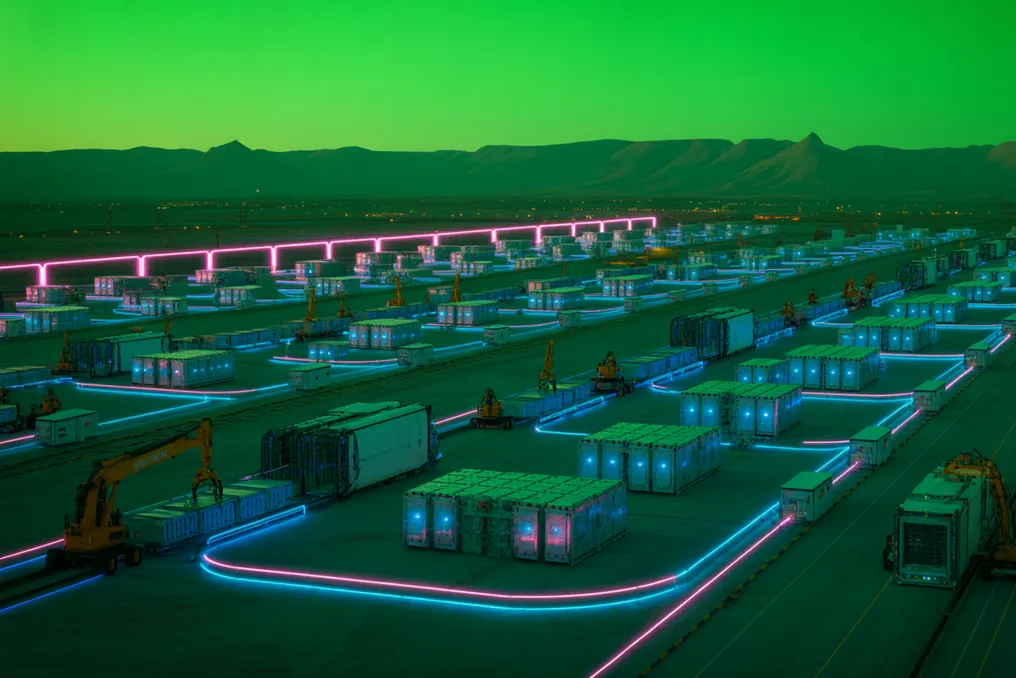
TAR has successfully raised $120 million in a Series A funding round to expand its autonomous power supply systems for data centers utilizing artificial intelligence. The funding was led by Spark Capital at a post-money valuation of $1 billion. The Austin-based company plans to increase both its headquarters and engineering office in San Francisco, as well as boost manufacturing and logistics capacity in West Texas.
TAR was founded in 2026 by Pat Becker and Leonhard Zonk. The company targets one of the most significant problems in AI infrastructure—limited power availability, which is becoming a serious obstacle to expanding AI computing power. Existing queues for grid connection can take years, and transmission limitations and local opposition create additional barriers for large energy projects.
TAR offers an alternative approach by developing modular systems that combine renewable energy generation with energy storage systems. These systems are specifically designed for large-scale AI computing facilities. The company builds the infrastructure in West Texas, allowing it to provide dedicated power without competing for local grid resources.
The company controls the entire energy deployment process: from site selection and design to procurement, logistics, construction, commissioning, and subsequent operation. This vertically integrated approach reduces reliance on numerous external contractors. TAR claims that its deployment automation stack can accelerate the construction of energy facilities, reducing the need for field labor as deployment scales up.
The TAR team combines expertise in the energy sector with robotics expertise; employees previously worked at companies such as Hut 8, AES, Vistra, and Lucid Motors, while other team members have experience at Zipline and GrayMatter Robotics. The company is currently executing a large-scale deployment for a major cloud service provider and developing a specialized project campus for future needs. In West Texas, TAR is completing the TAR Terminal One facility, which will function as a logistics and manufacturing hub.
The new funding will allow these projects to accelerate and expand TAR's operational capabilities. The company aims to deploy energy infrastructure in parallel with the growing demand for AI computing power. Co-founder Pat Becker stated that the energy industry needs a different deployment model, as gigawatt-scale projects require more control throughout the development chain. Co-founder Lenny Zonk also highlighted the growing customer demand, and the company intends to increase its supply to alleviate the energy shortage limiting computing expansion.
TAR plans to allocate the raised funds to develop several areas, including engineering, robotics, energy systems, and supply chain operations. Additionally, the company is hiring staff in Austin and San Francisco for roles such as project manager, operations specialist, and technical engineer.
Spark Capital views energy availability as a critical constraint on AI growth, believing that faster energy deployment can unlock additional computing power. TAR's approach could potentially shorten one of the longest lead times in data center development. Unlike traditional projects dependent on available generation and utility capacity, autonomous systems place generation and storage closer to the computing facility, giving AI operators greater control over how the energy infrastructure is deployed.
The company has not yet disclosed information about additional investors participating in the Series A round. The $1 billion valuation reflects growing investor interest in AI infrastructure as computing demand rises and access to reliable electricity remains limited.