Brazil participates in the creation of a giant telescope to study the past of the Universe
Read more
Olhar Digital
olhardigital.com.br

Brazil participates in the creation of a giant telescope to study the past of the Universe

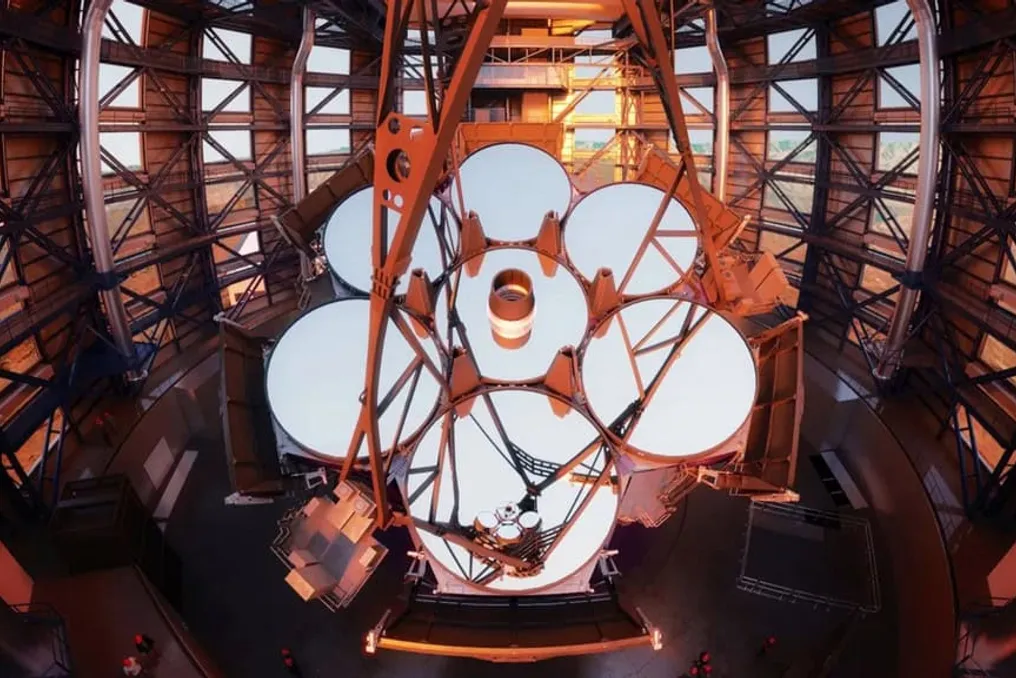
Near Brazil, in the Atacama Desert in Chile, one of the most impressive engineering structures of the 21st century is being formed—the Giant Magellan Telescope (GMT). This project is part of a new era of mega-telescopes designed to overcome all boundaries of human knowledge about the cosmos.

When GMT begins operation in the early 2030s, it will provide unprecedented clarity among ground-based observatories. According to the statement, the main mirror equipment will have a diameter of 25.4 meters and a light-collecting area of 368 square meters, allowing observations of galaxies that formed just 100 million years after the Big Bang.

The scale of the project reflects an international consortium of 15 institutions, in which Brazil plays a fundamental role thanks to the State Research Support Fund of São Paulo (FAPESP). By investing 50 million US dollars, the country created the GMT-BRO Brazilian office to ensure that Brazilian scientists and engineers take a central role in the development of the observatory's advanced instruments.

Despite the impressive size of the structure, light collection is only the first stage. Without appropriate instruments to analyze this cosmic radiation, astronomy cannot progress.

During the first 'Looking at the Stars' seminar organized by the GMT-BRO office last year, Claudia Mendes de Oliveira, a PhD in astronomy from Columbia University, senior lecturer at the Institute of Astronomy, Geophysics, and Atmospheric Sciences of the University of São Paulo (IAG-USP) and a member of the Brazilian Academy of Sciences (ABC), explained the project timelines.

She noted: 'The telescope should be ready between 2032 and 2035. The exact date depends on the final funding of the instruments, but it should happen in the middle of the next decade. Thus, we have a comfortable eight to ten years ahead to work on instrumentation.'

She emphasized that despite initial difficulties, the Brazilian team is fully involved with international groups in developing these technologies. The country's participation is focused on vital systems, ranging from exoplanet searches to the study of dark matter and energy.

One of the significant achievements of Brazilian investments is DIMEX (Visible Range Multi-Object Spectrograph in Moderate Scattering). Developed in partnership with the Harvard-Smithsonian Astrophysical Observatory, this instrument operates in the visible spectrum through two independent channels—one optimized for blue light, the other for red.

DIMEX is considered the true 'workhorse' of GMT, as it is expected to become the most frequently used instrument for the entire scientific community. The device's goals cover stellar astronomy and cosmology, helping to understand the acceleration of the Universe and mapping cosmic structures.

Professor Rafael Ribeiro, PhD in astronomy from IAG-USP and coordinator of the Brazilian team for this instrument, spoke about the importance of this achievement at the event. He recalled that Brazil joined the consortium a little later, which required effort to secure a place in technology development. 'It is not easy to get into such highly complex projects that are world-class. And we are here, despite our experience since the 60s, we are still beginners in this high-performance instrumentation.'

He noted that national competence provided the country's researchers with a decisive role in the DIMEX project. 'We demonstrated quality, commitment to the quality of our work, and because of this, we gained significance. And today we are proudly an active partner of this organization.'

As explained in the GMT-BRO institutional video, the Brazilian team is involved in the optical design, mechanical engineering, software development, and systems engineering of DIMEX. Researchers and engineers also collaborate to operate the instrument in an enhanced imaging mode, using low-atmosphere adaptive optics technology.

Adaptive optics is a revolutionary method capable of correcting turbulence and aberrations caused by the Earth's atmosphere in real time. Thanks to it, light coming from distant corners of space is corrected with exceptional precision, providing perfectly sharp images on detectors.

The search for planets outside the Solar System is further strengthened by technology developed by IAG-USP. The team designed, assembled, and successfully tested a prototype Exposure Meter (high-efficiency exposure meter), which is responsible for calibrating the CLERC spectrograph (high-resolution visible range spectrograph) and its DCLERC version.

Another promising innovation is Astrocomb—a high-precision instrument installed on high-resolution spectrographs, such as the GMT High-Resolution Echelle Spectrograph for characterizing exoplanets (GCLEF). This instrument generates an 'optical frequency comb,' creating perfectly evenly spaced lines of light that serve as a standard for calibrating cosmic observations.

At the seminar, Professor Flavio Cruz, PhD in physics, lecturer at the State University of Campinas (Unicamp) and coordinator of the Astrocomb development project, explained how this measurement allows the detection of distant worlds. 'When a planet orbits a star, it causes a small wobble in the star's mass. If a star has a planet in orbit, the planet's gravity induces a small stellar wobble—a very subtle phenomenon. This shift causes a small Doppler shift in the star's spectral lines of light.'

This phenomenon is known as the Doppler effect. By measuring subtle changes in the spectrum of light emitted by stars using Astrocomb, astronomers can detect the presence of new exoplanets and calculate their masses with unprecedented accuracy.

To maximize the potential of GMT, MANIFEST was created—a robotic optical fiber positioning system that covers a field of view equivalent to 40% of the full Moon's diameter. The robot moves hundreds of optical fibers in about five minutes. This allows the light collected by the telescope to be directed to several instruments simultaneously, such as GCLEF and GMAX, increasing the number of observed objects per night.

According to engineer and researcher Vitor Neves Hartman from the João Steiner Institute and USP, who coordinates the MANIFEST subproject in Brazil, this system transforms observatory operation. 'It won't conduct scientific research; it will redirect the light captured by the telescope to one or more instruments so that scientific research can be conducted. The ability to operate allows the telescope to use more than one instrument simultaneously,' Hartman emphasized at the meeting.

Within the international consortium developing MANIFEST, Brazilian engineering bears exceptional responsibility for a critical subsystem called the Filterbox. This component is responsible for conditioning the light signals directed to the spectrographs.

Brazil's presence in GMT encompasses many other crucial commissioning and testing projects. The national team of scientists is actively involved in the development of the Adaptive Optics Test Chamber (AOTC), designed to test the resolution limits of the observatory's adaptive optics. Brazilians are also collaborating on the Commissioning Chamber (ComCam), which assesses the initial image quality produced by the mirror assembly. In this, the country participates in the software architecture and mechanical engineering in partnership with the international consortium.

All this involvement places Brazilian science in a prominent position in global astronomy. Instead of just using data collected by international observatories, our researchers are designing the instruments that will shape the discoveries of the coming decades.

When GMT finally opens its eyes to the Universe, the knowledge and engineering solutions developed in Brazil will be there, in every ray of captured light, helping to decipher the mysteries of the cosmos and write the next chapters of our knowledge of the Universe.
Similar stories

Brazil tests reusable space laboratory for microgravity research
Read more
olhardigital.com.br

Brazil tests reusable space laboratory for microgravity research

Brazil is testing a platform capable of launching experiments to an altitude exceeding 100 kilometers and returning them to Earth. These operations are conducted at the Inferno Barrier Launch Center in the state of Rio Grande do Norte and could increase the country's autonomy in microgravity research.

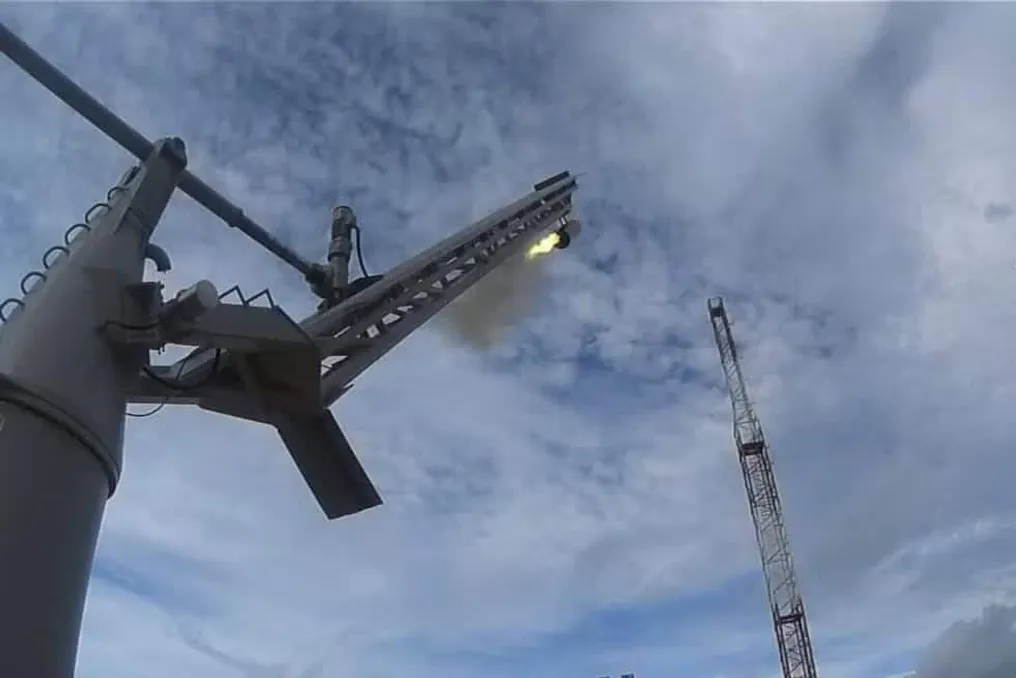
Named the Suborbital Microgravity Platform (PSM-R), this system is launched with a rocket, conducts experiments during flight, and then returns, secured by parachutes. After retrieving the payload, researchers can directly study materials exposed to the actual mission conditions.

Operation 'Potiguar 2' launched on August 31 and is scheduled to conclude on September 19. The Brazilian Air Force (FAB) is participating in the tests, with the main objective being to verify the functionality of the platform recovery system.

In similar missions, Brazilian scientists usually monitor results via telemetry transmitting data remotely. However, PSM-R offers an additional capability—the physical retrieval of experiments for post-flight analysis.

Microgravity Research

Microgravity does not mean the complete absence of gravity; it is a state where its influence is significantly weakened, leading to different physical and chemical phenomena. Areas of application for such research include the development of the VS-30 V16 rocket, created by the Institute of Aeronautics and Space (IAE), which is about nine meters long. The platform is launched to an altitude over 100 km and remains in a state of microgravity for approximately six to eight minutes.

After reaching the highest point of the trajectory, the platform begins its return to Earth. First, there is freefall, then a drogue parachute reduces speed in preparation for the main parachute deployment. The capsule typically lands in the sea. GPS equipment installed on the apparatus transmits radio signals about its location, allowing a FAB helicopter to conduct a rescue operation.

One of the experiments involves using Cubesat 1U—a miniature satellite containing lyophilized microorganisms and radiation dosimeters. The goal of this research is to determine how fungi and bacteria withstand extreme mission conditions and whether they remain viable after return.

Another set of samples with the same microorganisms and sensors will be used on Earth for comparative analysis. The team will also conduct laboratory tests of microgravity using clinical rotation methods, comparing simulation results with data obtained during the actual launch.

Autonomy and Future of Technology

Brazil previously used microgravity platforms acquired from abroad. If PSM-R is certified, the country will be able to conduct regular launches using its own equipment. As Marco Antonio Schamon, president of AEB, noted, this represents a step toward achieving autonomy in suborbital flights.

The Inferno Barrier Launch Center, opened in 1965, is the first space launch center in South America and has already participated in over 400 launches. The main advantage of this phase is the physical retrieval of experiments. Following the platform's qualification, universities and companies are expected to conduct more frequent research in the microgravity environment, thereby supporting the development of Brazilian space technologies.

Nancy Grace Roman Space Telescope promises to revolutionize knowledge of the Universe
Read more
olhardigital.com.br

Nancy Grace Roman Space Telescope promises to revolutionize knowledge of the Universe

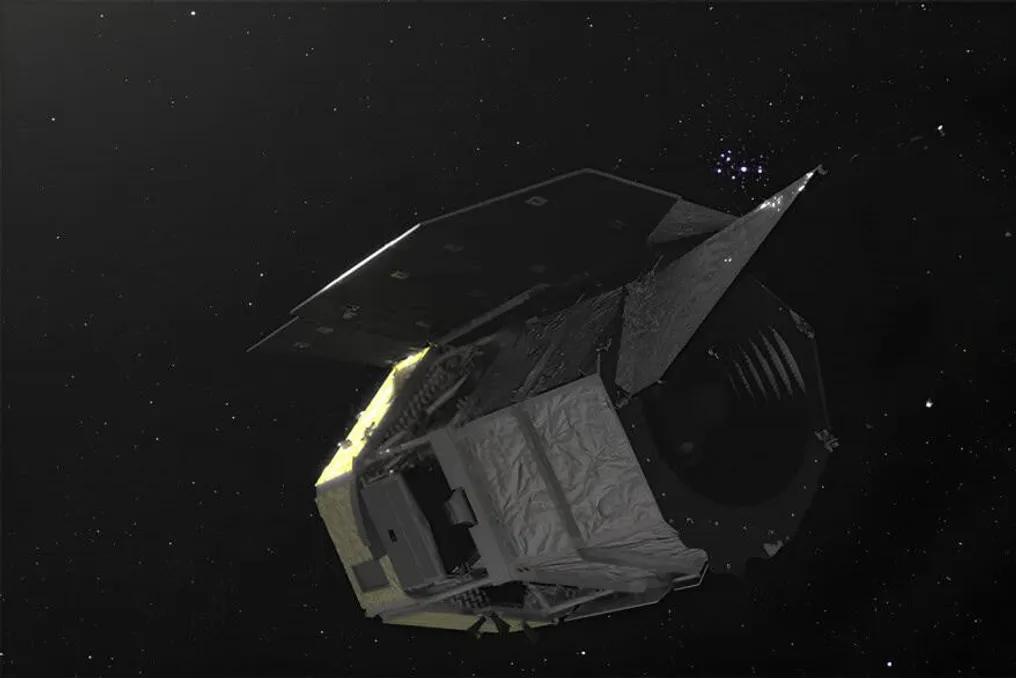
NASA is finalizing preparations for the launch of the Nancy Grace Roman Space Telescope, an innovative observatory designed to drastically alter the current understanding of the origin, evolution, and future of the cosmos.

The core of this initiative addresses an ancient question: whether humanity is alone in the Universe or if it simply lacked the appropriate tools to search for other beings. The answer to this inquiry may be revealed starting Sunday, August 30, 2026, the scheduled date for Roman's deployment into space to begin mapping.

The concept of the telescope dates back more than a decade, motivated by the need to overcome the limitations of existing observatories. However, the roots of the project are even older, linked to the pioneering work of an astronomer who questioned her own role in history.

Nancy Grace Roman, an astronomer (1925–2018), stated: 'It is difficult to say how history will view my achievements. People are generally not very interested in what kicks things off, so I am not sure if they will have much idea of my role.' As NASA's first chief astronomer, she was instrumental in persuading the US government and the scientific community about the feasibility of putting telescopes in space, earning the nickname 'Mother of Hubble.' Years later, NASA honored this legacy by naming the observatory with the potential to revolutionize astronomy.

This colossal project is led by the Goddard Space Flight Center, in collaboration with the Jet Propulsion Laboratory (JPL) and the Space Telescope Science Institute (STScI). This international cooperation involves engineers, astrophysicists, and programmers to ensure the perfect functioning of the observatory's complex engineering in the harsh space environment.

In recent weeks, the telescope structure underwent rigorous space qualification tests. Engineers tested the equipment by simulating the intense vibrations and mechanical forces experienced during the initial moments of rocket launch. Additionally, acoustic tests were conducted, exposing the system to noise comparable to the roar of engines during takeoff, and thermal vacuum chamber tests were performed to verify resistance to extreme temperature variations in deep space.

With technical qualification successfully completed, the telescope is ready for its journey. Its launch will take place at the Kennedy Space Center in Florida, using a SpaceX Falcon Heavy rocket, destined for the orbit established by NASA.

After launch, a meticulously calculated orbital transit begins. Roman's target, as specified by NASA, is Lagrange Point 2 (L2), a region of gravitational stability located about 1.5 million kilometers from Earth, which is equivalent to approximately four times the distance between the planet and the Moon.

The selection of L2 brings crucial operational and strategic benefits for high-precision astronomy. At this location, the natural alignment of the Sun, Earth, and the telescope allows the spacecraft's thermal shield to continuously block radiation and heat from the Sun and Earth, keeping the optical instruments at very low temperatures. Furthermore, L2 ensures an unobstructed view of the cosmos, allowing the observatory to point its instruments toward deep space without constant interference from the Earth's disk.

At L2, the Roman telescope will operate in the same region occupied by the James Webb Space Telescope, working in technical complementarity. Although Roman's primary mission is five years, NASA has planned fuel reserves to extend operations by another five years, depending on the condition of the onboard systems.

To understand the scientific impact of the Nancy Grace Roman Observatory, it is useful to compare it with its predecessors. While the Hubble Space Telescope functions like a high-precision microscope, capable of capturing fine details of a small section of the landscape, Roman acts as an ultra-high-definition wide-angle panoramic camera.

The secret to this transformative capability lies in the Wide Field Instrument (WFI), the telescope's central technological component. This is a monumental 300-megapixel sensor that operates in both visible light and near-infrared. The system also includes a slitless spectrograph, capable of analyzing the light emitted by distant bodies, identifying their physical and chemical characteristics.

Roman's mapping scale has no parallel in the history of space exploration, allowing for continuous monitoring of the sky. This paves the way for recording brief cosmic events that previously went unnoticed. The telescope will have the capacity to detect supernova explosions the moment they occur, record collisions between neutron stars, and capture fast radio bursts (FRBs), providing vital data on the Universe's most violent events.

The Nancy Grace Roman Telescope is prepared to radically change the inventory of exoplanets in the Milky Way, utilizing two complementary and highly sophisticated detection methodologies.

The first technique is direct imaging, performed through an advanced coronagraph. Historically, the search for planets outside the Solar System faced an almost insurmountable physical challenge: the intense brightness of the host star obscures orbiting planets, rendering them virtually invisible to direct photography. The coronagraph functions as an internal optical shield that blocks the direct light of the parent star, allowing the light reflected by surrounding planets to finally become visible in images.

During the Space View program, presented by astronomer Marcelo Zurita, astrobiologist Raíssa Estrela, a JPL researcher, detailed the function and importance of this technology. She explained: 'This technology we call a coronagraph is basically an instrument that blocks the light of the parent star. And why do we want to block this light? Because when we block the light of the parent star, we can see the light reflected by the planets inhabiting that star. The star's brightness is so strong that it overwhelms the entire image. So, we need to block it to see the light reflected by the planets orbiting. With this type of observatory, we will be able to perform imaging of the planetary system.'

Raíssa emphasized that this is the great differential of the equipment: 'It will stop being an indirect measurement, as is the case with what we do today with James Webb, to also have the actual imaging of the planets.'

With the coronagraph, Roman will primarily focus on obtaining direct images of giant gaseous planets the size of Jupiter. However, according to Raíssa, this approach will not be sufficient to locate smaller, Earth-like worlds.

In this scenario, the observatory will employ a second refined technique: gravitational microlensing. Based on Albert Einstein's Theory of General Relativity, gravitational microlensing occurs when the light from a distant star travels towards Earth and passes close to a massive body along the path, such as another star. The gravity of this intermediate star acts as a natural lens, bending spacetime and amplifying the light from the background star. If the lensing star has a planet around it, the planet's gravity will induce a small additional distortion in the light captured by astronomers.

Researcher Leandro de Almeida, from the Astrophysics Division of the National Institute for Space Research (INPE), elucidated the physical effect during his participation in Space View. According to the specialist, the phenomenon occurs because the gravity of a massive object distorts the fabric of space around it, modifying the apparent trajectory of the light coming from the background. He summarized: 'Light travels straight in curved spacetime. When light passes an object of great mass, the beam is deflected and changes course. The observer does not know this, so they will see the star in another position, which is the position we call the image.'

The combination of the coronagraph with gravitational microlensing will allow scientists to conduct a true demographic census of their galaxy, answering fundamental questions about the number of planets and the frequency of planetary architectures similar to ours.

In addition to the search for new worlds, the Roman telescope has central objectives regarding dark matter and dark energy. Together, these two components constitute approximately 95% of all the content of the Universe, yet they remain completely invisible to the human eye and conventional astronomical sensors.

Dark matter neither emits, absorbs, nor reflects light; its existence is detected only by the gravitational force it exerts on stars and galaxies, acting as an invisible cohesive substance that prevents galactic structures from dispersing while rotating. On the other hand, dark energy is a mysterious force that acts in the opposite direction, functioning as a repulsive pressure that causes the ever-accelerating expansion of the fabric of spacetime itself.

Despite decades of observations, the intrinsic nature of these two phenomena remains unknown. To unravel this hidden structure, the Roman telescope will use its vast field of view to photograph billions of galaxies over time and space, building a three-dimensional map of the cosmos with ten times greater precision than current surveys.

The observatory will analyze galactic distribution and measure redshift patterns, an index used to calculate the distance and speed at which distant objects are moving away from us. Furthermore, it will investigate Baryon Acoustic Oscillations, which are density waves left by the physical processes of the early Universe. These oscillations act as a natural cosmic ruler, allowing for the precise measurement of how the rate of the Universe's expansion varied over billions of years under the influence of dark energy.

Such measurements have the potential to redefine what science knows about the cosmos, as explained by Julie McEnery, senior scientist on the project, in a presentation video on the Goddard Space Flight Center channel. She stated: 'We are seeing indications that our standard model of the Universe is incorrect. Roman will be able to confirm this and provide the necessary data to explore new phenomena. It is extremely exciting. We probably won't confirm current models, but rather explore entirely new phenomena for the first time. It just so happens that we are the right mission, with the right capabilities, at the right time.'

Although Roman was not designed to directly analyze the atmosphere of rocky planets the size of Earth in search of biosignatures, its mission constitutes the essential foundation for making the discovery of a 'Earth 2.0' achievable.

The operational use of the coronagraph in the space environment and the population data collected by Roman will serve as a testing ground for the development of future astronomical missions. This applies to the future Habitable Worlds Observatory.

Popular