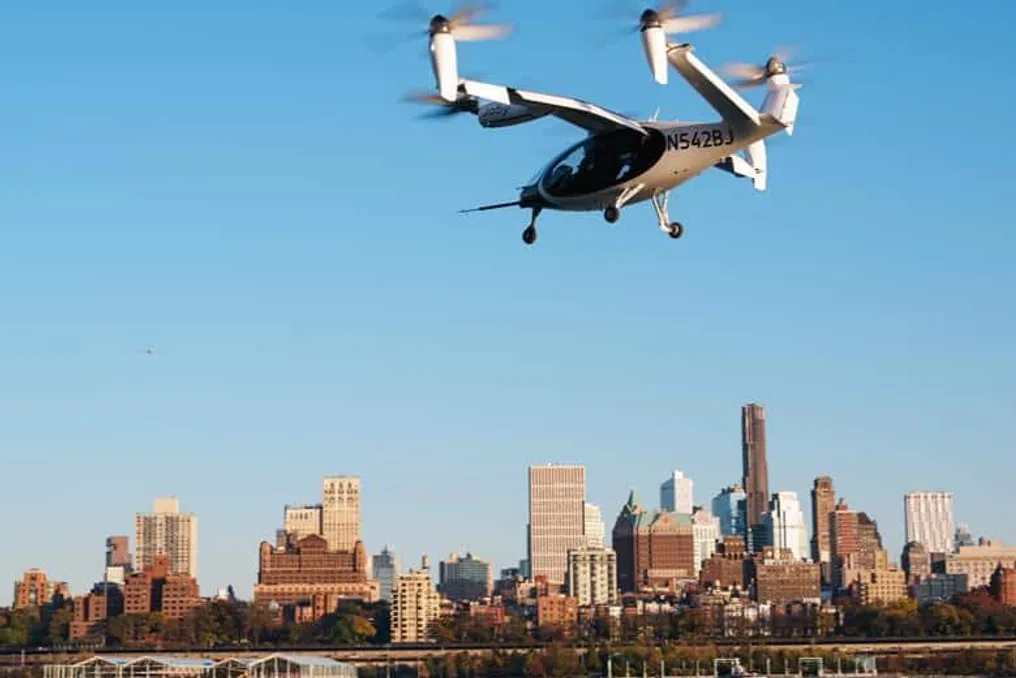
Electric air taxis are getting closer to realization in the United States. A new federal program started on Thursday (the 10th) aimed at testing the viability of electric, hybrid, and autonomous aircraft, and this is happening even before the relevant regulations are finalized.
The White House and the U.S. Federal Aviation Administration (FAA) initiative selected eight state-led projects earlier this year to conduct some of the first public tests of these aircraft.
First tests take place in Texas
The first of these tests begins now in Texas with the participation of three companies specializing in electric vertical takeoff and landing (eVTOL): Joby, Beta, and Wisk. Over the week, these companies will conduct test flights to demonstrate potential routes between cities and regional airports, including Dallas-Fort Worth International Airport.
At this stage, the vehicles will not carry passengers. Nevertheless, regulators are closely monitoring how the Texas air traffic control system handles the increased flow of aircraft.
For their part, the companies aim to show the federal government that their models are ready for type certification—a requirement necessary before any of them can commercially transport passengers in the US.
Joben Bewirt, founder and CEO of Joby Aviation, stated: 'I am incredibly excited about the potential of vertical takeoff and landing in Texas, a state with the infrastructure, specialized knowledge, and partnerships to help guide the next era of American aviation.'
Some of the companies have conducted experimental public flights previously. For example, Joby demonstrated a possible route between Lower Manhattan and John F. Kennedy International Airport (JFK) in New York earlier this year.
However, the tests in Texas will be the first official flights under the new White House pilot program. Other demonstrations are planned in New York, Utah, Pennsylvania, Louisiana, Florida, North Carolina, and New Mexico.
Obstacles on the path to development
Despite regulatory progress, lawsuits and technological limitations may continue to hinder the development of electric aviation. Joby and one of its competitors, Archer, are suing each other over allegations of trade secret theft and corporate espionage.
In addition to legal disputes, there are technical problems that could slow down the spread of air taxis. Among these obstacles are battery weight and sensor solutions used in the aircraft.