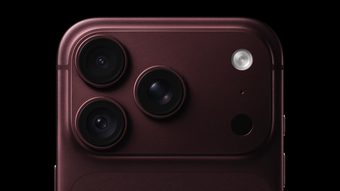
Apple has introduced a new technology designed to prove that a photograph was captured directly by the iPhone camera and has not undergone any subsequent alteration. This feature, called Apple Reference Image, was presented during the corporate event where the new Pro models and the unprecedented iPhone Duo, the brand's first foldable model, were launched this Wednesday, September 9th.
The company conceptualizes this system as a type of 'digital negative' of the image: at the exact moment of capture, the iPhone stores the data and generates a reference version that will be used to verify any future modifications.
This procedure involves recording the data of every pixel at the time of the photo. Initially, Apple Reference Image is an optional feature and is integrated into the hardware of the new iPhone 18 Pro, which are also equipped with a variable aperture mechanism in their main camera.
Apple Reference Image utilizes a redesigned sensor in the main camera. When the 'Reference' mode is activated, it collects the data of every pixel during capture and generates a digital signature. This record is then sent to Apple's Private Cloud Compute, which processes the data and builds the reference image.
With this functionality, the user can keep a copy that can later be compared with photos that may have been edited. This reference image will be displayed in the Photos app next to the finalized photograph.
Apple plans to extend this technology beyond its own ecosystem. As reported by the MacRumors portal, APIs will be made available in iOS 27, iPadOS 27, and macOS 27, allowing applications and social networks to access and validate these reference images.
This innovation arises in a context where subtle and realistic adjustments can be easily made using editing tools, including AI-based chatbots. Because of this, the industry has been seeking to establish standards to identify authentic photographs versus those that have been modified.
A common identification method currently involves metadata, such as those used by the C2PA standard. Although this metadata can record information about the origin and history of an image, it is vulnerable to being altered or removed when the file undergoes editing, compression, or sharing across various platforms.
Another strategy used is invisible watermarks inserted into images. An example of this is SynthID, developed by Google DeepMind, which alters the pixels of AI-generated images from the company to enable content identification.
Apple confirmed that it will integrate support for this system in an update scheduled for the end of this year. The technology will be applied to images that undergo certain processes on the company's devices. It should be noted that Apple already uses Gemini as one of the bases for its native AI systems.
It is important to note that Apple Reference Image will not have the same availability in all markets at launch. In China, the capture feature will not be offered initially due to local requirements regarding data processing and image encryption on external servers.
In the European Union, capturing reference images with hardware signatures will also initially be unavailable on the iPhone 18 Pro. However, users in this region will be able to process and view reference images generated by devices from other markets after updates to iOS 27, iPadOS 27, and macOS 27.