For many decades, developing economies have relied on Bretton Woods institutions, such as the IMF and the World Bank, for financial assistance. However, this dependence has rarely been smooth. Loans issued were often accompanied by strict conditions, structural adjustment programs, and a weakening of fiscal autonomy.
Proponents of austerity policies argue that such measures discipline wasteful governments, and in some cases, this was true. Nevertheless, the broader picture shows that these interventions often only stabilized short-term crises, leaving behind limited political autonomy, significant cuts to social spending, and only moderate long-term growth.
For many Global South countries, this experience was perceived more as an invasion than a partnership, as poverty and underdevelopment persisted despite decades of cooperation.
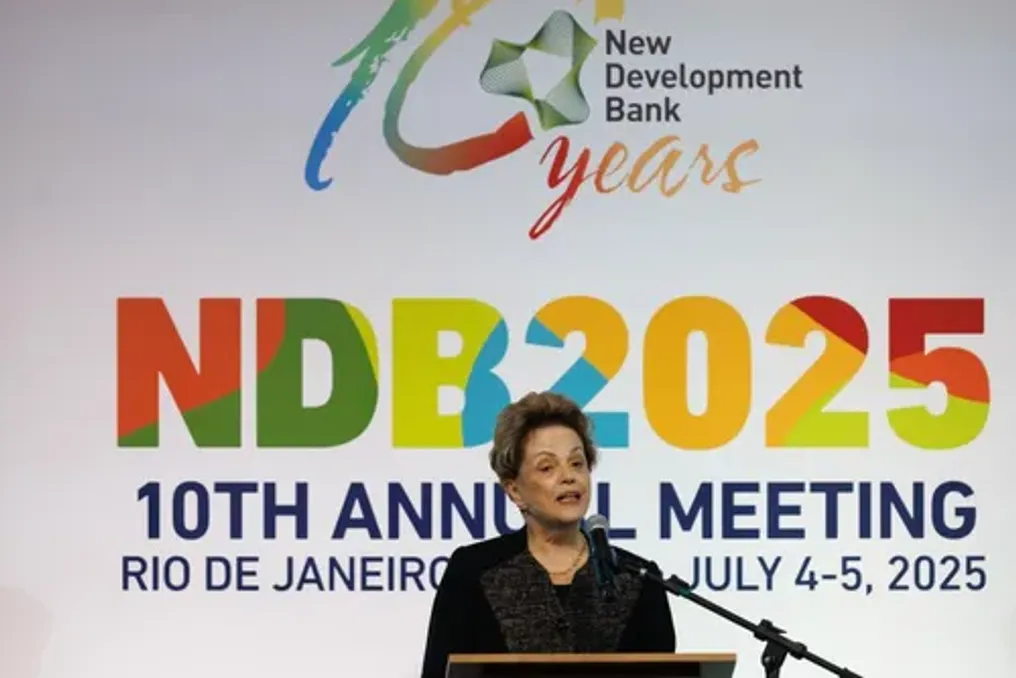
Against this backdrop, BRICS—the association of Brazil, Russia, India, China, and South Africa—has acted as a counterbalance. The bloc's financial arm, the New Development Bank (NDB), launched in 2014, represents a deliberate attempt to change the approach to development financing. Unlike the IMF and the World Bank, the NDB provides loans at competitive rates, excluding the harsh conditions characteristic of Western institutions.
The governance model is also significant: each member has an equal voting weight, ensuring that developing nations are viewed as partners, not as aid recipients.
South Africa's experience clearly demonstrates this difference. In August 2026, Pretoria signed two loan agreements totaling $405 million: $200 million for the construction of a new tertiary hospital in Limpopo and $205 million for the Magalies water supply scheme. The terms were highly favorable: a repayment period of 10 years, with a four-year grace period and lower interest rates.
Earlier that year, the NDB approved a $1 billion loan to modernize urban infrastructure in eight municipalities, including Johannesburg, Cape Town, and Tshwane. These funds are intended for water supply, sanitation, electricity, and waste management systems—areas where South Africa struggles to provide services.
For a government facing budgetary constraints, the NDB's terms mean not just cheaper borrowing, but strategic intervention in stabilizing urban infrastructure.
Egypt also serves as an example. Although Egypt is not a founding member of BRICS, Cairo received a $500 million loan in 2021 to support sustainable transport and energy projects. This loan had favorable interest terms, highlighting the NDB's mandate to provide affordable infrastructure financing for developing countries.
Egypt's participation shows the bank's expansion beyond its core members, increasing access to capital across Africa and offering countries an alternative to Western institutions that often impose politically sensitive conditions.
The implications for Africa are considerable. NDB loans are set close to global benchmark rates, making them cheaper than commercial debt. They focus on infrastructure, not short-term stabilization, directing funds toward projects with long-term developmental impact. Furthermore, they diversify funding sources, reducing dependence on Western-dominated institutions. By financing cross-border projects, the NDB can bring African economies closer together, fostering regional integration.
In addition to loans, BRICS is building a new financial architecture. The Contingent Reserve Arrangement, with a pool of $100 billion in currency reserves, provides members with a first line of defense against short-term balance of payments pressure. Discussions on de-dollarization, including the creation of a new international reserve currency, aim to expand bilateral trade settlement using national currencies and reduce reliance on the US dollar. These initiatives call into question global norms regarding who decides who receives financial assistance and under what terms.
Of course, challenges remain. Loans tied to global rates expose borrowers to currency volatility. Effective management is critical to ensuring productive use of funds; weak institutions can undermine achieved effects. Also, the role of the NDB, being an institution supported by BRICS, will inevitably be shaped by the changing geopolitical landscape.
Nevertheless, the risks do not diminish the significance of what is happening. For the first time in decades, developing countries have gained a credible alternative to the IMF and the World Bank—one that amplifies their voice, respects their autonomy, and focuses on their development priorities.
Recent loans to South Africa illustrate how the BRICS bank provides accessible and targeted financing to address infrastructure challenges. Egypt's experience shows that the benefits extend beyond the founders, offering African nations a new model for development financing. For Africa, the NDB is more than just another lender; it is a strategic alternative capable of redefining methods for financing economic growth in developing economies. By amplifying the voice of the Global South, BRICS is not only challenging the dominance of Western institutions but also democratizing global financial norms.