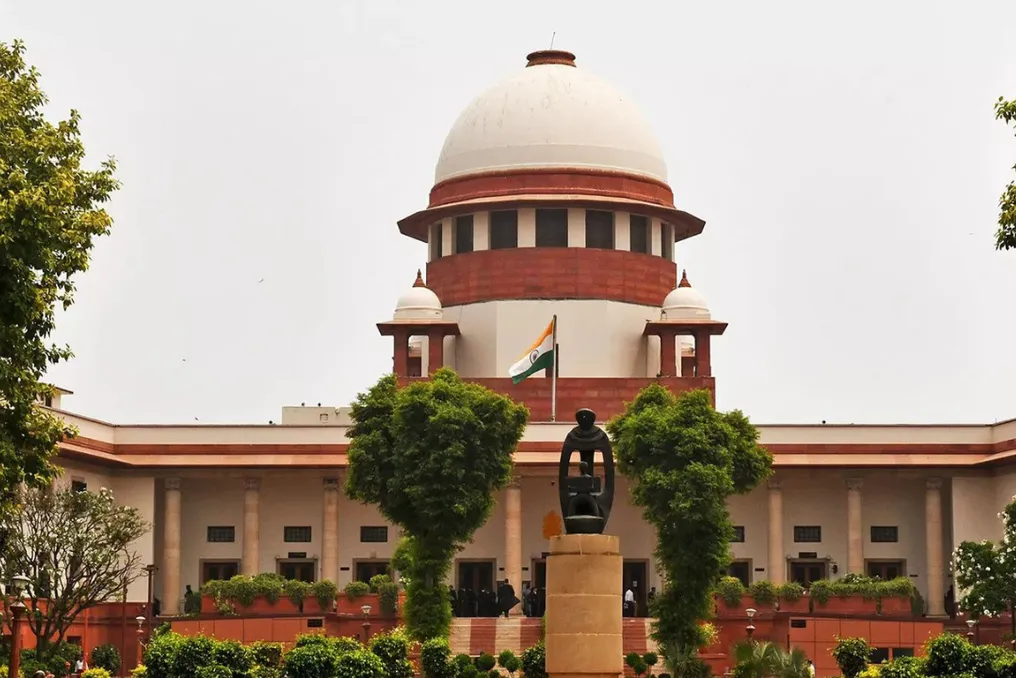
The Supreme Court has appealed to the Union government to consider lowering the threshold scores for the NEET-SS 2025 entrance examinations to avoid over 1800 vacant seats in super-specialized medical training, even after two rounds of consultations.
The judicial bench, comprising judges Pamidigantam Sri Narasimhi and Aloka Aradhe, stated that after examining the issue from various perspectives, they deem it necessary to reconsider the decision on lowering the percentile threshold. The Court noted that the situation is highly compelling, as a significant number of seats remain unfilled to date.
The bench directed the General Solicitor, Aishwarya Bati, to convey its concern to the Union Ministry of Health and request an appropriate decision, scheduling a hearing for September 17.
Previously, the Center informed the Supreme Court that following consultations with all stakeholders—the Ministry of Health, the Medical Council of India (MCI), and the National Medical Commission (NMC)—the decision was made not to lower the threshold scores this year. Aishwarya Bati presented the court with a one-page document explaining the government's decision, clarifying that in accordance with the Supreme Court's directives in the Kevin Joy case (2023), the MCI would conduct a 'special additional round' to fill vacant seats without lowering the percentile criteria.
However, advocate Rashmi Nandakumar, representing some applicants, informed the court that if the percentage score is not lowered, about 2000 seats in colleges will remain empty. She emphasized that authorities previously conducted special, final, and additional rounds, as well as easing eligibility criteria whenever there was a significant shortage of seats in super-specialization, and insisted on holding at least such a round after the completion of the main counseling process.
Senior Advisor P. Wilson, speaking on behalf of service doctors in Tamil Nadu, told the court that the 1800 vacant seats include specialties such as cardiology, neurosurgery, and oncology—disciplines that train doctors to treat the country's most complex diseases. He warned that allowing these seats to go unfilled would lead to a loss of public investment and exacerbate the shortage of qualified specialists.
Doctors told TOI that they are tired of waiting for admission. The eligibility check for super-specialization was completed in December 2025, and results were announced a month later. Despite two rounds of counseling being completed, over 1800 seats, including those in cardiology, cardiothoracic surgery, neurosurgery, and hematology, remain vacant. One doctor, Dr. R. Satish, questioned: 'How can so many doctors, physicists, and surgeons be kept waiting for so long?'
He also noted that, unlike MBBS or sometimes PG programs, most candidates for super-specialization are breadwinners. Many resign in February while waiting for admission but do not secure the desired seat.
Experts mentioned that in previous years, the government had lowered the qualification threshold to zero after regular counseling rounds. Dr. K. Senthil, a former member of the Post Graduate Council of the National Medical Commission, explained that this allowed doctors who passed the exam to apply for vacant seats, becoming eligible even with minimal or negative scores. He added that such an easing is an immediate way to prevent the wastage of seats without addressing broader issues such as poor employment prospects after graduation, modest salaries, difficult working conditions, and career uncertainty.