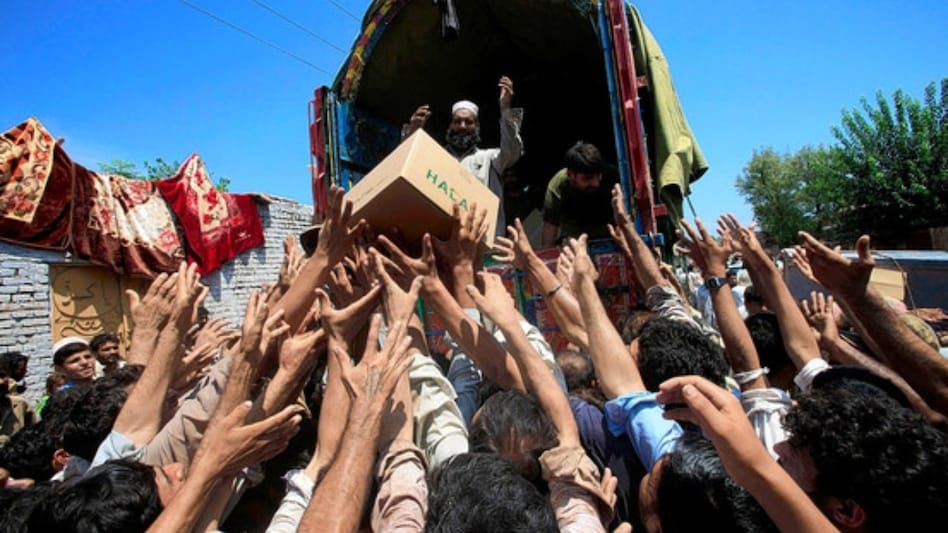
The situation in neighboring India's country, Pakistan, is extremely difficult as ordinary citizens suffer from inflation. The constantly escalating wave of price increases is hitting the population. In one day, Pakistanis faced a double blow: first, the government significantly raised the prices of gasoline and diesel fuel, and then the prices of bread also increased.
Local residents note that the government is not taking necessary measures to control prices.
In Pakistan, the population is facing successive spikes in inflation due to the continuous increase in the cost of electricity, gas, raw materials, and transportation expenses. The latest blow hit breakfast, as the price of bread sharply increased for the second time this year. According to a report by Pakistani media Don, the price of bread rose by 8–9 percent. Earlier this year in April, bread prices had risen for the first time in three years.
Following the price hike, the cost of a standard, medium, and small loaf of plain bread in Pakistan amounted to 270, 200, and 140 Pakistani rupees, respectively. Previously, large buns cost 240 rupees, medium ones 180 rupees, and small ones 130 rupees. The price of whole wheat bread was raised from 180 to 200 rupees.
The increase in bread prices has made breakfast more expensive for Pakistanis and also increases the cost of burgers at fast-food establishments. Specifically, a pack of four burger buns now sells for 140 Pakistani rupees instead of the previous 130 rupees. Prices for small and large packs of cookies have also risen from 90 to 100 rupees and from 170 to 180 rupees, respectively.
The price of flour is also constantly rising over the last few months, leading to bread becoming unaffordable for residents of Pakistan. An analysis of weekly inflation figures for the week ending September 3 showed an increase in the average national price for both a 10–20 kg bag of flour and a one-kilogram packet of finely ground flour. If a 20 kg bag of flour cost between 1,810 and 2,740 rupees at the end of March 2026, its current cost has reached between 2,200 and 3,200 rupees.
Representatives of traders and retailers in Pakistan state that the government is not taking any decisive action to stabilize the prices of various types of flour, despite the rise in open market wheat prices. They point out that the government failed to make a timely decision to import 1 million tons of wheat to stabilize the market, which led to instability in wheat and flour prices in the country.
According to a report by Express Tribune, the government delivered another blow to the population of Pakistan by raising fuel prices. On September 10, the price of gasoline increased by 3.40 Pakistani rupees per liter, and high-octane diesel (HSD) by 6.72 rupees per liter. Following this, the price of gasoline in Pakistan reached 367.75 rupees per liter, and high-octane diesel reached 392.67 rupees. Previously, on September 9, the prices of gasoline and HSD were increased by 5.58 and 4.18 rupees per liter, respectively.
It should be noted that on July 17, the government announced a new pricing system according to which fuel prices in Pakistan are adjusted daily. Before this change, gasoline and diesel prices changed every fifteen days, and then weekly. Against the backdrop of rising global crude oil prices, the government of Shehbaz Sharif continues to unprecedentedly raise the prices of gasoline and diesel fuel.