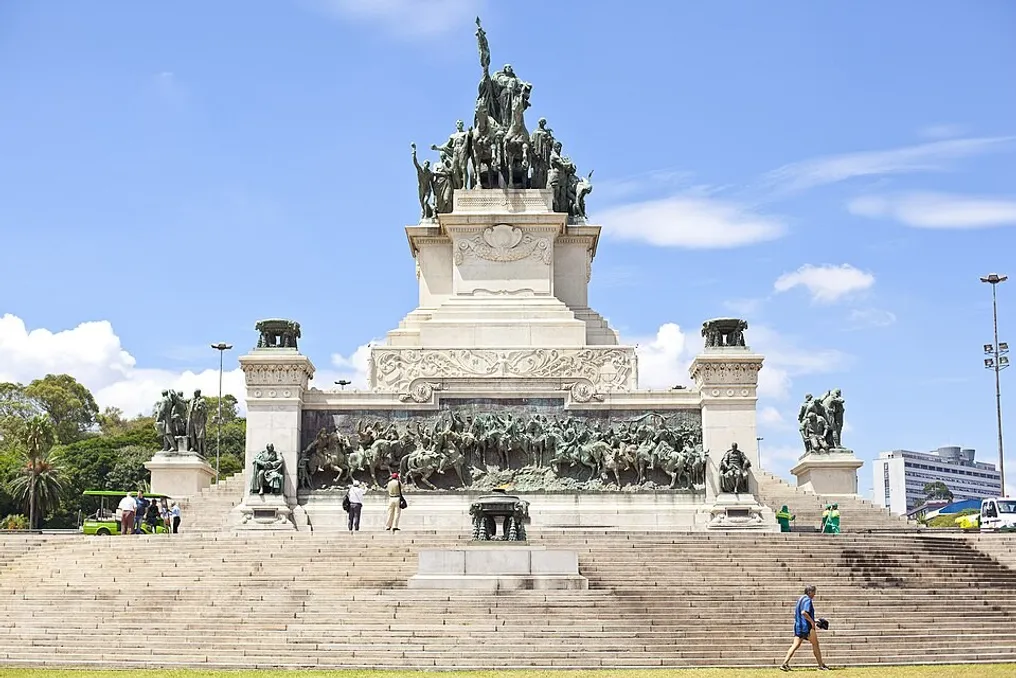
The Imperial Crypt, located in Parque da Independência, resumed receiving visitors on Monday, the 7th, after being closed for almost four years. This site, situated in the Ipiranga neighborhood in the south zone of São Paulo, is located in the basement of the Monument to Independence and houses the remains of Dom Pedro I, as well as the empresses Maria Leopoldina and Dona Amélia.
The reopening coincided with Independence Day and concluded a renovation process that cost R$5.3 million. The implemented improvements included enhancements to infrastructure and accessibility, as well as interventions in both the Monument to Independence and the Casa do Grito within the park.
Regular visits are available from Tuesday to Sunday, from 9 am to 5 pm, and admission is free. The crypt had been closed since October 2022 and underwent an extensive renovation aimed at solving infiltration problems and improving visiting conditions.
Among the improvements made, notable additions include new restrooms, accessibility features such as ramps and a lift platform, and the installation of a modern climate control system. The sarcophagus area was also restored, with bronze elements near the tombs undergoing restoration, and areas damaged by humidity were repaired. Additionally, the ceiling received yellow marble finishing, and preventive measures against future damage were established.
Another important change concerns access to the crypt: the stairs now have a covering that protects the path from rain and aids in preserving the area. Throughout the construction period, the remains of Dom Pedro I, Leopoldina, and Amélia remained intact in the crypt.
Exhibition and History of the Imperial Crypt
Upon descending into the Imperial Crypt, visitors first encounter the exhibition titled Representations of the Nation: The Monument to Independence and the Imperial Crypt. This exhibit is curated by historian Marly Rodrigues and aims to contextualize the creation of these two structures and their connection to the memory of Independence.
The historical trajectory begins in 1922, the year Brazil celebrated a century of its political emancipation, and São Paulo inaugurated the Monument to Independence as part of the festivities. In 1952, the Imperial Crypt was inaugurated inside the monument, preceding preparations for São Paulo's fourth centenary, and was conceived to house the remains of members of the imperial family.
Maria Leopoldina was the first to occupy the space. She died in 1826, and her remains, which were buried in Rio de Janeiro, were transferred to São Paulo with the construction of the crypt. Dom Pedro I was only transferred to Ipiranga two decades later. After renouncing the Brazilian throne in 1831, he returned to Portugal and died in 1834. His transfer to Brazil occurred in 1972, during the celebrations of the 150th anniversary of Independence.
Dona Amélia, Dom Pedro I's second wife, was the last to be interred there. She was buried in the Panteão dos Braganças in Lisbon, and her remains were brought to the Imperial Crypt in 1982 to rest beside her husband.
Visiting Parque da Independência
The Ipiranga Museum, the Monument to Independence, the Imperial Crypt, and the Casa do Grito offer distinct views on the Independence of Brazil and can be explored in a single visit to Parque da Independência. At the Casa do Grito, for example, there is the exhibition From Independence to the Cry: history of a wattle-and-daub house, which details the property's history and its connection to Pedro Américo's work Independence or Death. This location has also undergone structural repairs, new painting, and improvements to external access. Visiting the Casa do Grito is free and takes place from Tuesday to Sunday, from 9 am to 5 pm.