When leaving Johannesburg and traveling along the N4 highway, travelers often focus on the remaining distance to the border. In this context, the town of Zeerust appears, serving as a place to replenish fuel supplies and purchase necessary provisions for the journey. However, Marico Valley offers much more than just a quick stop at a gas station.
The landscape around Zeerust is shaped by rivers, cattle farms, bushveld, and a long history of movement between modern South Africa and Botswana. Outside the town are the remains of one of the largest Tswana settlements from the early 19th century, springs feeding permanent rivers, and stories related to Hermann Charles Bosman and the liberation route once traveled by exiled activists.
Here are seven reasons to include Zeerust and the wider Marico Valley in your trip.
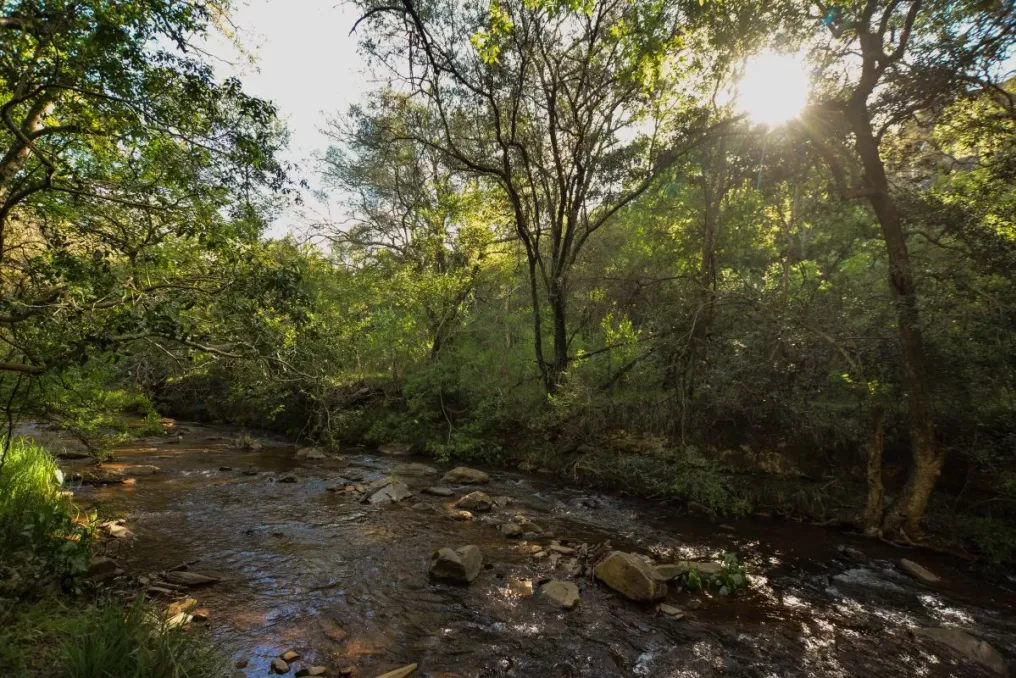
Although much of the landscape visible from the N4 highway appears to be typical North West bushveld, the river systems beneath and around it have shaped this region over centuries. The Marico, Molopo, and Molemane rivers originate in the dolomitic aquifer south of Zeerust and Grott Marico. Their sources include dolomitic 'eyes'—natural springs where groundwater emerges to the surface. The Marico River eventually becomes part of the Limpopo system, and further north, it also forms the border between South Africa and Botswana.
It is important to remember that you are not just traveling through an inland landscape; you are passing through a water-rich geological system that becomes increasingly significant as the scenery dries out towards Botswana. This gives your journey a completely new character.
The ruins of Kaditswene, the former capital of the Bahurutshe people, are among the most significant heritage sites in Marico. In the early 1800s, it was one of Botswana's largest settlements in South Africa, estimated to have had between 6,000 and 20,000 inhabitants. Fragments of this history can still be found in the landscape: stone walls, house foundations, ash heaps, and traces of metalworking, including remnants of furnaces and manufactured items. The Bahurutshe were skilled in mining and smelting iron and copper.
Being among these ruins changes the perception of Marico. Long before modern borders divided South Africa and Botswana, this space was an arena of political, economic, and cultural life. Tours of the ruins are conducted by prior arrangement, so access should be organized well in advance.
The feature that explains the existence of Marico is the Marico Eye. This spring is one of the dolomitic 'eyes' feeding the region's river systems and serves as the source of the permanent Marico River. There is something remarkable about finding such an abundant water source in an otherwise arid part of the country. The landscape may look dusty and sun-scorched, but beneath it lies an aquifer feeding clean, perennial springs. This river is not just a beautiful flow through the landscape; it profoundly influences the history of Marico Valley.
Thanks to Hermann Charles Bosman, Marico Valley has acquired its own literary mythology. In 1926, Bosman taught at Himviberg School in the valley, and the landscape, as well as the characters he met there, became the basis for many of his most famous works. Today, the Hermann Charles Bosman Museum in Grott Marico features an exact replica of the school where he taught. His presence also explains why Grott Marico became known as 'Bosmanland.' These stories have given a literary form to a place that could easily remain just a point on the map between Rustenburg and Zeerust. For readers who enjoy traveling through books, this is one of the most valuable detours in the region.
If you are one of those travelers who seeks to truly immerse themselves in the culture of the place, you might try mampwer in Marico. Traditional fruit distillation is part of the region's rural identity, and the Marico tourism network continues to promote visits to small mampwer producers and tastings as part of the area's cultural tourism. Local offerings include special mampwer tours combining tastings with river trips, farm lunches, and visits to historical sites. It is important to understand that this is not just a novelty of tasting a strong local drink; it is an opportunity to better understand the surrounding history: gardens, farms, old recipes, and traditions passed down through generations. Drivers should, however, postpone tasting until they are no longer operating a vehicle.
During the apartheid era, the Zeerust and Lehurutshe area became an important route for activists heading to Botswana and into exile. In June 1963, about 52 Umkhonto we Sizwe recruits heading to Botswana were intercepted by authorities in the Grott Marico and Zeerust area. These arrests entered the history of the region's liberation movement, but the story does not end there. As early as the 1950s, the wider Zeerust and Lehurutshe area was a center of resistance against apartheid pass laws. Women in Dinokane and Gopane played a significant role in protests, and Kgosi Abram Ramotsere Moiloa became an important figure of resistance, refusing to enforce pass laws against Khutshe women.
Today, this area is part of historical routes designed to introduce visitors to this history, including sites such as the ruins of Kaditswene and the ruins of Livingstone Mission Station. During the fight against apartheid, crossing the border into Botswana could mean escape, exile, and the opportunity to continue the struggle outside of South Africa. It is worth remembering this before crossing the border.
The town is a regional service center and a logical place to resupply before further travel into Botswana. The N4 highway connects Zeerust to the Skillpadjesk border post, which is officially registered by the South African Revenue Service as a customs crossing between South Africa and Botswana. However, the practicality of Zeerust is only half the story. This is where the character of your journey changes.
In your rearview mirror, you see the more densely populated areas of Gauteng and the mining belt around Rustenburg. Ahead of you is Botswana. You are surrounded by dry farmland, cattle grazing lands, old villages, and a landscape whose history crosses the modern border. Set aside some afternoon time, or even a night. Take a detour to Grott Marico. Walk along the river. Arrange a visit to Kaditswene. Find the Marico Spring. Then continue north.
When Botswana is your final destination, Zeerust is easy to ignore. But if you remove the urgency of the border crossing, Marico Valley begins to unfold as a destination in itself. Here are rivers originating from dolomitic springs, ancient Tswana settlements, stories shaped by Hermann Charles Bosman, and histories stretching from early settlements to the anti-apartheid struggle. Therefore, before crossing the border, dedicate some time to the valley. Get off the N4, sit by the water, or linger over some history. Botswana will still be there when you arrive, but you might discover that Marico Valley was never just a place to drive through.