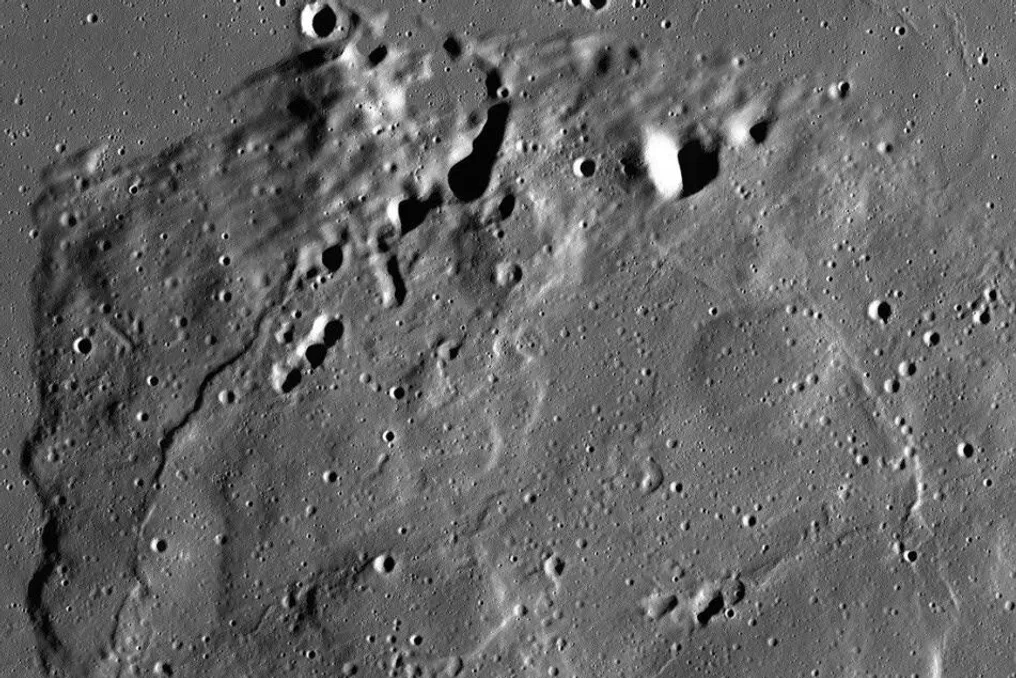
NASA and IBM collaborated on the launch of an open-source artificial intelligence model designed to analyze the lunar surface. This system was trained using data from four distinct missions, allowing it to identify potential ice deposits, map craters, and assist in the study of volcanic formations.
The development of this tool aims to accelerate investigations based on decades of lunar observations and support plans for establishing a lasting human presence on the satellite. One of the primary focuses of this project is locating water and other crucial resources for future expeditions.
The model, named NASA-IBM Lunar Foundation Model, received its training primarily with information captured by the Lunar Reconnaissance Orbiter (LRO) over 17 years. The dataset covers approximately two million images, including over one million one-meter resolution camera records and nearly 964 thousand multispectral images with 100-meter resolution.
Additionally, data from the GRAIL, Lunar Prospector, and SELENE missions, conducted by the Japanese space agency JAXA, were incorporated. In total, the training involves more than 30 layers of data collected by nine instruments from four missions.
Although NASA has dedicated decades to creating a vast scientific record of the Moon, the data collection process is only one step; it is necessary to make this data more accessible and usable for scientists.
Potential applications of the model
The model already processes a large volume of information during training and has the capacity for subsequent adaptation to specific tasks, even with smaller volumes of classified data. Among the foreseen uses are the permanently shadowed polar regions. These areas are of great interest because they maintain temperatures low enough to preserve ice for billions of years.
Discovering locations where this ice may be stable, whether on the surface or underground, contributes both to understanding lunar history and to assessing exploration resources. Beyond scientific research, the presence of ice signals the existence of water and oxygen, substances considered vital for establishing a future lunar base and for producing propellant for trips to Mars.
Craters also play a significant role, as each is the result of an impact, and their characteristics and quantity help scientists determine the age of the lunar surface and reconstruct the chronology of the Solar System.
In tests conducted, the model demonstrated the ability to identify lunar surface features with up to 23% greater accuracy compared to conventional methods, as reported by NASA and IBM. This improvement was particularly notable in estimating the stability of polar ice.
The NASA-IBM Lunar Foundation Model has been made public on the Hugging Face platform, and its complete code is available on GitHub. Both NASA and IBM have also made machine learning-ready datasets and integrated test collections available via TerraTorch.