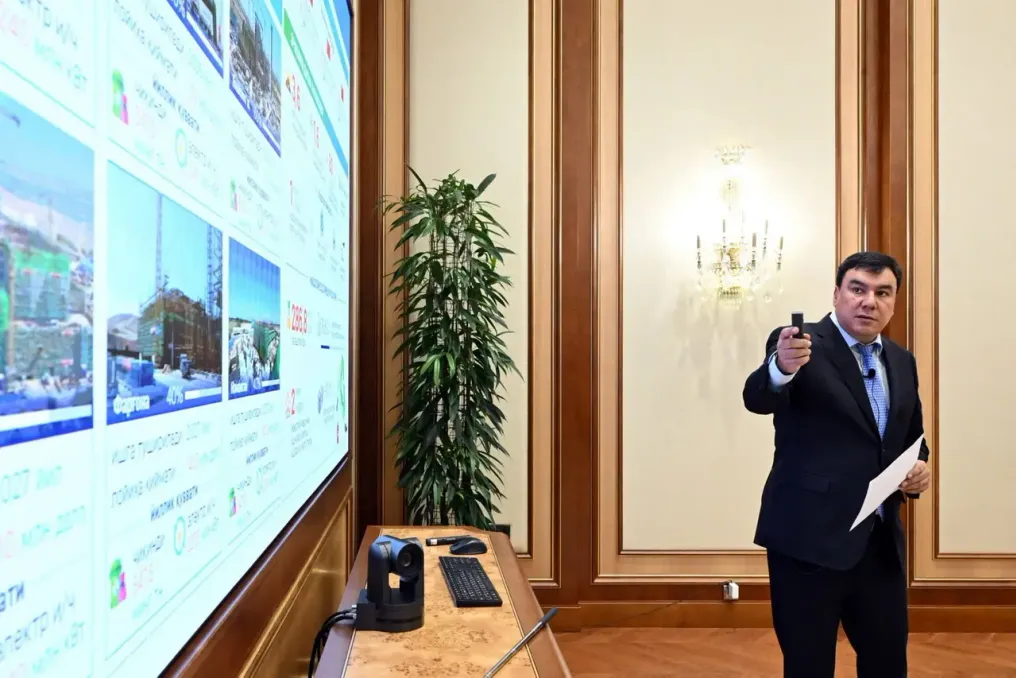
Uzbekistan invests $933 million in waste processing projects
Read more
UzDaily
uzdaily.uz

Uzbekistan invests $933 million in waste processing projects

President Shavkat Mirziyoyev reviewed a presentation dedicated to investment projects aimed at improving waste management, recycling, and electricity generation.

Six projects are planned for transforming waste into energy in Uzbekistan between 2026 and 2027, which will utilize waste incineration to generate electricity. The total cost of these projects is $933 million USD, and they are being implemented in partnership with Chinese companies.

As of September 1st, $286.8 million USD has already been invested in these projects. Additionally, domestic goods and services worth $76.6 million have been procured, and about 2,000 local workers participated in the construction.

These projects will cover the regions of Kashkadarya, Samarkand, Tashkent, Andijan, Fergana, and Namangan. Factories in the Kashkadarya and Samarkand regions will begin operations in 2026, while facilities in the other regions are scheduled to be commissioned in 2027.

Once all six facilities reach full capacity, they will be able to process 3.6 million tons of municipal solid waste annually and produce 1.6 billion kWh of electricity. This is expected to help Uzbekistan gradually transition to a 'zero waste' principle, reduce the burden on landfills, and improve the environmental situation.

The presentation also introduced five additional promising waste-to-energy projects proposed by companies from Singapore, South Korea, and China. The total estimated value of these initiatives reaches $625 million USD.

The new projects are planned for the regions of Karakalpakstan, Jizzakh, Surkhandarya, Bukhara, and Khorezm. Their implementation will allow for the annual processing of 1.9 million tons of municipal solid waste and the generation of 635 million kWh of electricity. The creation of 500 jobs, a reduction in natural gas consumption by 158 million cubic meters annually, and a decrease in greenhouse gas emissions by 316,000 tons are also anticipated.

During the discussion, a comparative analysis was conducted on the costs of building landfills versus waste incineration plants, land requirements, budget revenues, and environmental efficiency. Participants also reviewed measures to minimize the impact of waste incineration on the environment, based on international experience and investor commitments.

Mirziyoyev instructed officials to accelerate the implementation of investment projects, ensure the necessary infrastructure and organizational conditions for investors, increase the level of localization, and strengthen the training of qualified specialists for this sector. A task was also set to create a reserve of personnel for waste incineration plants.

In collaboration with Green University, Samarkand State University, and Karshi State University, it is planned to train a reserve of 1,000 specialists.
Similar stories

Indorama plans new investments in key sectors of Uzbekistan
Read more
uzdaily.uz

Indorama plans new investments in key sectors of Uzbekistan

Uzbekistan Deputy Prime Minister Jamshid Khojaev announced in his LinkedIn post that the company Indorama, which has been operating in Uzbekistan for 15 years, intends to begin implementing new projects in the textile, chemical, and agricultural sectors, as well as in mineral resource development.

According to Khojaev, Indorama has already invested over one billion US dollars in Uzbekistan. He noted that the company has transformed from a major investor into a long-term industrial partner whose activities cover the textile, chemical, and agrarian spheres.

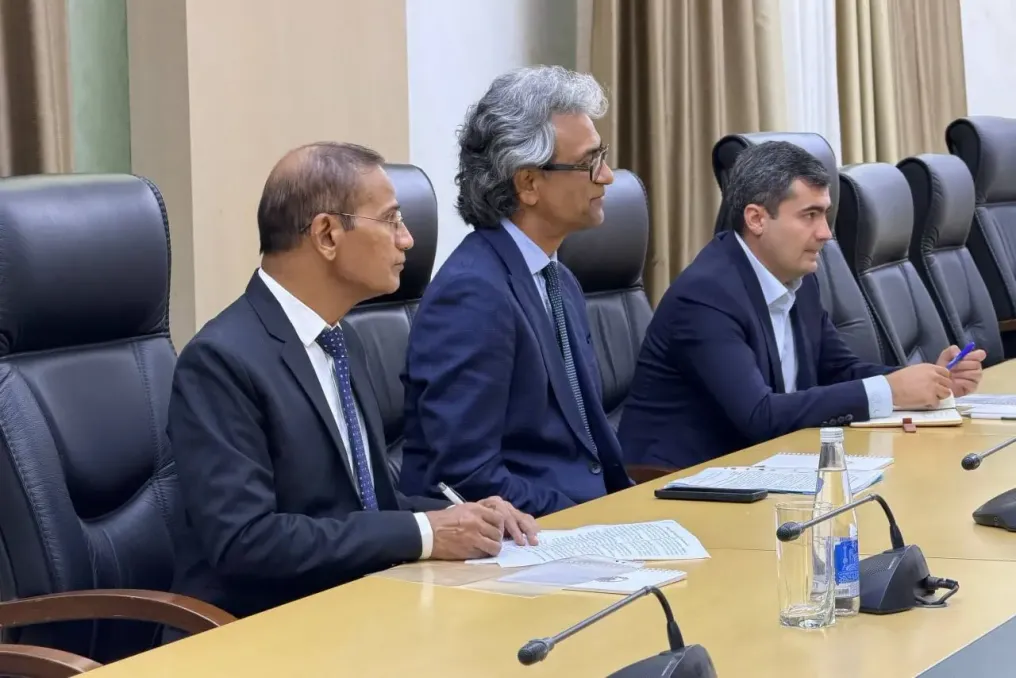
During a meeting with Parakesh Kejriwal, Chairman of the Supervisory Board of Indorama Corporation, the parties discussed further cooperation and preparatory work for new initiatives. Priority areas have been defined as processing high value-added products, fertilizer production, as well as agricultural processing and mineral resource development.

The creation of a new textile complex in the Kashkadarya region is planned. Additionally, the possibility of developing the raw material base for fertilizer production and a comprehensive agro-industrial complex is being discussed. Another area of cooperation will be the exploration of ilmenite deposits in Karakalpakstan.

Khojaev emphasized that the expansion of large investors' activities should include not only an increase in investment volumes. He named deepening production localization, forming new production chains, introducing technologies, creating jobs, and increasing the output of high value-added products as important results.

The Deputy Prime Minister stated that this approach would form the basis for the next stage of Uzbekistan's long-term partnership with Indorama.

Industrial production in Uzbekistan grew by 7.9% from January to July 2026
Read more
uzdaily.uz

Industrial production in Uzbekistan grew by 7.9% from January to July 2026

According to data from the National Statistical Committee of Uzbekistan, industrial production in Uzbekistan from January to July 2026 amounted to 795.4 trillion UZS, demonstrating a growth of 7.9% compared to the same period last year.

As of August 1, 2026, there were 63,900 industrial enterprises operating in the republic. The food production sector accounted for the largest share, providing 20.1% of the total volume, covering 12,800 enterprises. Other major sectors include non-metallic mineral products production (14.0% with 9,000 enterprises), clothing production (10.2% with 6,500 enterprises), scrap metal products (8.2% with 5,200 enterprises), furniture (6.8% with 4,400 enterprises), textiles (6.1% with 3,900 enterprises), and rubber and plastic products (4.6% with 3,000 enterprises).

Structure of Industrial Production

From the perspective of industrial structure, manufacturing produced the largest volume—690.7 trillion UZS, accounting for 86.8% of the total amount, while the physical volume index reached 109.0%. Mineral extraction and quarrying contributed 50.2 trillion UZS (6.3%), and electricity, gas, steam, and air conditioning production amounted to 50.4 trillion UZS (6.4%, index 108.1%). Water supply, sewerage, and waste collection and disposal brought in 4.1 trillion UZS (0.5%, index 108.4%).

Regional Indicators and GDP per Capita

At the regional level, the largest production volume was recorded in Navoi region (182.7 trillion UZS), followed by Tashkent city (135.4 trillion UZS) and Tashkent region (124.8 trillion UZS). Jizzakh region demonstrated the largest growth in the physical volume index (112.7%), followed by Samarkand region (109.7%) and Andijan region (109.0%). The overall national growth of the physical volume index reached 107.9%.

Industrial production per capita across the country reached 20.7 million UZS, an increase compared to 15.3 million UZS in 2025, 11.8 million UZS in 2024, 9.5 million UZS in 2023, and 8.3 million UZS in 2022. Figures above the national average were noted in Navoi region (163.8 million UZS per capita), Tashkent city (42.4 million UZS), and Tashkent region (39.3 million UZS). The highest growth rates per capita were recorded in Jizzakh region (110.6%), Samarkand region (107.7%), and Andijan region (107.2%), exceeding the average national growth rate of 106.0%.

Production of Raw Goods

In the field of commodity production, large industrial enterprises produced 21.6 billion cubic meters of natural gas, 368,700 tons of crude oil, 3.5 million tons of coal, 731,900 tons of gasoline, 683,400 tons of diesel fuel, 12.1 million tons of Portland cement, 478,200 tons of yarn, and 841,100 tons of soft wheat and spelt flour during the period from January to July 2026. Gasoline output increased from 672,100 tons in the previous year, diesel fuel from 673,700 tons, and Portland cement from 12.0 million tons. Conversely, natural gas extraction decreased from 25.4 billion cubic meters, crude oil from 378,800 tons, and gas condensate from 667,900 to 567,500 tons.

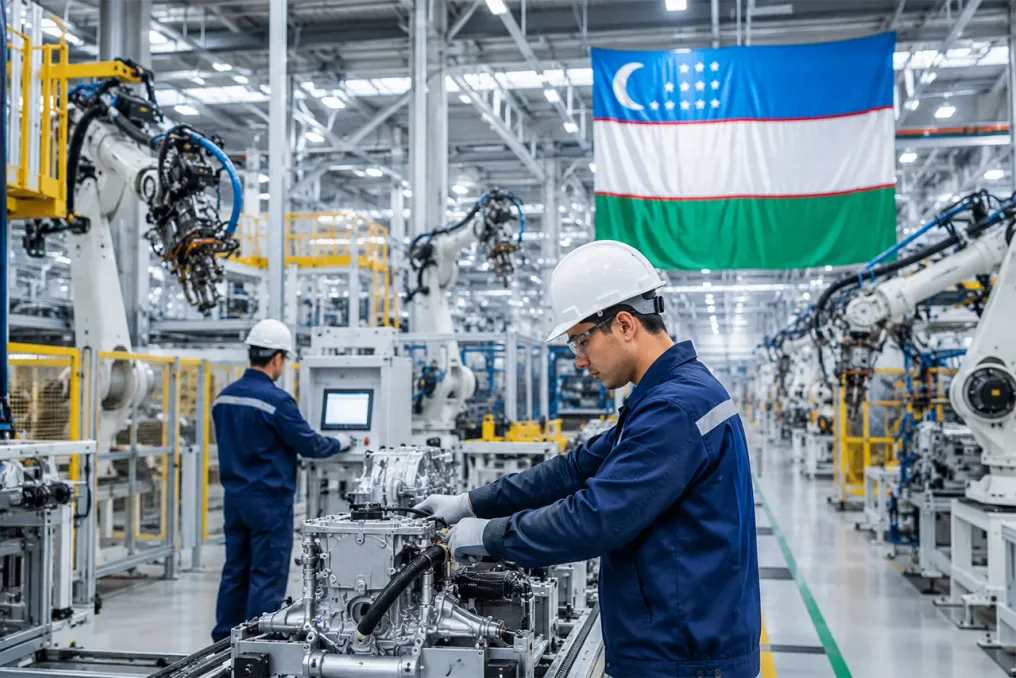
The volume of automobile engine production was 137,600 units compared to 131,800 units the previous year. Within the manufacturing industry, food, non-alcoholic, and tobacco products accounted for the largest share—19.1%. Textiles, clothing, leather, and related goods made up 12.4%, scrap metal products, electrical equipment, machinery, motor vehicles, and other equipment accounted for 15.1%, and chemical products, rubber, and plastic products accounted for 6.4%.

Automobile production reached 263,700 passenger cars over the seven-month period, which is more than 241,100 units the previous year, as well as 3,200 trucks compared to 2,600 trucks last year. Among passenger car models, Cobalt led with 91,100 units, followed by Damas (47,500), Tracker (25,800), and Onix (20,400). BYD model production increased from 8,600 to 17,800 units, and KIA output increased from 14,400 to 17,100 units. Production of the Chevrolet Damas Move model, launched in April 2026, reached 932 units.

In the energy sector, total electricity production amounted to 52.5 billion kWh, which is 6.4% higher compared to last year. Large enterprises produced 35.3 billion kWh, lower than previous levels, while small businesses expanded output to 17.3 billion kWh compared to 12.8 billion kWh the previous year. Thermal energy generation by large enterprises decreased by 18.3% to 10.1 thousand Gcal. During the reporting period, gas was not produced through underground coal gasification.

In the water supply and waste management sector, wastewater collection and treatment services generated 444.6 billion UZS compared to 392.5 billion UZS the previous year, and pumping services from septic tanks and cesspools reached 241.9 million UZS. The volume of textile waste increased to 15,600 tons from 14,500 tons in the previous year.

Popular