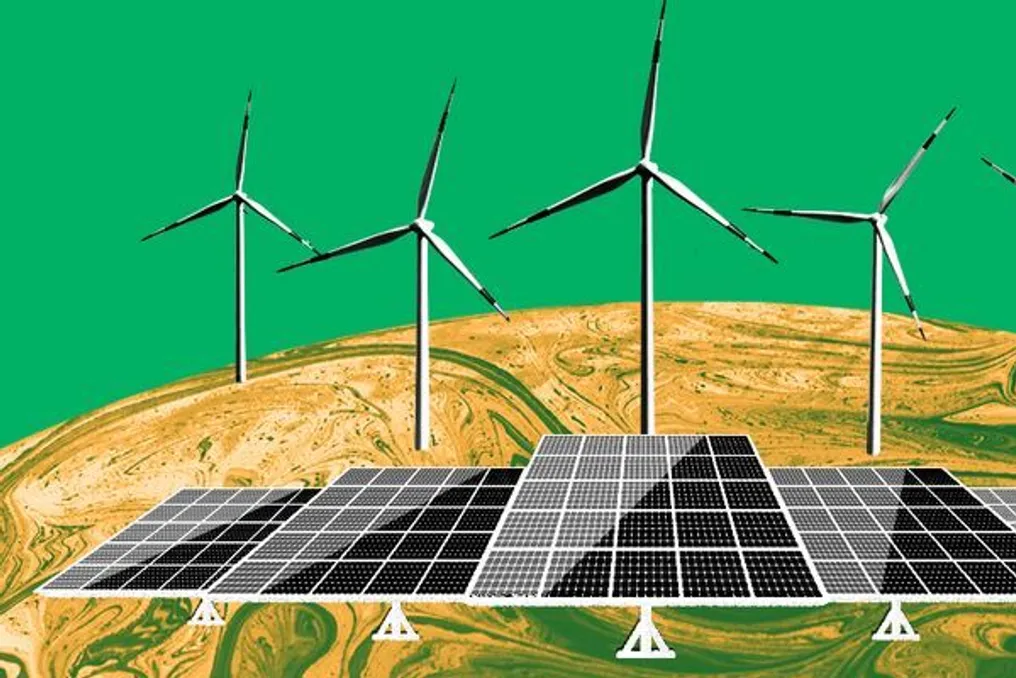
Google has introduced a series of initiatives in the field of climate technology and clean energy in India. These projects combine artificial intelligence, geospatial data, and infrastructure investment to accelerate the country's transition to clean energy.
Among the announced measures are the expansion of Solar API to over 300 million buildings across India, the launch of a 150-megawatt (MW) solar project in Rajasthan in collaboration with ReNew Power, and a climate-smart agriculture program with Mitti Labs aimed at reducing methane emissions and water consumption among rice farmers. Furthermore, new research priorities have been defined within the Google Center for Climate Technology.
Goud, Director of Climate Operations at Google, commented on these steps, noting that ensuring sustainable and inclusive growth while strengthening India's technological and AI leadership is key to the common future. She emphasized that such initiatives demonstrate how digital innovation and environmental care can be combined to create a tangible and long-term impact for India, whether through using geospatial AI to scale rooftop solar panel installations or collaborating with farmers to implement climate-smart water management practices.
The company is also scaling up Solar API, which is part of Earth AI, to cover more than 300 million buildings in India. This technology uses AI and high-resolution imagery to assist solar installers in remotely assessing building roof potential, reducing the need for lengthy site visits. According to the company, globally, Solar API can now provide roof data for over 1.2 billion buildings.
In addition, Google is strengthening its commitment to clean energy in India by signing a long-term agreement with ReNew Power to build a 150 MW solar power plant in Rajasthan. This project marks Google's second Scope 3 investment in India, bringing the total volume of signed solar energy contracts with ReNew to 300 MW.
Google is also collaborating with Mitti Labs under a climate-smart agriculture program targeting small rice farmers in Telangana. This project is expected to prevent nearly 3 million tons of CO2 equivalent emissions over 20 years, according to the global warming potential indicator. Impact monitoring will be conducted using satellite observation supported by NASA technologies, as well as ground field networks.
Meanwhile, the Google Center for Climate Technology, launched in February in partnership with the Government of India's Principal Scientific Adviser's Office, is expanding its research agenda. It will now address additional environmental issues: freshwater demand, as well as the recycling of electronic waste and batteries.
Google also announced the first cohort of the Google DeepMind accelerator, featuring four Indian startups applying AI to solve environmental challenges. Startups Terrastack and Varaha Climate use parcel-level land information, regenerative agriculture practices, and verified carbon credits to support small farmers, while Farmers for Forests and Climitra Carbon employ geospatial AI, drones, and satellite models to scale agroforestry, biodiversity restoration, and the conversion of invasive biomass into biochar.