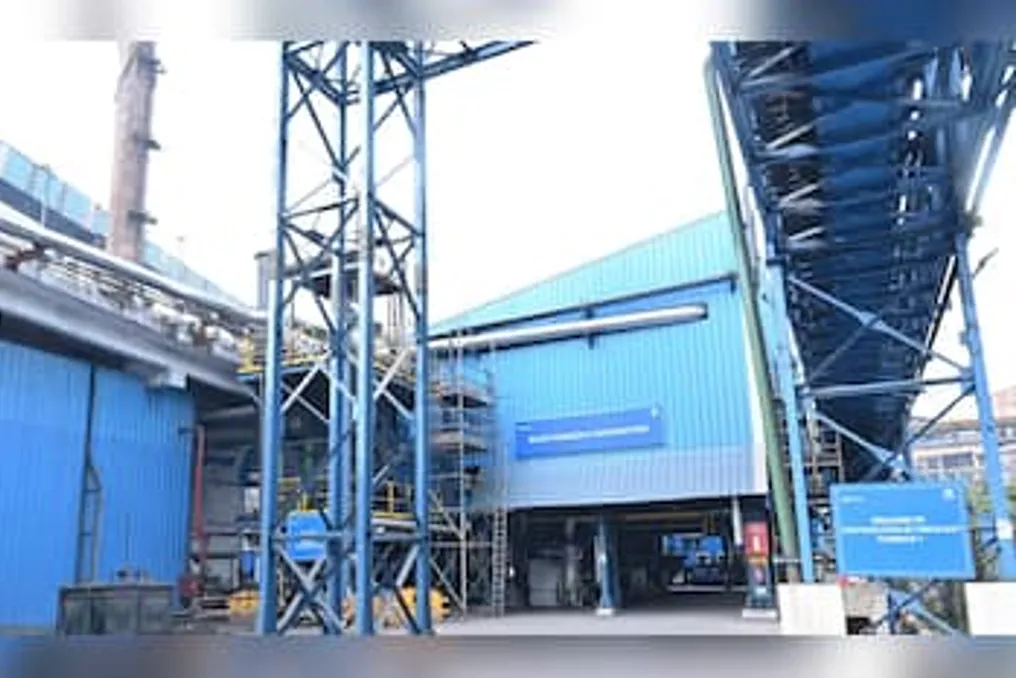
Tata Steel's metallurgical plant in Meramandali, Odisha, has launched the first project in India for injecting gas from blast furnaces (COG). On Thursday, the company announced that this initiative is an important step for the steel industry as it will help reduce fossil fuel consumption and decrease carbon emissions associated with traditional iron production based on blast furnaces.
In the integrated steel complex, blast furnace gas (COG), which is a byproduct rich in hydrogen and hydrocarbons, is usually used for energy generation, heating, or simply burned. This gas contains over 55 percent hydrogen and methane.
As part of the new project, the gas is purified to remove harmful tars and sulfur. The purified gas is then fed directly into the blast furnace through special nozzles called tuyeres. Tata Steel successfully implemented COG injection into the blast furnace through tuyeres with the support of technology partner Paul Wurth-SMS and equipment supplier Kobelco.
Project and its significance
Subodh Pandey, Vice President of Technology, R&D, NMB and Graphene at Tata Steel, noted that this project demonstrated the possibility of more efficient utilization of gases already generated within the integrated steel plant. He stated that using COG as a reductant and partially replacing traditional fossil fuels will improve the resource efficiency of the unit and reduce the carbon intensity of iron production, thereby accelerating the company's move towards net-zero emissions by 2045.
This initiative is highly significant for the steel industry because the hydrogen contained in the gas replaces carbon as a chemical reductant, leading to a reduction in overall carbon dioxide (CO2) emissions. Furthermore, the use of this gas reduces the need for expensive metallurgical coke or coal for iron production.
Since traditional processes in blast furnaces heavily rely on coke and injected fossil fuels to provide the heat and reducing gases necessary to convert iron ore into hot metal, finding ways to replace some of these fossil components with internally generated technological gases may be a relatively direct path to emission reduction without radically changing the blast furnace operating process.
According to Pandey, injecting blast furnace gas allows the remaining gas from the coke production process to be returned to the blast furnace to reduce carbon emissions and save fuel. In addition to reducing fossil fuel consumption and CO2 emissions, this opens up a unique opportunity to operate the blast furnace with a three-component fuel system, which enhances operational flexibility and efficiency.
Plant details
Tata Steel Ltd, located in Meramandali (TSM) in the Dhenkanal district of Odisha, is one of the leading integrated steel producers in India and the largest auto-steel manufacturer in the country. Previously named Bhushan Steel Limited, it became part of Tata Steel after being successfully acquired by Bamnipal Steel Ltd (BNPL), a subsidiary of Tata Steel, in 2018. This was one of the first landmark decisions under the Indian Insolvency and Bankruptcy Code (IBC) 2016.
Sukhbir Kumar Mehta, Vice President of Operations at TSM, emphasized that this project combined improved operational efficiency with environmental benefits. He noted that the company is constantly seeking ways to improve efficiency while simultaneously reducing environmental impact by implementing more sustainable and cleaner methods through finding productive uses for blast furnace gas in the blast furnace process.
Tata Steel's move towards decarbonization is happening in parallel with capacity expansion and technology investments across all its operations. In the fiscal year 2026, the company recorded a consolidated CO2 emission intensity of 2.22 tonnes per tonne of crude steel (tCO2/tcs) and invested ₹1,456 crore in research and development.