
Moshi: A Tanzanian City That Is More Than Just a Gateway to Kilimanjaro
Read more
Getaway
getaway.co.za

Moshi: A Tanzanian City That Is More Than Just a Gateway to Kilimanjaro

The city of Moshi, located in Tanzania, is often associated exclusively with preparation for climbing the famous Mount Kilimanjaro. However, if one spends more time in this city, the complex relationship between Moshi and the surrounding landscape becomes evident.

Kilimanjaro, Africa's highest mountain at 5,895 meters, rises above the plains, and its summit is sometimes visible above the clouds. For many travelers, Moshi serves as an overnight stop before an early departure, where they gather gear, meet guides, and begin the arduous ascent. Kilimanjaro National Park, a UNESCO World Heritage site, protects the upper parts of the mountain and the surrounding forests.

On the lower slopes of Kilimanjaro, Chagga farmers have developed an intensive system of home gardening known as 'kihamba'. Here, coffee is grown under taller trees and alongside bananas, fruits, and other crops, forming a multi-layered agricultural landscape distinct from traditional plantations. This system is also irrigated using ancient canals that draw water from the mountain.

In 2011, the Shimba Juu Kihamba agroforestry cultural heritage site was recognized by the Food and Agriculture Organization as a Globally Important Agricultural Heritage System. This system incorporates over 500 plant species and combines crops, trees, livestock, and traditional irrigation in such a way that the same land is utilized on multiple levels.

Coffee was introduced to the Kilimanjaro region in the 19th century and became an important cash crop for Chagga farmers. Today, it remains a central part of the kihamba system, and its history is still palpable around Moshi.

Visitors can stroll through coffee and banana plantations, observe the harvesting and processing process, and learn how coffee is integrated into an agricultural system that has evolved over generations. This serves as a reminder that the mountain is not an endless wilderness awaiting conquest; families have lived, farmed, and managed water resources on its slopes for centuries.

During the colonial period, the city transformed into a significant commercial hub, and the arrival of the railway helped establish its connection to wider trade networks. The railway reached Moshi in 1912, connecting the city to Tanga and the Usambara railway system.

A morning walk through the city allows one to discover markets, small shops, cafes, and businesses serving both locals and the constant stream of climbers. The markets are particularly useful for understanding Moshi beyond its tourism economy, as agricultural produce comes from the surrounding region. Moshi is a working city, and that is what makes it so intriguing.

The Chagga communities living around Kilimanjaro have shaped the landscape through agriculture and complex water management systems. The traditional kihamba system relies on canals that divert water from streams originating in the mountain forests, allowing crops to be irrigated even during dry periods.

The Materuni Waterfall is one of the area's iconic attractions. The trail passes through coffee, banana, and avocado plantations before reaching the waterfall, where the water drops approximately 70 meters to its base. Visitors can also experience elements of Chagga culinary traditions and coffee culture in the village.

While the waterfall is beautiful, the walk to it may be the more interesting part. It is this landscape that makes Moshi something more than just a stopover for a mountain ascent. Kilimanjaro is interwoven with farms, water systems, and communities scattered across its slopes.

Just a few kilometers from Moshi is Rau Reserve, where the lowland forest seems surprisingly separate from the surrounding town. Located about 3 km from Moshi, this reserve encompasses natural groundwater, marshland, and forest. It supports diverse wildlife, including black and white colobus monkeys, blue monkeys, and Kirk's dik-dik, as well as various birds and other small species. Rau is particularly interesting due to its proximity to expanding urban development. It is not the type of forest retreat that requires full-scale safari transport and a whole day. Hiking, birdwatching, and cycling are among the accessible activities within and around the reserve, making it an easy addition to a slower itinerary in Moshi.

After the noise of the market and the hustle of the streets, the change of pace is pleasantly surprising. Kikuletwa, also known as Chemka or Rundugai, is a cluster of springs about 35 km from Moshi. These springs emerge from arid terrain as clear pools surrounded by vegetation, providing an unexpected contrast to the dusty plains. Despite its name, the water is not boiling. Tanzanian tourism information describes it as having a pleasant swimming temperature, with some sections reaching depths of over 6 meters.

After a morning spent walking through coffee plantations or exploring Moshi, the idea of spending the afternoon in tranquility becomes appealing. For climbers, this might be considered a recovery day. For any other traveler, it is simply another reason to relax and unwind.

None of this diminishes Moshi's connection to Kilimanjaro or is intended to. If the mountain is the reason for your visit, the city remains an important base for exploring the region and accessing Kilimanjaro National Park. The mountain itself ascends through five distinct ecological zones: from cultivated lower slopes and montane forests to alpine desert and the summit.

However, the stories you tell about visiting here can be much deeper if you look beyond just Kilimanjaro. Once you look past the summit, the mountain begins to reveal a completely new narrative.

Moshi tells a complex story that subtly lives within all of us. It is the connection between humanity and nature. It manifests in how forests feed water systems, the same waters sustain farms, and the farms produce food and livelihoods for local residents. Everything is connected and works together as a single living landscape.

So, whether you want to conquer the mountain, drink coffee where it grows, wander through the market, follow the trail to the waterfall, or spend a quiet morning in Rau Forest, or swim in the spring outside the city—if there is one lesson to take away from Moshi, it is this: Kilimanjaro may be the headline, but Moshi is the story beneath it.
Similar stories

The 'Local Stay' Concept: New Safari Formats Allowing Wildlife Observation Without Leaving Your Accommodation
Read more
getaway.co.za

The 'Local Stay' Concept: New Safari Formats Allowing Wildlife Observation Without Leaving Your Accommodation

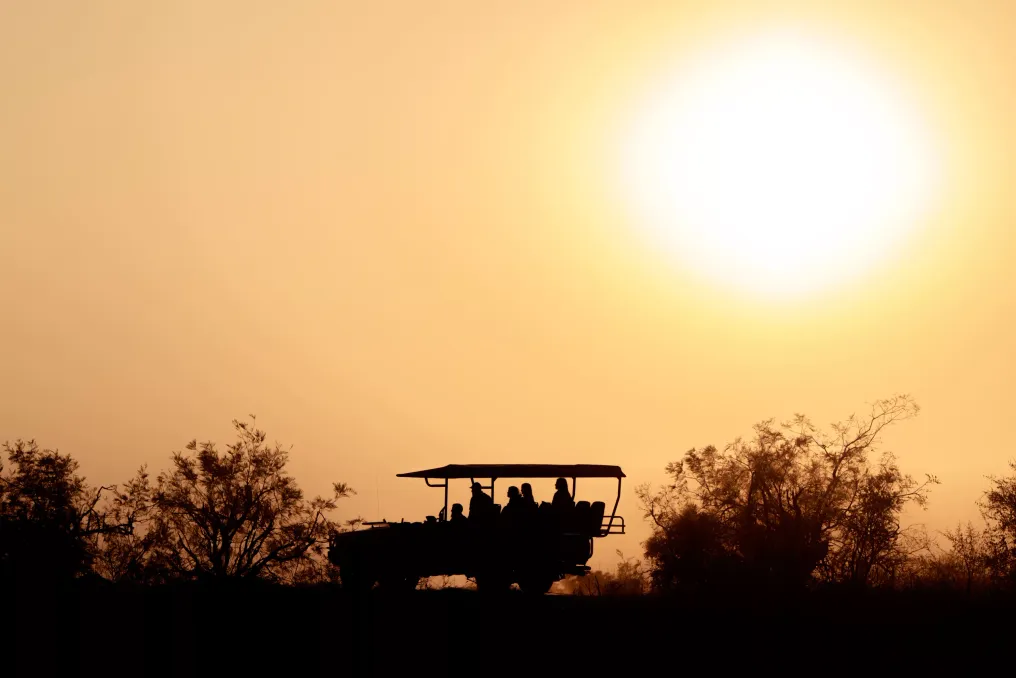
The traditional approach to safari, involving early starts and driving in SUVs to find animals, remains popular. However, modern resorts are offering alternative ways to observe wildlife that allow guests to stay in place.

The author shares experiences from staying at Kruger Shalati, where they decided to forgo the traditional safari drive and instead spent time on the suspended deck by the pool, watching the Sabie River. Although giving up the trip seemed like breaking an unwritten rule, such opportunities are becoming increasingly common across South Africa.

Modern lodges are designed so that animal observation happens not just from a vehicle. This is now possible thanks to open sleeping areas, underground shelters, and watering holes located right in front of decks and pools, turning stationary stays into a legitimate choice of safari rather than a missed opportunity.

Kruger Shalati is considered one of the boldest architectural projects in South Africa. Converted train carriages house 24 luxury rooms on a bridge over the Sabie River, which was previously a night stop for travelers in the 1920s. These suites feature floor-to-ceiling windows, allowing guests to enjoy the view from the shower and from their king-size bed.

The most impressive viewpoint is the deck extending beyond the bridge. From here, one can watch elephants and buffalo following familiar paths along the banks, while crocodiles bask on sandy shoals. The elevated position reduces the sense of urgency often associated with wildlife viewing; there is no need to change position, no radio communication, and no feeling of being chased.

Even though Kruger Shalati is inside the park and offers daily safaris, many guests opt out of one of the trips in favor of relaxing on the deck or watching the sunset from their suite, content that the river itself provides the spectacle.

At Lion Sands Game Reserve, which borders Sabi Sands and Kruger National Park, guests can substitute a lodge room for a night in one of three treehouses. These houses are not part of the main lodge but follow the same principle: once you arrive, you stay put. You are accompanied at sunset and left on an elevated platform with a four-poster bed, protected only by a mosquito net and feather bedding, creating a feeling of complete solitude with the night.

Outdoors, one can hear the distant cries of hyenas or the sounds of lions at dusk. Elephants move below; their approach is heard long before they become visible, betrayed by the sounds of snapping branches, chewing bark, and low rumbling communication between them. As dawn breaks, the savanna gradually reveals itself; shapes emerge from the shadows: a herd of impalas grazes cautiously, a giraffe's head appears above the treeline, and a kudu moves in a solitary line along a worn track.

If height provides one type of proximity, ground level offers another. At Mhondoro Safari Lodge & Villa in Welgevonden Game Reserve, just three hours from Johannesburg, an underground shelter accessible via a tunnel beneath the main deck allows one to be at the same level as a permanent watering hole. Animals approach, and neither height nor distance hinders observation. Antelope pass close enough to hear their breathing, and rhinoceroses cautiously appear and then pause.

This shelter changes the relationship between observer and observed. You are not looking down from a car or observing through a dam; you are in the animals' world at eye level. Here, not only the closeness but also patience and stillness change. In a vehicle, there is always the option to move on, to look for something else, whereas in the shelter, you remain. You watch how the watering hole changes its character with shifting light and the appearance of different animals, and in the process, you begin to notice patterns that you usually miss during a drive.

Mhondoro is also known for a detail that seems incredible: elephant herds regularly drink from the lodge's salt lick. The pool is located near the watering hole observed by the shelter, and the elephants use it accordingly. They appear almost daily, sometimes in large groups, moving through the space without hesitation. Guests quietly swim or sit at the edge while the elephants approach the water with their trunks. Although encounters are not guaranteed, they happen frequently, leaving behind something stranger after the novelty wears off: the anxious intimacy of sharing a pool with a bull elephant while reading a book.

Sometimes thoughtful design gives way to something entirely different. Places like Kruger Untamed do something even more fundamental by eliminating the need for a specific viewpoint. During the dry winter months, two seasonal tented camps appear, and they disappear completely with the return of the rains. Both camps are unfenced—one near Satara Rest Camp, the other near Tshokwane—and built so lightly that no trace remains by October. The animals passing through here do not visit the watering hole or leave; they cross their backyard. These camps acknowledge something that permanent lodges can only approximate: this is not your territory; it is theirs. You are simply occupying it seasonally.

Cheetah Plains Private Game Reserve in Sabi Sands demonstrates a similar principle of immersion through more permanent architecture. Each of the three exclusive villas has glass doors that open fully onto the savanna. One villa, Mapogo, is located right next to an active watering hole, and its infinity pool stretches along the water's edge. From the pool, one can see animals approaching without obstruction, framed by open space rather than enclosures or platforms.

None of this diminishes the value of driving safaris. Early mornings and late afternoons in the vehicle remain among the most effective ways to cover large distances and track elusive species. However, these lodges understand that guests are not obligated to spend every hour searching.

When wildlife observation becomes part of the place where you sleep, eat, and bathe, the savanna isn't just turned on when the vehicle is running. It is present always. By choosing to stay put, you are not missing out; you are choosing a different type of safari where wildlife comes to you. For those who still prefer the traditional experience, the 5 AM alarm calls remain relevant. You can still go on trips.

A 72-Hour Route Along Kenya's Lesser-Known Coast: From Kilifi to Lamu
Read more
getaway.co.za

A 72-Hour Route Along Kenya's Lesser-Known Coast: From Kilifi to Lamu

The Kenyan coast is often associated with Mombasa and the Diani resort beaches. However, moving north, the pace of life changes. Quiet streams, fishing villages, mangrove forests, and centuries-old Swahili settlements offer a deeper immersion into coastal life, where daily existence is shaped by the Indian Ocean.

This 72-hour itinerary, running from Kilifi to Watamu and Lamu, combines marine life, coastal history, fresh seafood, and relaxed beach time.

Exploring Kilifi and Surroundings

Kilifi serves as a natural starting point for traveling along Kenya's quieter coast. The town is situated near a wide stream where mangroves, fishing boats, and tidal waters replace the busier promenades characteristic of other locations. In Kilifi, there is no need to fill every hour with activities, as the appeal of this area lies in its slow pace.

The area offers a blend of beaches, water activities, cultural experiences, and community-focused tourism. Next is the direction towards Takanga, a historic settlement located by a stream south of Kilifi. This village has strong ties to the Swahili and Mazrui cultures, featuring ancient mosques, old buildings, and a waterfront that remains closely linked to fishing and community life.

During the trip, be sure to try the freshest seafood dishes—fish, crabs, shrimp, and other local delicacies, depending on the day's catch. Local initiatives around the Kilifi stream also showcase local cuisine alongside projects for mangrove conservation and aquaculture. It is recommended to spend the night in Kilifi, preferably near the stream or Bofa Beach.

Marine Conservation in Watamu

After breakfast, the journey continues north to Watamu, where the focus shifts from local communities to marine environmental protection. The Watamu National Park and Reserve protects coral reefs, mangrove swamps, and diverse marine habitats. The waters of this park are home to sea turtles, dolphins, whales, whale sharks, and numerous fish species.

In the morning, you can go snorkeling, diving, or take a guided boat tour. The protected waters around the Mida stream also provide an opportunity to study Kenya's mangrove ecosystems. It is important to follow the recommendations of local operators and conservation authorities, giving wildlife ample space.

After lunch, a visit to the ruins of Gede is planned, located inland from the coast. These remnants belong to a once-thriving Swahili settlement. Mosques, houses, palaces, and other structures offer insight into the advanced trading communities that flourished along the East African coast. Time should be spent exploring the archaeological site rather than treating it as a quick stop; the combination of coral stone ruins and dense forest makes Gede one of the most atmospheric historical attractions on the coast.

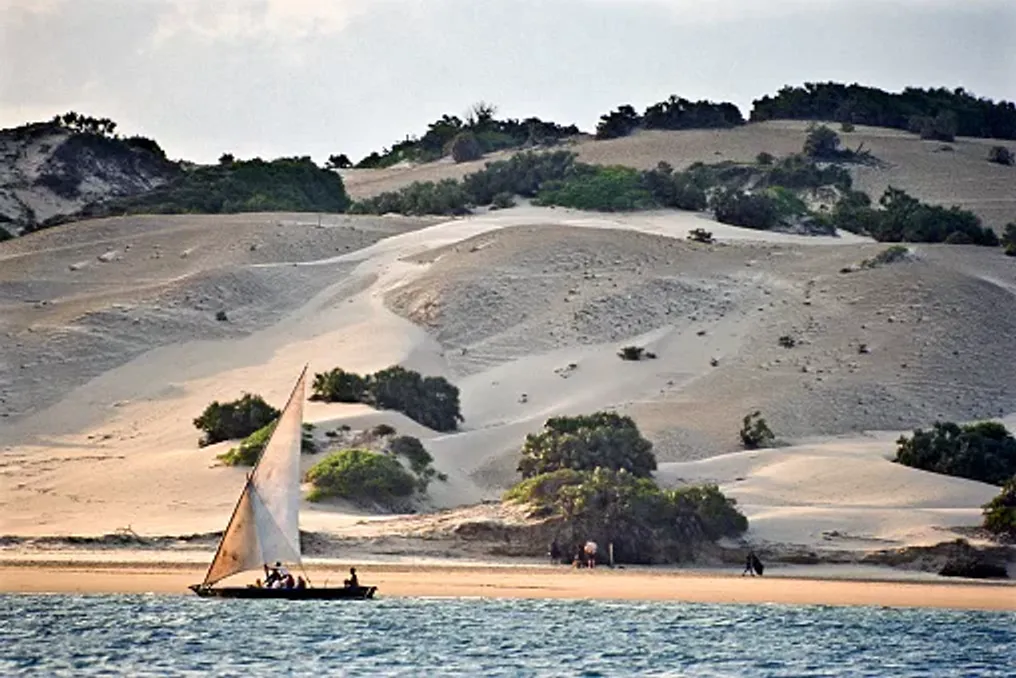
Returning to Watamu allows for a relaxing day at the beach. You can swim, walk on the sand, or take an evening boat ride before dinner. Traditional dhow tours are available along some stretches of the coast, offering a more leisurely way to experience the Indian Ocean. The night is spent in Watamu.

Journey to Lamu

To travel to Lamu, you should start early. Depending on transport arrangements, you can head to mainland Lamu and continue by boat, or connect via Malindi to a flight to Manda airport. The final leg of the journey is longer than the Kilifi-Watamu stretch, so careful planning is required when creating a 72-hour plan.

Upon arrival in Lamu, it is recommended to leave the car and explore the island on foot. Old Town Lamu is a UNESCO World Heritage site and represents one of the oldest and best-preserved Swahili settlements in East Africa. Its narrow streets, coral stone buildings, carved wooden doors, inner courtyards, and verandas reflect centuries of cultural exchange along the Indian Ocean.

Although Lamu is not just a restored historical site, it is a living community, making respectful exploration particularly important. Lunch can be used as an opportunity to sample local coastal cuisine. Swahili cuisine is based on centuries of Indian Ocean trade, combining seafood and spices with ingredients like coconut and rice. It is recommended to seek out restaurants and eateries that support the local population instead of standard tourist menus.

Next is the direction towards Shela for a quieter end to the day. This village possesses a calmer and more relaxed atmosphere, with sandy paths, historic houses, and easy access to the beach. Time can be spent walking along the coastline or simply enjoying the view of the water. The trip can conclude with a traditional dhow ride. An evening sail around Lamu provides a final perspective of the islands, channels, and coastline. At sunset, the boats and historic waterfront perfectly conclude a journey shaped by the sea.

Three days are enough for an introductory overview, but the route would be even better with one or two extra days. The biggest mistake is trying to see everything. Kilifi, Watamu, and Lamu reward travelers who allow time for wandering, eating, and simply enjoying the coast. While Kilifi and Watamu are relatively easy to combine, the trip to Lamu requires more preparation. A pre-arranged transfer service or flight can save time on a short trip. If traveling independently, allow flexibility in the schedule and avoid booking too close events.

The appeal of this route lies in its diversity. In three days, you can experience all the listed elements, and together these places reveal a side of the Kenyan coast far beyond traditional beach holidays. The quieter the destination, the more important thoughtful travel becomes. Whenever possible, use the services of local guides, support small restaurants and businesses, and respect local customs. In Lamu, remember that the historic town is a living neighborhood, not an open-air museum. When visiting marine areas, follow nature conservation rules and do not touch corals or approach wildlife. Responsible choices help protect the ecosystems and communities that make this coast worth visiting.

Popular