Piston raises $15 million in Series A round led by FPV Ventures
Read more
YourStory [india, en]
yourstory.com

Piston raises $15 million in Series A round led by FPV Ventures

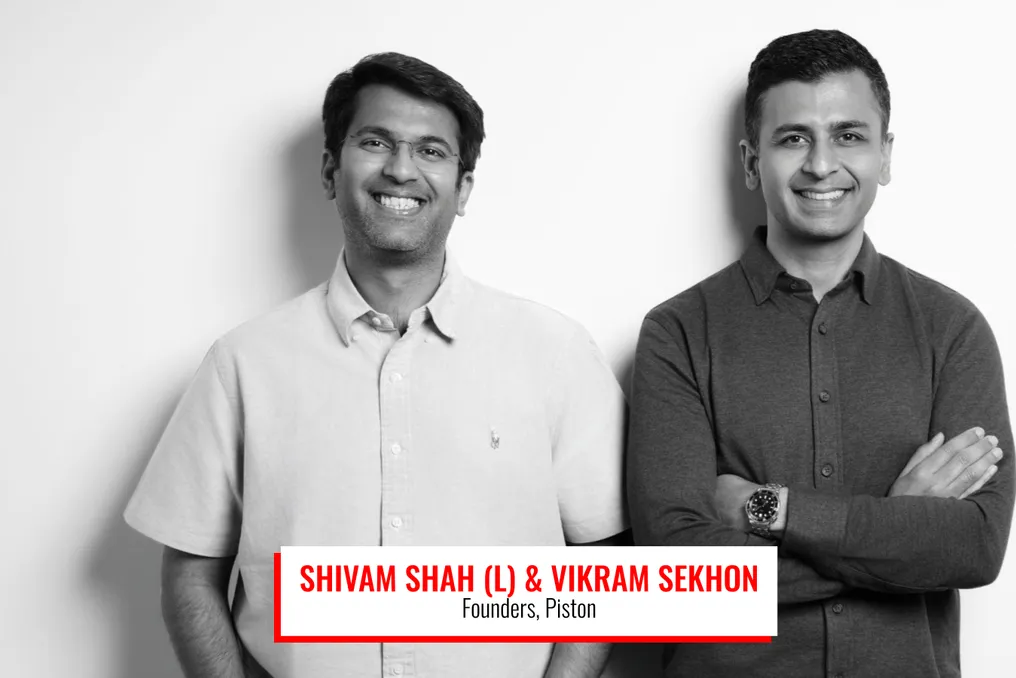
Piston, a technology startup headquartered in the US with an engineering center in Kolkata, has successfully raised $15 million in a Series A funding round. The round was led by FPV Ventures, with participation from existing investors Spark Capital and Pear VC.

Piston was founded by Vikram Sekhon and Shivam Shah. It has developed a cashless payment network that connects commercial fleets with gas stations and stores. This system allows fleet owners to track fuel expenses in real time, eliminating the need to issue or manage physical cards.

For merchants, this platform provides direct access to demand for commercial fuel, reduces transaction operational costs, and offers a chance to earn revenue from store purchases associated with repeat visits by fleets.

According to the announcement, the raised funds will be used to expand the payment network, develop products, and hire senior executives in key business areas. Over the next eighteen months, the company plans to achieve coverage across all US regions. Furthermore, as part of its expansion, Piston intends to move beyond fuel payments into broader logistics payment infrastructure.

Co-founder and CEO of Piston, Vikram Sekhon, noted that fuel fraud in fleets is a problem of physical cards masquerading as a detection issue. He emphasized that they have eliminated the card and created a network that authorizes every purchase for a specific driver and vehicle directly at the point of sale. This round will allow them to scale this infrastructure until no commercial driver doubts whether a station accepts payments through Piston.

Piston reported that its presence in India grew in parallel with its expansion in the US. The Kolkata office, launched in April 2023 with a team of five people, has now grown into a center with over 25 employees, playing a central role in creating and scaling the startup's technology infrastructure.

The company stated that its engineering team in Kolkata will continue to play a key role in the product and technology roadmap as the payment network scales nationally. The startup also reported that the volume of payments in its network has increased eightfold compared to the previous year, while the merchant network has grown 40fold, and customer retention remains at 98%. Currently, Piston's technology is implemented at over 2,000 stations across 48 states.

Similar stories

Factory raises $200 million at $5 billion valuation to scale AI software development
Read more
ventureburn.com

Factory raises $200 million at $5 billion valuation to scale AI software development

Factory has successfully raised $200 million in a new funding round, achieving a valuation of $5 billion. Investors in this round include Blackstone, Khosla Ventures, and Sequoia Capital. Insight Partners, Evantic Capital, and Sound Ventures also participated.

Factory was founded in 2023 by Matan Greenberg and Eno Reyes. Other investors included NEA, Mantis VC, and Clearlake. The round also attracted angel investors, including Nico Rosberg, Brad Gerstner, and Mark Benioff.

The new funding increases the company's total capital raised to over $400 million. This represents significant growth compared to the $1.5 billion valuation set in April. Thus, in five months, Factory's valuation has more than tripled; previously, the company had raised $150 million at that same valuation.

The latest capital raise reflects growing enterprise demand for autonomous software development tools. The San Francisco-based company aims to increase the degree of autonomy in software development. Its platform enables large enterprises to create, test, and maintain software using artificial intelligence agents throughout the entire development lifecycle.

Factory differs from platforms focused on individual coding agents because it provides enterprises with a unified system for managing software development. The platform allows companies to control the training process of their 'software factory,' as well as manage models and system deployment. Factory can operate through its managed cloud infrastructure, or clients can deploy it on-premises or in fully isolated environments, giving enterprises greater control over AI-driven development.

The company reports that its platform is used by hundreds of thousands of developers. Factory's clients include Nvidia, Blackstone, Royal Bank of Canada, Palo Alto Networks, and Adobe. This growing client portfolio underscores the increased interest from the corporate sector in AI-powered software development.

Enterprises are increasingly using AI to boost engineering productivity. Factory believes that companies are moving from using individual coding assistants to building broader software factories around autonomous systems. Matan Greenberg noted: 'Major enterprises worldwide are transitioning from individual coding agents to software factories,' adding that clients confirm the potential for rearchitecting software development systems, although the company is still in the early stages of this transition.

Factory's strategy is focused on creating autonomous software factories that operate continuously under human supervision. Enterprises can regulate measurable outcomes while AI performs development tasks. The company competes in the rapidly growing AI coding market. Factory plans to use the new capital to support further growth, focusing particularly on platform expansion and adoption within the corporate sector.

Positron AI raises $875 million to scale AI inference hardware
Read more
ventureburn.com

Positron AI raises $875 million to scale AI inference hardware

Positron AI has successfully raised $875 million in a Series C funding round, valuing the company at $5 billion. The company's core business involves developing hardware that makes the artificial intelligence inference process more energy-efficient and cost-effective.

The funding was secured in two stages: first, a Series C round of $375 million was closed, followed by a Series C-1 round of up to $500 million. The main round was led by NEA, Atreides Management, and Valor Equity Partners, with co-leads from Andra Capital and SemiAnalysis Capital participating. The second tranche was led by Jim Clark, founder of Silicon Graphics and Netscape, with participation from several institutional and strategic investors.

The capital raised will allow Positron to significantly expand its growing business in inference and add several experienced technology investors to its board of directors. Forest Basket from NEA and Gavin Baker from Atreides Management will join the board. Thomas Germoluk and Dylan Patel will also become directors.

As AI workloads increasingly shift towards inference, infrastructure is necessary for the continuous operation of models by every AI assistant, agent, and helper. Positron focuses on solving memory and power issues arising from this growth. The company's systems are designed with an emphasis on bandwidth and memory capacity, rather than raw computational power.

The company's next-generation systems utilize standard LPDDR5X memory, which reduces dependence on constrained high-performance memory supply chains. Positron claims its systems can achieve over 90% of available memory bandwidth.

Furthermore, the company focuses on high performance in tokens per dollar and tokens per watt metrics. Positron's architecture supports both air-cooled and liquid-cooled data centers, giving customers flexibility in deploying systems across various rack densities.

Positron already has clients using the first version of the Atlas system. Over 50 Atlas racks have been deployed in Oracle Cloud Infrastructure, where Parasail uses this power for its own inference services. Jump Trading and i3d.net are also production clients of Atlas.

The new funding will be directed towards developing the next generation of silicon chips. The Asimov chip is scheduled for fabrication using TSMC's N3P process by the end of 2026; TSMC describes N3P as an improved 3nm process. Production of Asimov is slated for the second half of 2027. Each Asimov chip will support between 288 GB and 2304 GB of memory, meeting the demands of increasingly complex AI inference workloads.

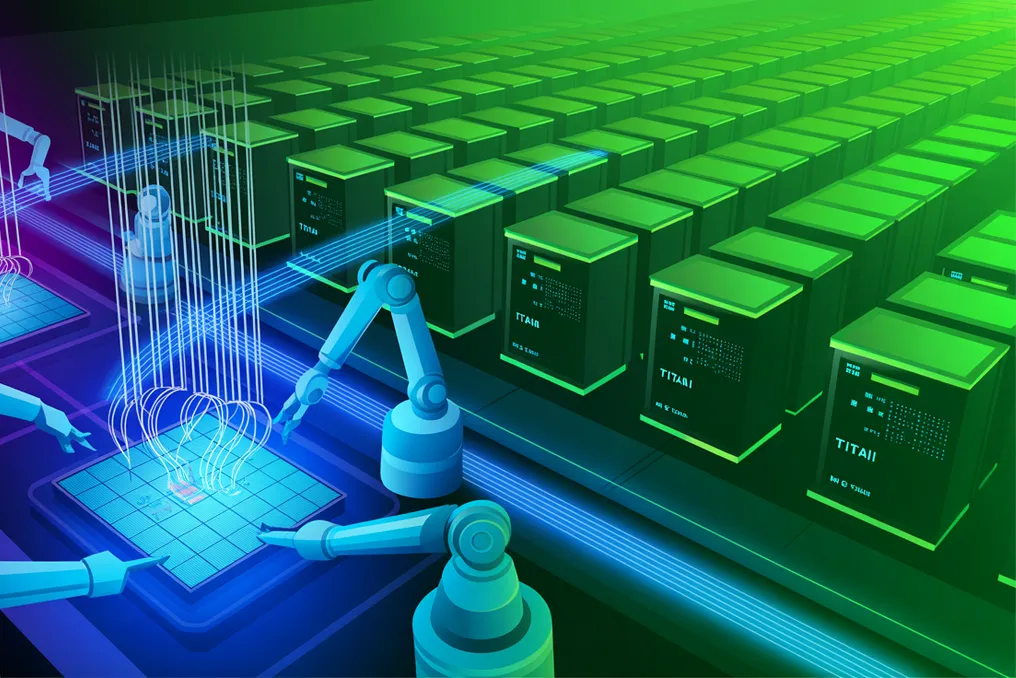
The Titan system will integrate four to eight Asimov chips into a single system and is designed to support models exceeding 16 trillion parameters. Titan will also target context windows exceeding 10 million tokens and can scale to thousands of nodes for larger deployments. Positron also plans to build a data center engineering facility with a capacity of over 2 MW and an emulation platform to support development, testing, and manufacturing readiness.

Positron intends to use the funds to secure LPDDR5X supply commitments, as well as to increase manufacturing capacity and system integration. Go-to-market operations will expand in parallel with production, helping the company meet the growing demand for inference infrastructure.

CEO Mitesh Agrawal noted that the Atlas deployments provided valuable customer insights that influenced the design of Asimov and Titan. The company is currently in a demanding execution phase, requiring it to complete silicon development while simultaneously scaling production and customer adoption.

Positron's strategy is focused on the economic efficiency of AI model operation. Its memory-centric architecture aims to reduce both energy consumption and infrastructure costs. The $5 billion valuation reflects investor confidence in the inference market.

Popular