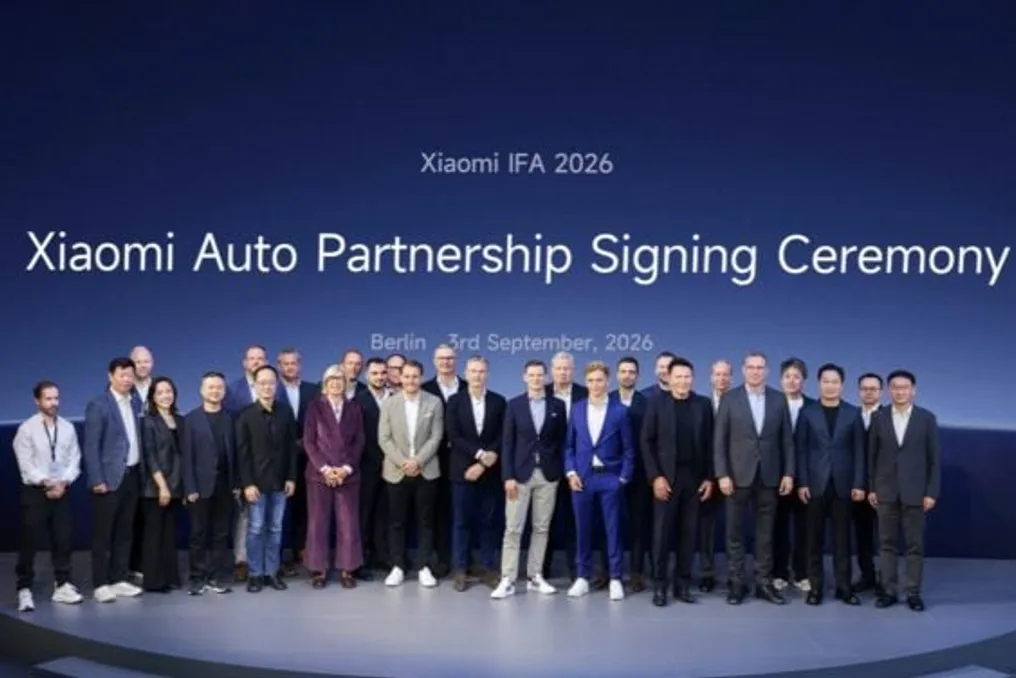
Xiaomi signs agreements with major German dealerships to launch car sales in Europe in 2027
Read more
AutoPapo
autopapo.com.br

Xiaomi signs agreements with major German dealerships to launch car sales in Europe in 2027

Xiaomi announced at IFA Berlin that it plans to start selling automobiles in Germany and other European countries starting in 2027. To realize this initiative, the Chinese company's automotive division has established memorandums of understanding with eight important German dealership groups, marking the first practical step toward establishing a sales and after-sales support structure outside of China.

Among the partners are LUEG, which was the first authorized Mercedes-Benz dealer in Germany, and Emil Frey, recognized as one of the largest vehicle distributors on the European continent. It is important to note that these memorandums of understanding only formalize the intention to negotiate and do not have contractual validity.

Yu Liguo, Vice President of Xiaomi Auto and responsible for international management, emphasized that local collaborations constitute the central pillar of the company's strategy in Europe. He assured the company's commitment to long-term financial investments in the region, mentioning the research and development center located in Munich as a base to adapt products to local consumer preferences. Xiaomi also declared its intention to seek new partners in other European countries before the official launch.

This expansion is based on notable initial performance. Since the first deliveries of the SU7 model in March 2024, Xiaomi has already accounted for over 700,000 vehicles sold in mainland China. The SU7 family surpassed the half-million unit mark in a period of 28.5 months, while the YU7 SUV reached more than 240,000 confirmed orders in just 18 hours of pre-sale. Furthermore, the Skynomad line was presented in July and had its official launch on the 7th.

Regarding the Brazilian market, there have been no official communications. In 2025, Lei Jun, Xiaomi's founder, indicated that the company would only consider selling vehicles outside of China from 2027 onwards, prioritizing domestic demand and the production capacity of the Beijing factory. Although an Autoesporte report mentioned the brand having conversations with at least three Brazilian importers that year, there have been no formal developments. In this context, Brazil already receives brands such as BYD, GWM, GAC, Changan, Zeekr, and Jetour, all with their own networks, which would place Xiaomi in a late arrival position.

Similar stories

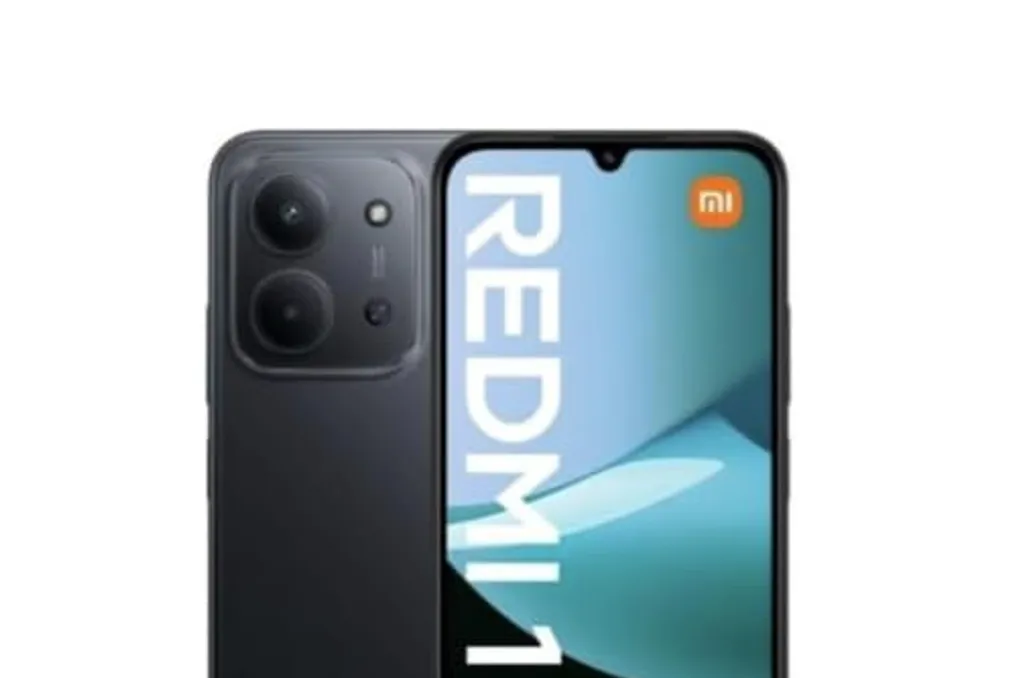
Xiaomi registers 34% drop in smartphone shipments in Brazil due to component crisis
Read more
tecnoblog.net

Xiaomi registers 34% drop in smartphone shipments in Brazil due to component crisis

The Brazilian mobile phone market has shown a decline this year, but Xiaomi was one of the manufacturers most impacted by this contraction. According to data provided by the consultancy Counterpoint Research, the company's shipments in Brazil decreased by 34% in the first half, compared to the same period in 2025.

Despite this significant reduction, Xiaomi managed to maintain third place among the brands that shipped the most phones to the country's stores. This performance contrasts with that of competitors like Samsung and Apple, who managed to increase their sales volumes during the same time frame. Globally, smartphone shipments in Brazil registered a total drop of 11% in the first half.

Difficulties in the global component supply chain, particularly in the memory chip sector, exert strong pressure on brands and lines focused on offering good cost-benefit. Such products are more susceptible to price adjustments and operate with considerably smaller profit margins.

This 34% drop positions Xiaomi as the manufacturer most sensitive to the slowdown in the Brazilian market, a direct result of higher costs and supply problems affecting the cell phone industry.

Infinix, which holds fifth place in the ranking, is another affected Asian company, with a 24% drop compared to the previous year. This company belongs to the same group as Tecno and Itel, which also operate in the Brazilian territory.

The consultancy points out that the growth of other Chinese brands, such as Honor, Oppo, and Realme, along with Jovi, a brand of Vivo Mobile, intensified competition in the market niches explored by Xiaomi. These companies have adopted strategies such as local production or assembly, aggressive promotions, and partnerships to reduce expenses and gain a larger market share. However, the combined participation of these brands decreased from 26% in the first half of 2025 to 20% in the first half of 2026.

While Chinese brands lose ground among Brazilian consumers, established brands have regained strength. Samsung and Motorola maintained a leading position, responsible for 73% of all shipments in the first half. The South Korean company, despite recording a loss in its cell phone division, achieved a 10% growth compared to the same period in 2025, highlighting the Galaxy A07 4G model, which alone accounts for 8.3% of semi-annual shipments.

Motorola showed more modest growth, only 1% compared to the first half of the previous year. On the other hand, Apple demonstrated progress in recent months; its shipments grew 19% year-on-year, raising its share from 6% to 7%, equal to Xiaomi's.

The report emphasizes that most of the smartphones sold in Brazil are still concentrated in the most affordable price ranges. Devices costing up to US$ 249 (approximately R$ 1250) accounted for 78% of shipments. However, devices priced below US$ 99 (about R$ 550) began to lose relevance in the market.

Tina Lu, a consultant analyst, explains that this change reflects consumers' willingness to invest in superior specifications and the greater availability of models within this mid-range price bracket.

Xiaomi offers selection of smartphones with good cost-benefit on Amazon
Read more
olhardigital.com.br

Xiaomi offers selection of smartphones with good cost-benefit on Amazon

Xiaomi has reinforced its presence in the Brazilian market through devices that combine good performance with an attractive cost-benefit ratio. For those looking for a new phone, three options from the brand currently available on Amazon have been selected, all characterized by having ample RAM and storage for daily use.

One of the highlighted models is the Xiaomi Redmi 15C, in Midnight Black. This device represents an accessible alternative from the Redmi line, equipped with 8 GB of RAM to allow multitasking without crashes and 256 GB of internal storage, offering plenty of space for photos, videos, and applications. Its Midnight Black finish gives it an elegant and discreet look, making it ideal for those who need reliable performance in daily life.

Another option presented is the Xiaomi Redmi Note 15, available in black. This model raised the standard of the Xiaomi mid-range line, featuring 8 GB of RAM and 256 GB of internal space. It was designed for users who want smoother browsing on social media, streaming, and intensive gaming. Furthermore, the rear camera received improvements compared to previous versions, making it a well-balanced choice for the segment.

Additionally, there is mention of another listing for the Redmi Note 15 on Amazon, maintaining the same robust configuration of 8 GB of RAM and 256 GB of storage. It is advisable to compare the different sales offers, such as shipping, delivery time, and the seller, to ensure the best experience during the order. The device preserves the attributes of the Note line, including a large screen, long-lasting battery, and stable performance.

It is important to note that electronics stock on Amazon is dynamic, and sales conditions can change at any time. If any of these models spark interest, it is recommended to access the link immediately to check availability and make the purchase.

Xiaomi approves two new smartphones, Redmi Note 17 Pro and Poco X8, for sale in Brazil
Read more
tecnoblog.net

Xiaomi approves two new smartphones, Redmi Note 17 Pro and Poco X8, for sale in Brazil

Xiaomi is about to launch two new smart devices in the Brazilian market. One of them is the Redmi Note 17 Pro, which received approval from Anatel, along with the Poco X8, which shares several functionalities with it.

The Redmi Note 17 Pro has model codes 2607DRA18T and 2607DRA18G, while the Poco X8 is identified by code 2607DPC18G. The National Telecommunications Agency (Anatel) issued this certificate last Tuesday, September 15th, according to information obtained by Tecnoblog.

In general terms, both smartphones present very similar characteristics both internally and externally. However, there are three notable differences between them.

Firstly, in the packaging, both will come with a 67 Watt charger, being models MDY-15-ET or MDY-20-EV. Secondly, there is a distinction in memory capacities: only the Redmi Note 17 Pro offers the option of 512 GB of storage in certain regions. Furthermore, the RAM memory can vary between 6 GB, 8 GB, or 12 GB, depending on the sales location.

The approval of the Redmi Note 17 Pro follows its more basic models, the Redmi Note 17 4G and 5G, which already have the agency's seal. However, the Redmi Note 17 Pro Max, which features more advanced specifications and a battery of up to 10,000 mAh, is still awaiting the necessary authorization.

Popular