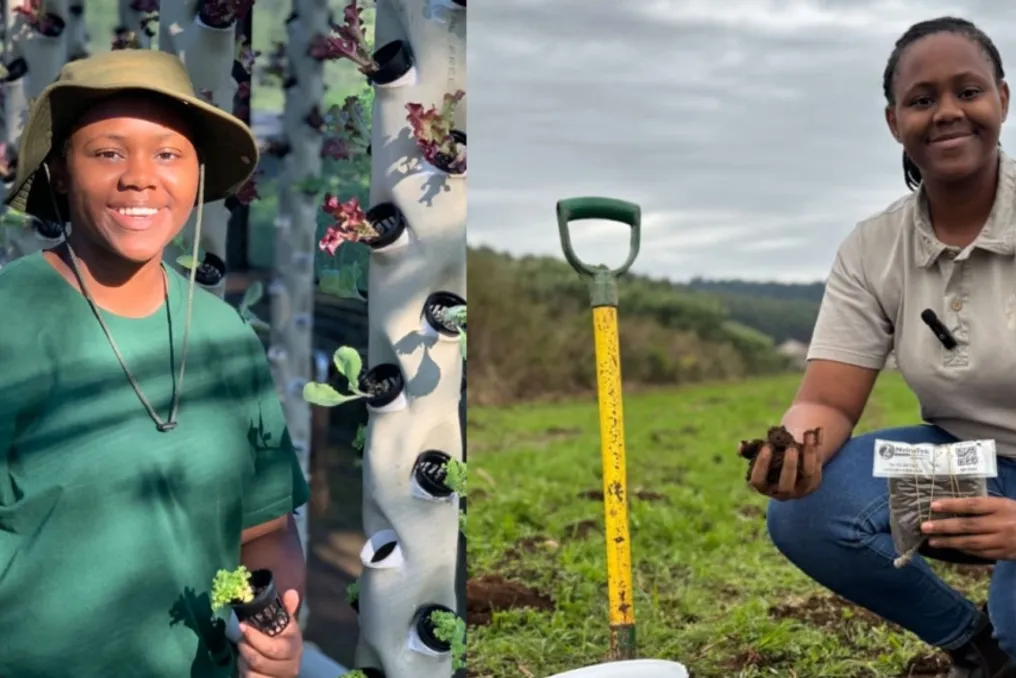
Lerato Moeli turned her love for nature into a professional career in agriculture
Read more
Food For Mzansi
foodformzansi.co.za

Lerato Moeli turned her love for nature into a professional career in agriculture

When Lerato Moeli took a year off after finishing school, she was unsure of her life path. She knew she loved spending time in nature, constantly learning, and having the freedom to explore various fields. It was then that she discovered that agriculture could provide her with exactly that and more.

Today, she holds a bachelor's degree in crop production management and works as a junior technical manager at Zylem & RegenZ, specializing in soil health and regenerative agriculture.

Having grown up in Westville, Durban, Moeli was initially interested in sports. However, as things didn't go as planned, she did not establish a specific career path.

She notes: 'After high school, I took a gap year because I wanted to understand what I truly want to do in life. Ultimately, agriculture attracted my attention because it offered me the combination I was looking for: being outdoors, continuous learning, and the freedom to explore different places.'

Moeli's career in agriculture began after earning her bachelor's degree in crop production management from the University of Free State. Immediately after graduation, she decided to work on a farm as a general laborer.

She shares her experience: 'I had the qualification, and I understood the theory, but I had never worked on a commercial farm before. I didn't know what daily operations looked like. I could understand something from a textbook, but I couldn't say how it looked physically.'

Starting as a general employee opened up opportunities for her, allowing her to learn more practical aspects of farm operations, which helped her move beyond theoretical knowledge.

Moeli explains: 'So, working as a general laborer on a farm allowed me to build this foundation. I had to learn what the spacing between plants looked like, what harvesting involves, what a crop looks like two weeks after planting, what surface application of fertilizer looks like physically, and what farm operations actually entail. There is a big difference between knowing a term and actually performing the action.'

She also emphasizes the difference between what is taught in university and what she learned working in the field, despite having the relevant qualifications.

'For example, if I hadn't gone to university, I might not have understood what aphids are, why they are a problem, or how to control them. But when you are actually working on a farm, these concepts become real.'

Moeli mentions facing some initial difficulties working in the field and stresses the importance of admitting ignorance when assigned a task.

'Having qualifications can sometimes give the impression that you are ready for the industry, but agriculture quickly humbles you. You realize how much you don't know when you start working. That was one of the biggest lessons of my career: don't be afraid to admit that you don't know something.'

Another challenge for her was realizing that agriculture is not a universal solution for everyone. 'What works for one farmer or one soil may not work elsewhere. This forced me to become more open and listen to people with different experiences. I am learning every day from the people around me, including those who have been in this industry much longer than me.'

She spent two years trying to find her niche and what interested her in various roles on the farm. The opportunity to specialize in soil health and regenerative agriculture presented itself to her.

'I was fortunate to get an opportunity at Zylem and RegenZ, a soil health company focused on biological solutions, biostimulants, and regenerative agriculture practices. I immediately connected with the principles the company upholds, especially the focus on soil care and improving the health of the entire farming system.'

For her, it is important to understand the difference between regenerative agriculture and sustainable development. 'Sustainable development generally focuses on maintaining the system and ensuring we do not deplete resources. Regenerative agriculture goes further, focusing on restoring, improving, and building soil and broader ecosystem health over time.'

She continues: 'I am particularly interested in how we can improve soil health, reduce unnecessary intervention, better utilize cover crops, and understand soil biology while still producing viable crops.'

Moeli advises young agricultural graduates not to shy away from volunteering during university breaks to gain practical experience and develop communication skills. 'I also urge graduates to learn different languages and meet different people and communities. Agriculture is a people-driven industry, and communication is incredibly important.'

She concludes: 'And most importantly—never stop learning.'
Similar stories

Farming Bootcamp Helped Uniche Dladla Develop Her Business in South Africa
Read more
foodformzansi.co.za

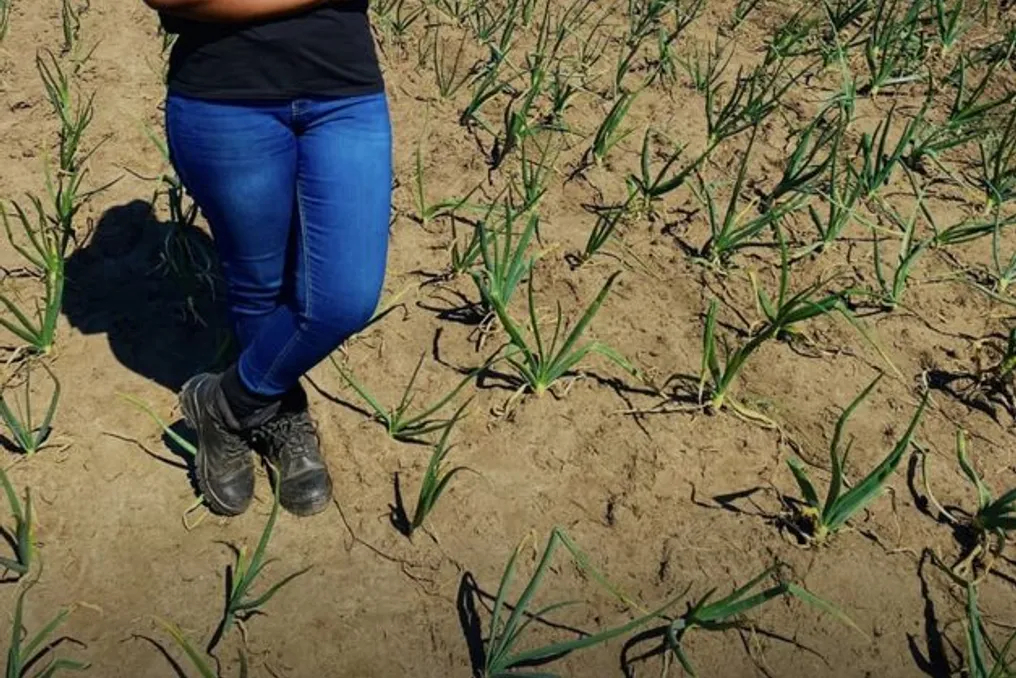
Farming Bootcamp Helped Uniche Dladla Develop Her Business in South Africa

Uniche Busisiwe Dladla, founder and managing director of Magalela Enterprises, utilizes her roots and drive to solve production challenges to build a career in modern South African agriculture.

Dladla grew up in the small town of Amersfort, Mpumalanga province. Although her family was involved in commercial farming, primarily growing maize and soybeans, her personal exposure to crop care began at home. Her mother, Lizzy Dladla, maintained a vegetable garden where Dladla regularly assisted. She stated that this experience gave her an early connection to agriculture.

She received her primary education at De Emigratie Primary School and later attended Hlelimfundo Combined School. After school, Dladla expanded her knowledge by studying business management at Oxbridge Academy, followed by obtaining a technical qualification in rigging from ABS Academy. In 2013, she began working as a rigger in the construction industry, stepping away from full-time farming but maintaining her business ambitions.

The turning point toward agriculture was the registration of Magalela Enterprises, named after her family surname, with the slogan: 'Cultivating a Lasting Legacy.' Although the enterprise was registered in 2022, its operational activities accelerated in 2024 after she saw an advertisement for the Seriti Green farming bootcamp. She applied, was accepted, and used this platform to refine and present her farming concept.

Dladla noted that during the bootcamp, she developed and presented her farming idea, and this opportunity gave her the confidence to pursue farming seriously. Following a successful presentation, Dladla secured initial funding to establish necessary infrastructure, including netting shelters, fencing, and basic agricultural tools. She started cultivating on a small rented plot, planting potatoes and onions.

Despite immediate challenges with water access, she harvested her first crop and sold the produce directly to local street vendors and spaza shops. In pursuit of long-term stability, Dladla subsequently acquired two hectares of municipal land in Bethal, where Magalela Enterprises currently operates. She also receives ongoing support from the Seriti Institute, including onion seedlings, soil preparation assistance, and agricultural education, which has helped her develop as both a practical and academically proficient farmer.

Magalela Enterprises is currently focused on producing onions, beetroot, green peppers, and chili on its two-hectare site, where two part-time employees assist with daily field work. Dladla intentionally selects main crops based on market demand rather than quick profit. She explains that she focuses on onions because there is a market opportunity. Many may underestimate onions due to their longer maturation period, but she sees this as an advantage because of the demand for them.

Her progress attracted the attention of high-ranking officials, including visits from the CEO of Seriti and the Minister of Electricity, confirming the growing scale of the business. Concurrently, Dladla continues to receive technical training. She is undergoing NQF Level 4 certification in plant production and participating in a three-year program with Agriculture Academy aimed at transforming her enterprise into a commercially viable operation.

However, running a new farm comes with certain operational pressures, particularly regarding mechanization and logistics. Dladla shares that one of the main issues is soil preparation. Renting a tractor can be very expensive, so she sometimes has to hire people to help prepare the land. Transportation is another hurdle, requiring the hiring of vehicles to deliver to buyers. She notes that while these difficulties can be challenging, they have taught her to find alternative solutions and move forward using available resources.

Dladla's plans for Magalela Enterprises include expanding vegetable production, securing formal procurement agreements, and entering larger commercial supply chains. Her long-term expansion plans involve seed production, hydroponic systems, and added value through agro-processing, specifically onion processing. Most importantly, she aims to create jobs, contribute to food security, and build a business that can create a lasting legacy for future generations.

For aspiring farmers, Dladla emphasizes the importance of taking action rather than waiting for ideal conditions. She advises starting with what you have and utilizing what is available. You don't need to have everything from the beginning. You must start small, learn everything possible, take advantage of opportunities, and not be afraid to ask for help. Agriculture is a business, so it must be taken seriously; you must understand the market and continue learning.

Popular