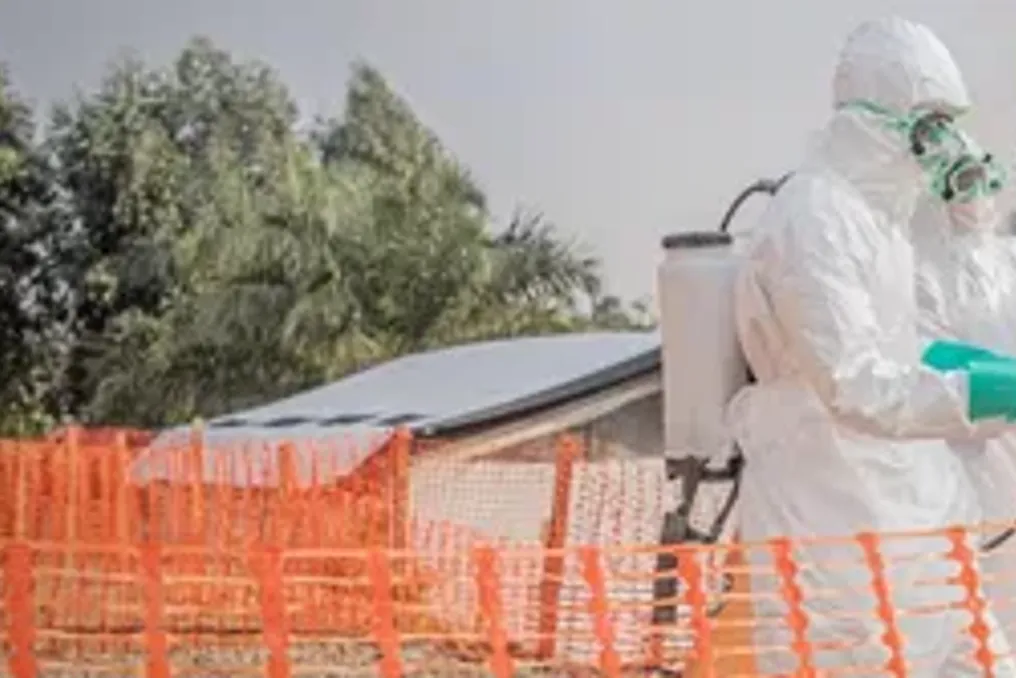
The Democratic Republic of Congo's (DRC) fight against the Ebola virus has reached a critical point. Successes in controlling the latest outbreak may accelerate, or the epidemic risks becoming the most devastating in history.
As of September 1, 2026, over 6,186 confirmed cases and 3,007 deaths have been registered since May 2026, when the first outbreak was declared. This outbreak is the deadliest in DRC's history and is caused by the Bundibugyo strain, for which there is currently no licensed vaccine or specific treatment.
It is believed that the outbreak began in late April 2026 in the Mongbwalu mining area in Ituri province, northeastern DRC, and subsequently spread through connected communities and health networks in Rwamparu and Bunia—health zones of Ituri province, as well as into Uganda.
The national response is coordinated by the DRC government with support from the African Centre for Disease Control, the World Health Organization, and other partners. These organizations assist in expanding surveillance, laboratory capacity, treatment centers, infection prevention, vaccination, logistics, community engagement, and safe burials.
Significant progress has been made, including halting virus transmission in Uganda due to decisive national leadership and close cooperation with local residents. However, transmission continues within the DRC due to security issues, high population mobility, delayed case detection, lack of funding and supplies, and weak community involvement.
The current response is insufficient to stop transmission in the DRC, highlighting the need to bring surveillance, testing, treatment, vaccination, and public engagement closer to the village level. Public health experts involved in containing this outbreak believe more effort is required.
What is needed for control
Controlling the epidemic is complicated by four main factors: the complex geographical and humanitarian situation in the DRC, high population mobility, low levels of trust and weak community participation, and an incomplete scientific arsenal against the Bundibugyo virus.
Four Key Factors
Firstly, the outbreak is occurring in an exceptionally difficult environment. The affected areas are vast, remote, and unsafe in many places; travel can take a day or longer due to poor roads, especially during the rainy season.
Secondly, the population is highly mobile. Mining communities, motorcycle transport, movement, and cross-border travel connect villages and health zones that are difficult to control. The outbreak is concentrated in several interconnected areas, particularly in Ituri, located approximately 2,886 km from the DRC capital, Kinshasa. Bunia, the main urban center of Ituri, is linked to surrounding transmission foci.
Thirdly, trust and community engagement remain problems. When people are afraid, when health facilities close after healthcare workers die, or when families face Ebola without seeing an effective response, they may delay or avoid seeking help. This directly impacts surveillance, as current investigations show that a significant portion of cases are detected outside established contact lists, and the response cannot rely solely on traditional contact tracing.
Fourthly, unlike the Ebola caused by the Zaire virus, the Bundibugyo virus does not have a licensed vaccine or specific treatment, meaning clinical trials are part of the response process itself.
Ebola vaccination has begun in Kisangani, DRC. The first injections were given to healthcare workers and other frontline staff. Over 50,000 doses have been received, and the International Coordinating Group for Vaccine Provision has approved 70,000 doses of Ervebo for use in the country. About 20,000 doses will be used in a clinical trial to assess its effectiveness against the Bundibugyo strain.
Response Undertaken
It is important to acknowledge what has been achieved in just three months—from May 15 to August 15, 2026. More than 20 Ebola treatment and isolation facilities have been established or maintained. At the height of the crisis in late May 2026, treatment capacity was overloaded, with occupancy exceeding 200%, but by the end of August, it had dropped to approximately 66%.
Laboratory capacity has expanded significantly: 22 laboratories are operating in five affected provinces. Previously, only one laboratory in Kinshasa could detect Bundibugyo. This has reduced the time from sample collection to result receipt from over a week to a few hours.
Safe and dignified burials have also substantially improved, with most now conducted within 24 hours. These improvements indicate that the response is capable of changing the trajectory of the epidemic when resources, coordination, and technical competence are combined.
There are also encouraging epidemiological signs. The effective reproduction number has significantly decreased from very high levels (Rt 4.0) observed in May. The average number of people infected by one patient has fallen from four to just over one.
The scale of mobilized resources for this outbreak is enormous: nearly $1.72 billion in pledges has been received, including $118.5 million pledged by African countries. It is reported that about $867 million (roughly half of the pledges) has already been allocated.
The continental response plan, launched on June 27, 2026, by the African Centre for Disease Control and WHO, is based on a simple principle: one plan, one budget, one team, one monitoring and evaluation system focused on communities.
Next Steps
The next phase must focus on villages. Local representatives, healthcare workers, and leaders must become active partners in surveillance, early detection, patient referral, risk communication, and community protection. Digital tools can help, but technology must serve the community, not replace it.
Commercial motorcycle drivers connecting communities over vast distances must be engaged as partners in the response, rather than being viewed merely as a risk. Vaccination must be brought closer to populated areas, and research must be conducted directly where the epidemic is occurring. Clinical trials of vaccines and therapeutics must proceed with urgency and scientific rigor.
Restoring Trust
Necessary medical services must continue alongside Ebola control. The same applies to the resumption of schools. This must occur while adhering to infection prevention measures, including teacher training, provision of sanitation facilities, development of clear referral mechanisms, and adaptation of epidemic information for students and families.
Humanitarian and anti-Ebola response measures must also be integrated. A community facing insecurity, displacement, and disease cannot expect to navigate separate systems for every crisis.
Finally, Ebola recognizes no borders. Cooperation between the DRC and Uganda demonstrates what regional solidarity can look like. It involves joint surveillance, bringing diagnostic capabilities closer to border communities, information exchange, and coordinated action. Lessons from the DRC and Uganda should be shared with South Sudan, the Republic of Congo, and other neighboring countries, as agreed in Bangi, Central African Republic, in mid-August.