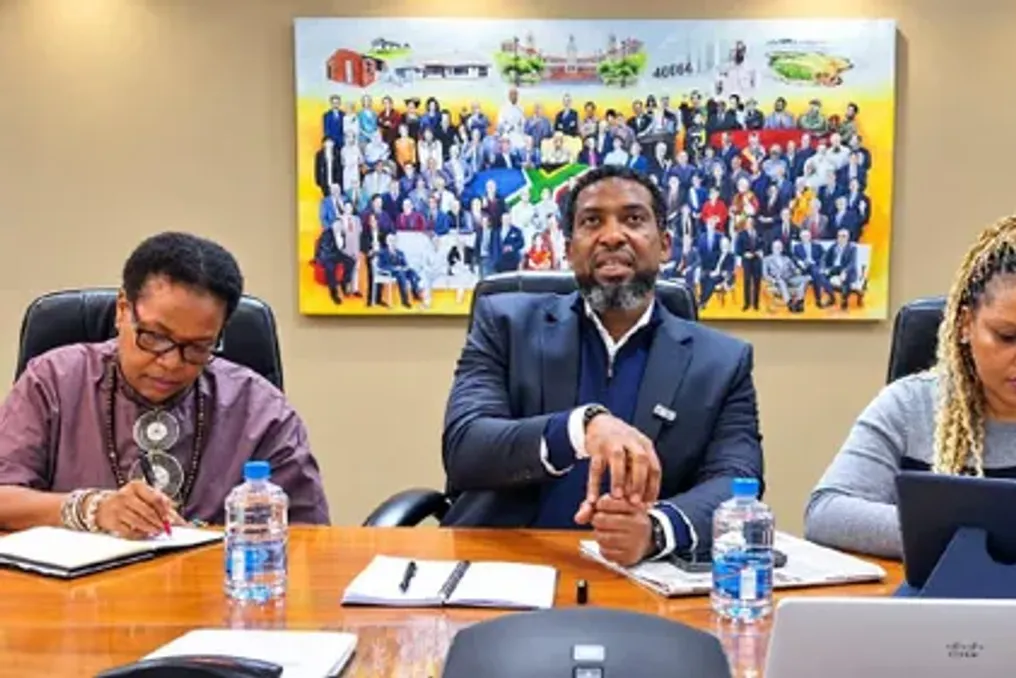
The Minister of Higher Education and Training, Buti Manamela, spoke out against the idea of excluding foreign lecturers from South African universities, warning that such a measure could deprive the country of critically important knowledge, innovation, and opportunities for international cooperation.
Manamela's statements were made in response to concerns regarding foreign nationals working in higher education institutions, as well as gaps in government data concerning their visa status.
He reported that the ministry has informed Parliament that foreign nationals constitute about 12% of the permanent academic staff, but acknowledged that existing databases do not always allow for the differentiation between permanent residents and individuals holding student or work visas.
Manamela noted: 'We have developed policies based on good faith. Now, the datasets required from institutions, some of which do not indicate whether a person is a permanent resident, has a student visa, or a work visa.'
Government steps to strengthen control
The Minister clarified that the Department of Higher Education and Training proposes joint action with the Department of Home Affairs, the Department of Employment and Labour, and the Special Investigating Unit (SIU) to strengthen oversight of foreign nationals working and studying in educational institutions.
He stated: 'Currently, as a department, we propose that we, together with the Department of Home Affairs, the Department of Employment and Labour, and the SIU, enter the process; we need to agree on what data we should measure, and then we need to conduct checks to determine who corresponds to what.'
Manamela acknowledged reports of potential visa misuse by both students and academic staff, but emphasized that universities generally rely on the documentation presented to them.
'There are reports that students may misuse their visas, and academic staff may misuse their work visas,' he said. Nevertheless, Manamela added that the information available to the department does not indicate that TVET universities or colleges are knowingly hiring people without the necessary documents.
'What I can say now, with maximum authority based on the information we have, is that no university or TVET college has hired anyone in any of our institutions without the required paperwork,' he stated. He urged: 'If we know of anyone who was appointed this way, let's deal with it. Let's name the university. Let's name them.'
Supporting stricter adherence to immigration and labour laws, Manamela firmly cautioned against turning this issue into an anti-foreign scientist campaign.
'The idea that you can prevent our universities from accepting scholars of foreign origin, I think we would make a big mistake,' he remarked. He stressed that any person hired at a university must be legally appointed and comply with the rules and regulations of this country, the Constitution, and various legislative acts.
However, he added: 'But we cannot appear as if South Africa is deliberately targeting foreign scientists and expelling them from our institutions. I think it would be regrettable if that happened.'
Manamela argued that South African universities require international experience and collaboration to maintain competitiveness and advance research and innovation. He stressed that the country cannot progress if it isolates itself from global processes.
Foreign expertise as an opportunity for South Africa
Manamela believes that global changes in the academic sphere can provide South Africa with an opportunity to attract expert knowledge and strengthen interaction between local and international researchers.
'This is a huge opportunity for us so that South African minds can collaborate with international minds to help build this country,' he said. He noted the necessity of innovation, creativity, and the creation of new products for markets, which is impossible in isolation.
Nevertheless, he strongly emphasized that the international recruitment of personnel must be carried out within the framework of South African legislation. 'All of this must happen in accordance with the country's laws.'