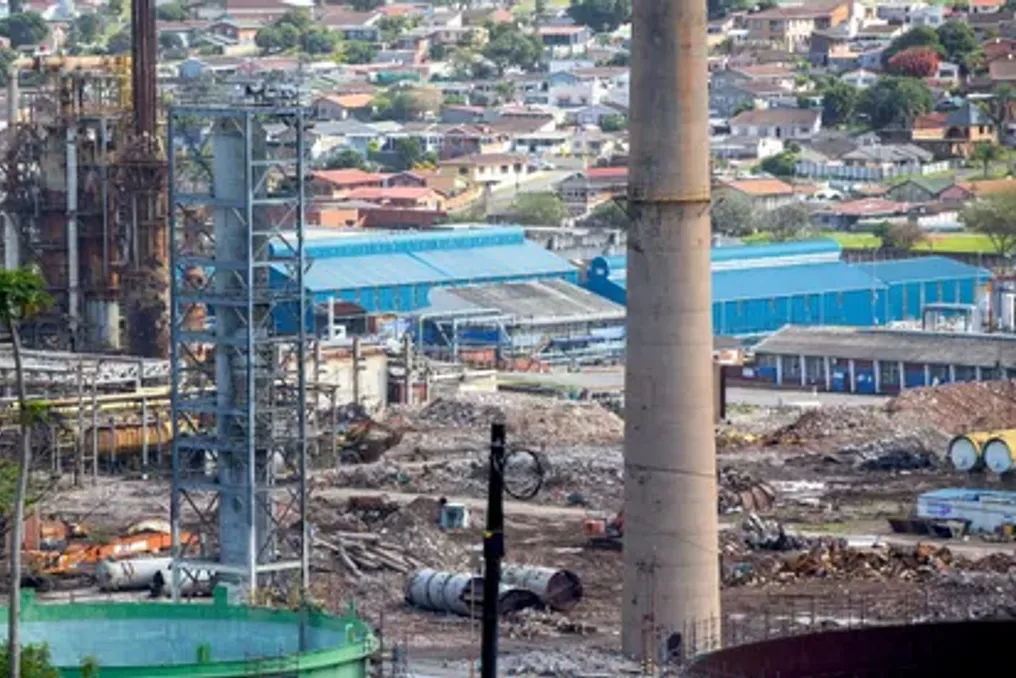
Six years after the closure of the Engen refinery in Merewent, residents express mixed feelings of relief and concern. Although the halt in production led to reduced noise and pollution levels, concerns persist as the site is being transformed into a storage terminal.
The refinery was shut down in December 2020 following an explosion that caused a fire and injuries to several local residents, as well as damage to residential property. Subsequently, Engen announced plans to convert the refinery into a storage terminal, a decision resulting from a comprehensive strategic assessment of its refining business.
Engen stated that every aspect of the plant was thoroughly studied and evaluated considering market demand, future growth potential, and the ability to ensure sustainable development. The company believes that the transition from a refinery to a terminal is part of a long-term strategy to ensure business sustainability, allowing it to counter future market threats and respond promptly to new opportunities.
However, the circulation of a video showing the dismantling of the refinery's glass structure in WhatsApp groups has reignited questions among Merebank residents regarding the work being conducted behind the facility's gates.
Residents' Views on the Terminal Transition
Viktor Kupsami, a resident and representative of the Merebank Forum Alliance, noted a significant decrease in pollution, particularly the noise from flare burning at night, which disrupted citizens' sleep. Nevertheless, his current concerns relate to the increased flow of trucks and tankers on the roads after the conversion is complete. He emphasized that the Tara and Basil Fevruari roads, used by these vehicles, are also routes for many residents, raising fears about collisions and potential spills that could lead to accidents, endangering pedestrians' lives.
Kupsami also expressed worry about the volume of stored product and the consequences of a possible explosion. He asserted that Engen had not informed the community about the current activities at the site, adding: 'All we ask is that they listen to the community's concerns before making further decisions. We must get a chance to voice our opinion, as this also affects our lives.'
Raven Naidu, another resident, had previously voiced concerns about gases and fumes related to the refining process, especially regarding breathing problems and the risk of explosion. Regarding the transition to a terminal, he insists that residents receive timely and consistent information about all work at the site. Like Kupsami, Naidu is concerned about the transportation of fuel products.
He stated that the risk of accidents and fuel spills can be mitigated if strict control over fuel transport is ensured and stringent safety requirements are established for all companies delivering products through their areas. Naidu stressed: 'There can be no compromise when it comes to the safety of surrounding communities.'
Furthermore, he believes the future of the site should consider not only commercial activity but also providing benefits to surrounding communities through job creation, significant community investment, environmental responsibility, and continuous engagement.
Local resident Loshni Govender was pleased to be rid of the 'rotten egg' smell in the air. She noted that many experienced breathing difficulties, especially people with asthma. Despite the joy of the refinery's closure, she expressed anxiety about storing any highly flammable or toxic substances in close proximity to residential homes.
Desmond D'Sa, coordinator of the South Duban Environmental Alliance (SDCEA), reported that since the refinery's closure, residents have noticed improved air quality and clearer skies; however, he maintains that environmental and health issues have not disappeared. D'Sa also expressed concerns about the potential impact of industrial activity on neighboring residential areas.
He warned that hazardous trucks increase the risk to the residential area located directly opposite. Increased storage of gasoline and other petroleum products will lead to higher benzene emissions—a volatile chemical capable of killing many nearby residents. Moreover, D'Sa pointed out a complete disregard for the residents of South Duban due to poor communication and the ignoring of serious proposals aimed at improving life. He believes the terminal should have been built further away from densely populated areas.
Engen Company Comments
Samantha Valt, media and communications consultant for Engen Vivo Energy, reported that after decommissioning the refinery's production equipment, the company began the safe dismantling and demolition of infrastructure previously used in production. She specified that this phase started in April 2025 and is proceeding 'safely and according to plan.'
Valt explained that dismantling large structures such as columns, tanks, stacks, and associated equipment is a complex task. Engen conducted a thorough analysis of demolition methods and implemented measures to minimize impact. The company assured that it remains committed to carrying out this work safely and responsibly, minimizing inconvenience to stakeholders, employees, and the local population, emphasizing that safety is the highest priority.