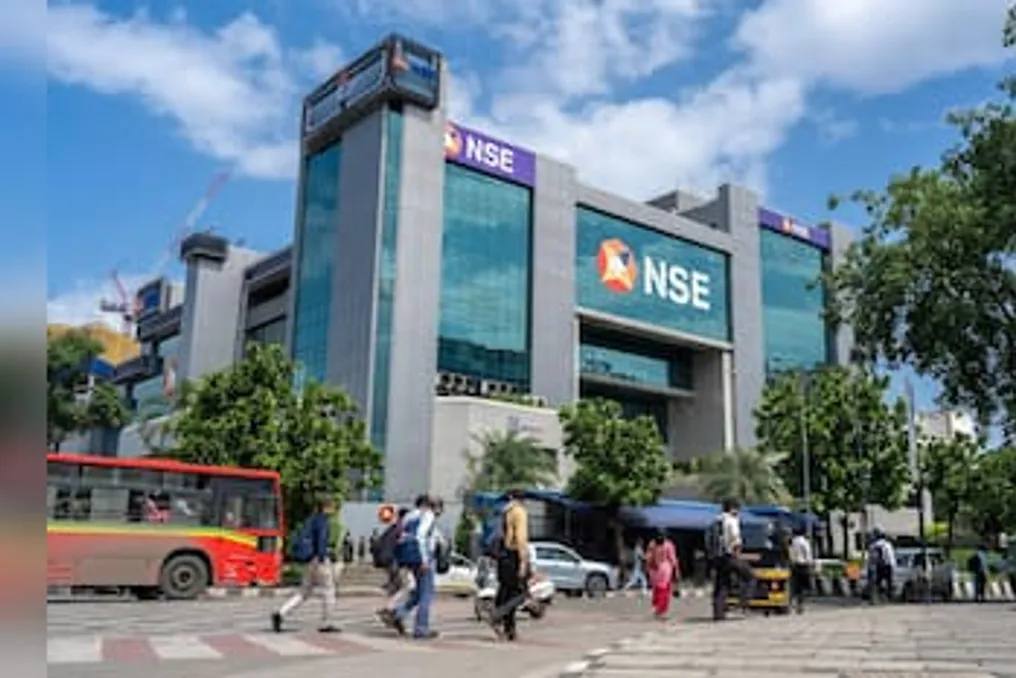
The management of the National Stock Exchange of India Ltd. has faced investor concerns regarding future growth rates after regulatory restrictions cooled down India's derivatives market. These concerns forced the exchange to lower the target maximum valuation for its Initial Public Offering (IPO) before listing.
During meetings with global investors in Hong Kong, London, and New York, the question arose as to how the exchange could continue to grow after the tightening of regulations on its rapidly developing derivatives business. Investors expressed doubt about the NSE's stated valuation of around $55 billion, deeming it too high.
Under investor pressure, NSE executives informed anonymous sources that they had reduced the maximum desired valuation by approximately 15 percent. Even at the new price of $47 billion, NSE shares would be more expensive than those of the ten largest global exchanges based on last fiscal year's profits.
John Ninia, a partner at Mobius Investments, noted that NSE appears quite expensive in the short and medium term compared to other global exchanges, pointing to stricter trading rules as a risk to derivatives volumes. He added that investments would become more attractive in the long run after the valuation adjustment.
The NSE listing, which was prepared over a decade, was slowed down due to legal issues and regulatory hurdles. Specifically, last year's regulatory pressure on Jane Street Group and other measures to limit excessive speculation led to a cooling of the derivatives market, which previously made India a leading global options center.
The environment also became less favorable: investors are actively shifting into artificial intelligence-related stocks, which India lacks, and rising oil prices and delays in a trade agreement with the US are creating economic pressure. Despite this, the IPO will attract significant attention due to the country's importance in emerging market portfolios; over 120 global funds attended the meetings, including BlackRock Inc. and GQG Partners LLC, but initial investor enthusiasm has waned.
A similar incident occurred in Hong Kong previously, where the IPO of Shein Global Holdings Ltd. reached a peak, after which its shares fell by 10 percent after trading began and remain significantly below the IPO price.
According to deal information, NSE plans to go public with a price range of 1,700 to 1,785 rupees per share. At this valuation, the exchange would rank eighth among global peers by market capitalization. The exchange may also reduce the offered stake to 5.5 percent of total equity, compared to the previously planned 6 percent. At the upper end of the proposed range, the sale of this stake, fully executed by existing shareholders, would amount to about 24,300 crore rupees ($2.6 billion), which is lower than the record 27,900 crore rupees collected by Hyundai Motor Co. in India in 2024.
Valuation was a central element of discussions at international roadshows. Investors showed interest but were divided on prospects, with some questioning the impact of tighter regulations. Investors also asked NSE management and bankers what portion of the exchange's future growth was already factored into the price and whether the exchange could sustain the pace of the past decade.
At the upper end of the proposed range, NSE is valued at approximately 43 times the profit for the 2026 fiscal year. This multiple would make it the most expensive among the 10 largest listed exchanges globally, whereas four leading competitors trade at a multiple of about 24 times, according to Bloomberg data.
NSE management asserted at the roadshow that the exchange is growing much faster than its global counterparts, making comparisons incorrect. However, some investors disagreed, believing the exchange should receive a discount because Indian regulators intervene more frequently than their counterparts in other countries. A representative of the exchange did not respond to the request for comment.
Further regulatory actions could negatively affect the valuation. According to the Securities and Exchange Board of India, retail investors lost over $40 billion in derivatives stocks over five years leading up to March 2026, intensifying scrutiny on the market where small traders confront global firms. Jane Street denies regulator accusations of market manipulation and seeks access to additional documents in an Indian court.
Derivatives trading has been highly profitable for NSE. For the year ending March 2026, the exchange reported a net profit of 10,300 crore rupees on revenues of 16,600 crore rupees, providing a profit margin of about 62 percent. Although this figure decreased from approximately 71 percent the previous year, according to the IPO prospectus, it remains higher than most major global peers.
Options form the basis of its profitability, generating about 60 percent of operating revenue for March. This model is becoming harder to maintain. A smaller competitor, BSE Ltd., is gaining market share in the options segment, and new central bank restrictions on lending to proprietary trading firms threaten a key source of trading volume. According to the exchange, the average daily nominal turnover of futures and options on NSE reached an 18-month low in August.
Some of NSE's earliest investors view the situation differently, maintaining their positions despite a gain of over 1000 percent based on the current unlisted market valuation. Bodas, founder and CIO of Deccan Value Investors LP, which holds 1.83 percent of NSE, calls the exchange an 'options contract' on India's growth. Holders also include Life Insurance Corp. of India and a fund backed by tech magnate Azim Premji.
Morgan Stanley, Temasek Holdings Pte., and State Bank of India are among the shareholders expected to reap significant profits from the IPO, according to the prospectus draft. Global funds that held 31.35 percent of the exchange's shares as of December 31, 2021, have since reduced their stake to 26.41 percent as of June 2026.
NSE's growth began with the transformation it brought to the Indian markets when it was launched in the 1990s. Established after a stock market scandal in 1992 that triggered systemic reforms, NSE introduced electronic trading in 1994, challenging the then-dominant Bombay Stock Exchange. BSE followed a year later, completing its century-old trading ring where brokers shouted orders.
Dina Mehta, a broker who became the first female president of BSE in 2001, noted that NSE became a strong competitor, significantly increasing market efficiency and transparency for investors. She also emphasized that NSE offered products familiar to global funds, helping to attract foreign investors and turn India into a world leader in equity derivatives.
By 2016, NSE was ready for listing. The plan stalled after SEBI raised questions about a dispute in which some brokers with servers located near the exchange allegedly gained faster access to data feeds. Years of litigation and regulatory procedures followed, along with a reorganization of senior management. The path to listing was cleared in January of this year when SEBI granted approval, and a settlement of 1,491 crore rupees was reached in July to resolve past disagreements.
Although the IPO might have been blocked, the business continued to grow. More Indians shifted their savings into stocks and began trading derivatives, leading to a sharp rise in NSE's private market valuation. This expanding pool of investors remains a powerful long-term driver, providing NSE with more clients even if derivatives growth slows down.
Nevertheless, the exchange's growth potential in some markets is partially limited by its already dominant position. In the 2026 fiscal year, NSE held 74.71 percent of equity options, 92.99 percent of cash equities, and 99.48 percent of currency futures traded on the exchange, according to its prospectus. Since several of these markets are under pressure, the exchange needs to find new revenue streams.
One option is commodity derivatives. The exchange could leverage its technology and broker relationships to compete with established local rivals such as Multi Commodity Exchange of India Ltd. Another option is data. Major global exchanges, including Nasdaq, have built businesses less dependent on trading. NSE possesses similar data and analytics assets that it could utilize. Jian Shi Cortes, manager of Gam Investment Management in Zurich, noted that in conditions of regulatory uncertainty, 'a positive surprise may come from non-transactional revenues, such as index licensing and data services.'
Some investors, including Mike Sell, head of Global Emerging Markets at Alquity Investment Management Ltd., see greater potential in digital platforms for stock brokerage that benefit from domestic investment growth than in the exchanges themselves. This makes NSE harder to sell than ten years ago. The exchange remains a dominant player, but now investors have more ways to access India's changing financial landscape.