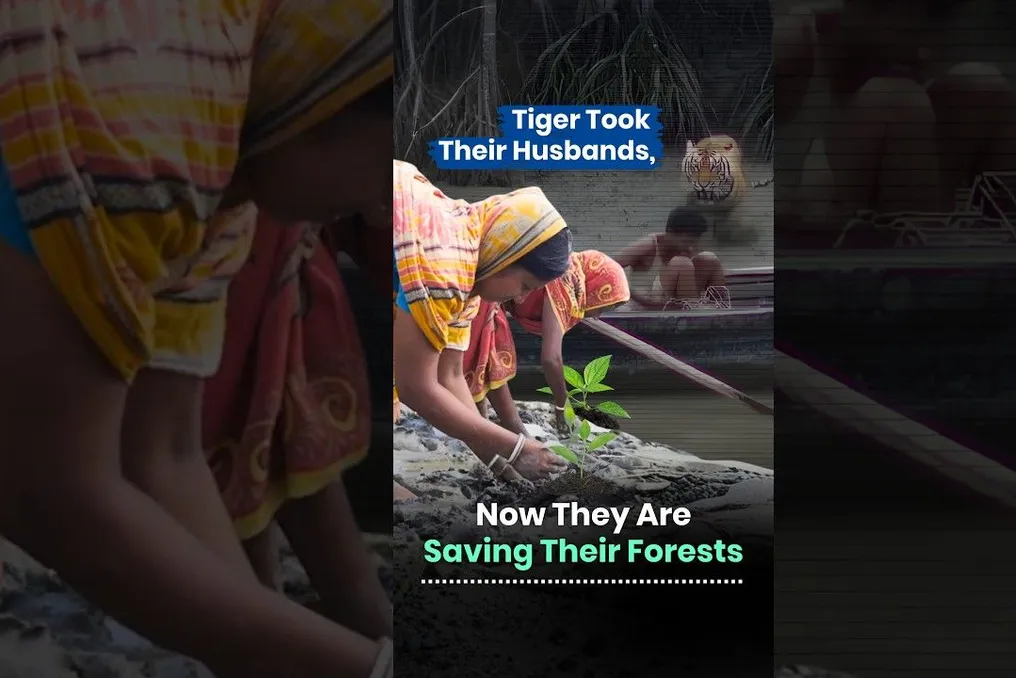
In the Sundarbans region, visiting the forests for work carries the risk of encountering Bengal tigers. For many local families, this is part of daily life, as men venture into the forest to catch fish, gather crabs, or honey, hoping to return home with enough provisions to support their families.
However, they do not always return. Between 2016 and 2020, tiger attacks resulted in the deaths of 67 people in the Sundarbans, though the actual number of victims may have been underestimated.
The women left behind after these attacks are known as 'tiger widows.' The loss of a spouse radically changes life: they must cope with grief, manage the household, and face the sudden loss of an income source.
For some of these women, the situation is compounded by another injustice: they are accused of their husbands' deaths and abandoned by their own families. In moments of greatest need, many are forced to try to survive alone.
Returning to the Mangrove Forests
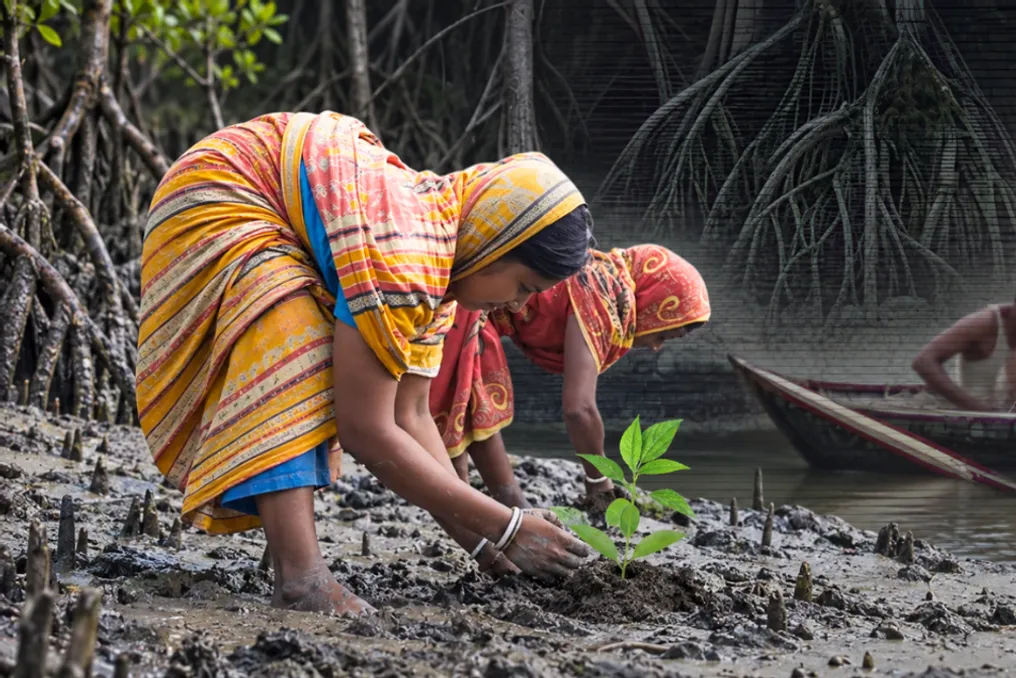
In the village of Jarkhali, some of these women have begun engaging in activities that change the perception of their story. They are returning to the mangrove swamps, restoring about 100 hectares of degraded mangrove habitat alongside other local residents. Their goal is to plant one hundred thousand mangrove saplings.
The significance of this work is evident. The forest that provided the livelihood for their husbands became the site of their tragic deaths. Today, these women are helping to restore the landscape for both families and wildlife that still depend on it.
Mangrove swamps are critically important for life in the Sundarbans. Their roots protect coastal villages from the destructive impact of cyclones and strong waves. Furthermore, they serve as a habitat for fish and other fauna, sustaining communities whose well-being depends on fishing and crab gathering. Mangroves are also part of the Bengal tiger's range.
For the residents of this region, people, forests, and wildlife exist in a single landscape where their lives are intertwined in ways that can bring both sustenance and danger.
A Future Where Women Are Not 'Tiger Widows'
This is what makes the decision of these women so significant. They have personally experienced the consequences of the conflict between humans and wildlife and know what it can take from a family. Nevertheless, their current activity is focused on restoration.
Every sapling they plant contributes to strengthening the forest that protects settlements, supports livelihoods, and provides necessary space for wildlife survival. The story of these women also serves as an important reminder of the need to conserve nature in places like the Sundarbans.
People living near the forests cannot be isolated from discussions about wildlife protection; their safety, livelihoods, and future are part of the same issue. For these women, this issue is deeply personal. They are helping to heal the same landscape that shaped their families' lives and brought them immense losses. Through one hundred thousand mangrove saplings, they are working towards a future where people and wildlife have a greater chance of coexisting, and where fewer women are forced to live under the label of 'tiger widow.'