
Vastu Tips: Images You Should Not Use as Phone Wallpaper
Read more
Aaj Tak
www.aajtak.in

Vastu Tips: Images You Should Not Use as Phone Wallpaper

In the modern world, the connection between humans and smartphones has become so close that the screen is constantly in view, from morning till evening. Users unlock their phones countless times throughout the day. However, many do not know that the image on the phone screen affects not only its appearance but also directly influences the subconscious and destiny.

According to Vastu Shastra and Feng Shui specialists, the mobile phone is a very personal and energetically charged part of life. Using unsuitable images on it can lead to family tension, financial difficulties, and mental anxiety. Below are types of photos that can negatively affect the phone.

According to Feng Shui principles, images of a setting sun or a ship sinking at sea, which are often used in cinematic or melancholic wallpapers, symbolize misfortune, energy decline, and financial losses. Constantly gazing at such pictures can breed a feeling of hopelessness.

It is also not recommended to use photos of thorny or dry plants, such as cacti, even for aesthetic reasons. According to Vastu, images of such plants attract struggle, obstacles, and stagnation into one's life, creating a sense of developmental standstill.

Furthermore, wallpapers with sad faces, tears, or scenes of mourning negatively affect mood, causing depressive states and generating negative energy within a person.

One should not place images of aggressive or frightening animals, such as lions or cheetahs, in a rage or in a terrifying state on the phone. Such pictures form an aggressive and frightening aura around a person, contributing to the growth of unknown fear and anger.

If a person strives to attract positivity, success, and luck into their life, they should set one of the following photos on their screen. A rising sun is considered a symbol of new hope, enthusiasm, and success, and starting the day with such an image maintains a high level of energy.

Other favorable options include images of blooming flowers or lush greenery, such as lotus or roses, as they calm the mind. Feng Shui symbols like a golden fish (a pair of fish) or a smiling Buddha are also considered auspicious for attracting wealth and luck.

Finally, inspiring quotes can be used to motivate the user every time they pick up their phone, reminding them of their goals.
Similar stories

Historians to Join Scientists in Studying Hanuman Statue in Ujjain, Which May Be Thousand Years Old
Read more
www.aajtak.in

Historians to Join Scientists in Studying Hanuman Statue in Ujjain, Which May Be Thousand Years Old

Due to various discussions concerning road widening, the dismantling of the temple building, and the impossibility of moving the statue, there is a suggestion that the Hanuman statue in Ujjain may be around a thousand years old. With experts involved, historians are now planned to assist in understanding the age and historical context of this statue. The Archaeological Department posits the hypothesis that the statue might be about 1000 years old, and a corresponding investigation has begun.

In Ujjain, road widening work is underway on the section from Kantal intersection to Chhatri Chowk (Bada Sarafa Marg) as part of preparations for Singhastha 2028. The Hanuman temple building located on this route and its enclosure have fallen into the construction zone. After some structures were removed, the situation surrounding the statue became sensitive. In recent days, various discussions regarding this statue have emerged. Some devotees consider the inability to move the statue a miracle and travel from neighboring states such as Gujarat, Maharashtra, and Rajasthan to see Bajrangbali. Many pilgrims share videos of the statue on social media, leading to a constant trend of Hanuman-related videos.

The greatest interest lies in the age of the Hanuman statue. An examination is being conducted to check the possibility that the statue is about 1000 years old. However, this is not yet a final conclusion. Expert studies are necessary to confirm the true age of the statue. This is why the role of historians and relevant specialists becomes extremely important. Ujjain is known for its ancient religious and historical traditions. Historians can study which stylistic tradition the statue belongs to: its posture, facial features, body structure, ornaments, and manufacturing style can be compared with temples and statues of that era.

Local sources claim that the Hanuman temple itself is about 170 years old. If the statue's age turns out to be around 1000 years, the question will inevitably arise: where was this statue before the current temple? Was there any old religious structure on this site previously? Was the statue moved from another old temple or location? Or was there a tradition of worship in some form here even before the construction of the current temple? Answers to these questions can only be found through the research work of historians.

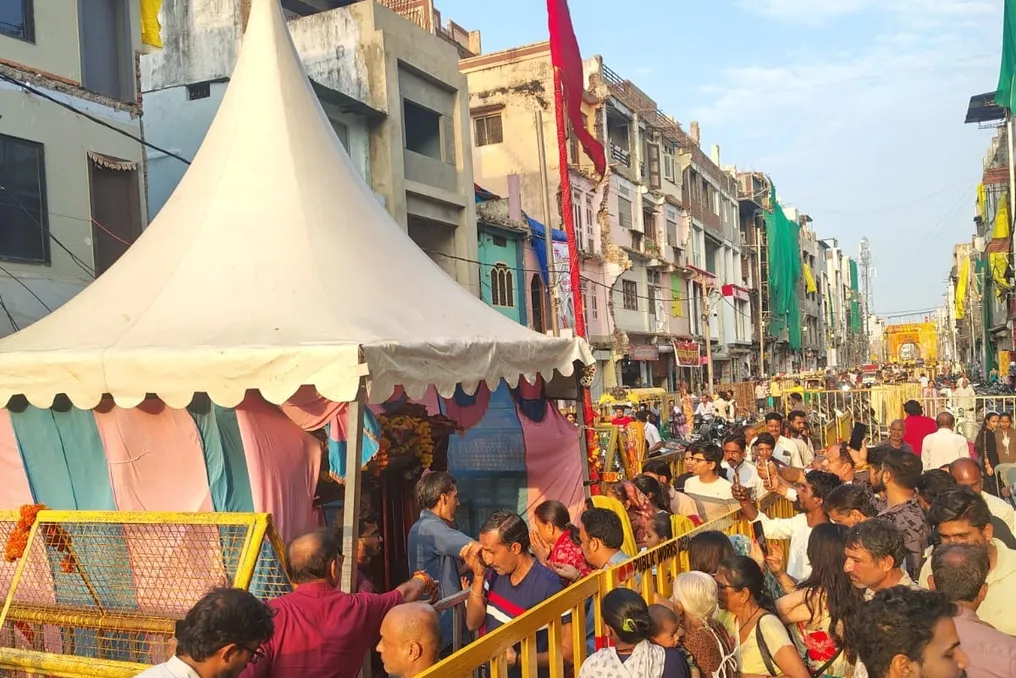
Part of the enclosure and the temple building was dismantled for road widening. Currently, the Hanuman statue is temporarily placed in a tent to ensure its preservation. Despite the change in the appearance of the temple, the flow of pilgrims has not decreased; on the contrary, there has been an increase in crowds in recent days. Pilgrims arrive for worship from morning till evening. On Tuesday evening, a maharati took place on the temple grounds, accompanied by the sounds of drums and trumpets, as well as the recitation of the Hanuman Chalisa. On Wednesday, representatives of religious organizations also visited the temple to conduct rituals. Local residents note that Hanuman is part of the old religious life of Ujjain, and people have long revered this statue.

Recently, various discussions regarding the relocation of the statue appeared on social media. Some people claimed that the statue had not moved from its place, attributing this to the divine power of Hanuman. However, the district administration issued a clarification regarding these claims, noting that many news items on social media are misleading. The administration emphasized that no attempts to move or dismantle the statue using machinery have been made so far.

On Wednesday, many representatives of religious organizations came to worship Hanuman. The Sangh performed worship according to rituals and opposed the relocation of the statue. Mahant Raghavendra Das Maharaj called for the statue to remain in its original place. In turn, Gadipati Mahant Vinit Giri Maharaj from Mahanirmohi Akhara stated that the administration should find a solution through dialogue, respecting public sentiment. Meanwhile, Congress leaders also held a demonstration against the alleged plan to remove the statue. The administration insists that no action has been taken to remove the statue.

Ancient Bronze Age Cemetery Discovered in Surkhandarya with Burials
Read more
podrobno.uz

Ancient Bronze Age Cemetery Discovered in Surkhandarya with Burials

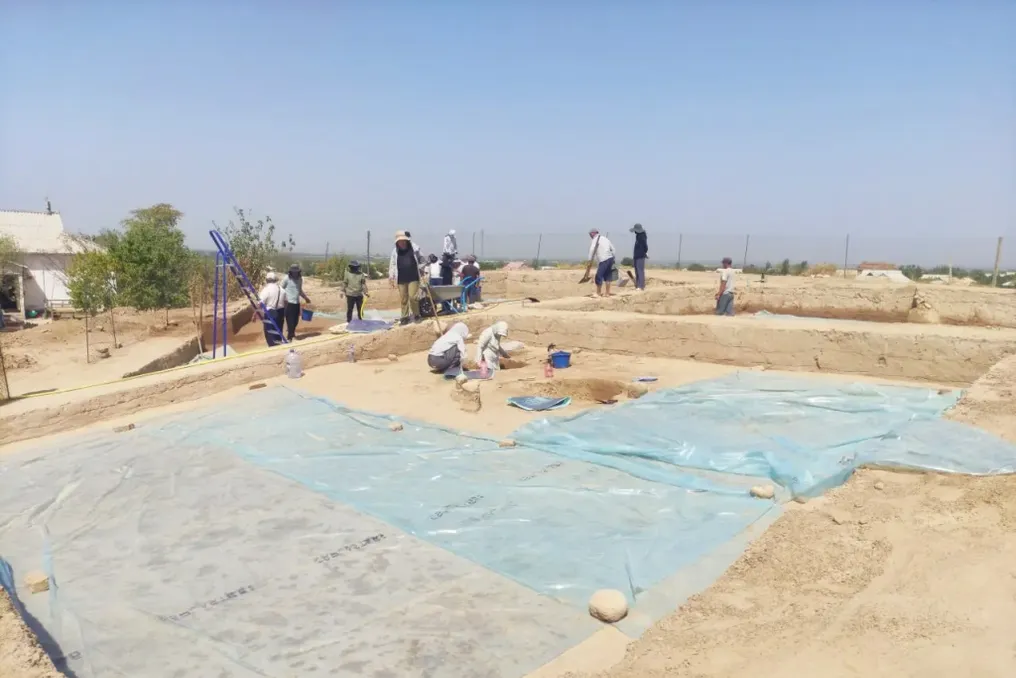
Archaeologists are exploring one of the region's oldest burial grounds, located at the Ozod monument, in the Shurchinsky district of the Surkhandarya region of Uzbekistan. During the work, approximately one hundred burials dating back 3,5 thousand years were discovered.

Excavations at this monument began on August 15, 2026. The research is being conducted through the joint efforts of specialists from the Gulomov Samarkand Archaeological Institute and the Silk Road Archaeology Research Center of Northwestern University of China.

The monument itself was first discovered in 2023 as a result of field reconnaissance work conducted in the eastern part of the Surkhandarya basin. It is located southeast of the village of Ozod, about six kilometers from another ancient monument—Dalverzintepa. The total area of the archaeological site is about 200 by 100 meters, and about one hundred burials have been identified so far.

In the current season, the specialists' attention was focused on more than ten graves located in the southwestern part of the monument. Preliminary results indicate that both the construction of the burials and the found artifacts exhibit characteristics of the Sapallin culture.

The age of the monument was determined through radiocarbon dating and comparative typological study of archaeological finds. According to preliminary estimates, the burials date to the period of 1700–1500 BCE, which corresponds to the age of the Ozod cemetery at 3.5 thousand years. For archaeologists, this site is of significant interest because it is one of the oldest cemeteries found in the Surkhandarya basin, and its study will help clarify the evolution of funerary traditions of the local ancient population.

Work at the site continues, and archaeologists expect new discoveries that will allow for a more detailed study of the history of this ancient monument. It should be noted that stone artifacts dating back 320 thousand years have previously been found in the Tashkent region.

Popular