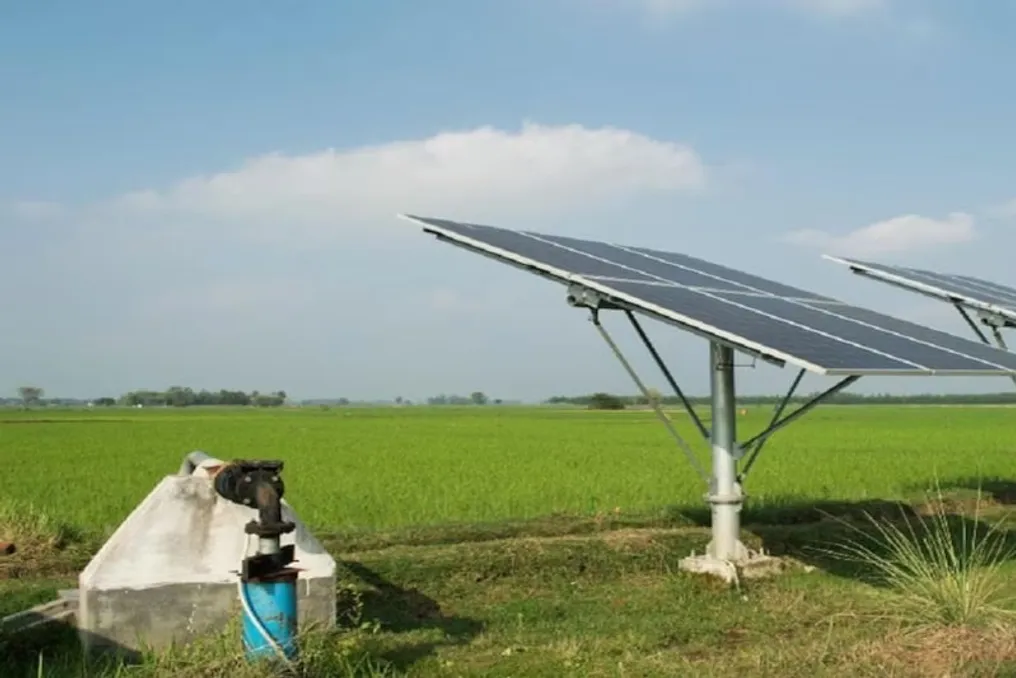
Unstable power supply on farms leads to serious problems: the shutdown of irrigation pumps, heating of cold storage rooms, exposure of poultry to cold or heat, and increased costs due to product downtime. For South African farmers, who are already facing rising resource costs, unreliable electricity, and climate change, the energy issue is critically important.
Consequently, more and more farmers are considering alternatives to the national grid, focusing on solar panels, battery storage, and even using agricultural waste as an energy source.
The transition to renewable energy sources is also part of agriculture's response to climate change. In addition to seeking more affordable and reliable energy, abandoning fossil fuels helps reduce greenhouse gas emissions in the sector.
Commercial poultry farmer Lerato Aliu, CEO of Roadgrass Investments in Katabooshfontein, is integrating renewable energy into her farm's plans for increasing sustainability and reducing costs. Although the farm has not yet fully transitioned to autonomous power supply, Aliu is in the process of approving a plan to implement solar energy.
Her approach is based on utilizing existing farm resources rather than building a system from scratch. Aliu noted that the goal of the transition is to reduce electricity costs by at least 20% in the coming months.
Besides savings, this step aims to increase resilience against power outages and sudden supply interruptions. For her, energy reliability has become as important as its cost. One of the main lessons learned was studying available resources, such as chicken manure, which can become an untapped energy source.
Aliu emphasized that selecting a suitable solar system requires a thorough plan that must consider initial costs, actual energy needs, and system compatibility with existing equipment. Her advice to other farmers is not to rush planning and to carefully examine waste or by-products that can be converted into energy.
An agricultural economist from Gauteng, Dr. Sifwe Zantsi, believes that energy already constitutes a significant portion of farmers' production costs, and rising fuel and electricity prices intensify pressure on already limited profits. For farmers who can cover the initial investment in solar and other renewable systems, long-term savings can significantly impact the financial outcome.
After the equipment pays for itself, most of the funds previously spent on energy remain in the business, although maintenance costs remain. This is particularly relevant for small farmers with narrower margins. However, the main problem is the upfront cost. Zantsi suggests that small landowners pool their efforts to jointly cover the costs of installing renewable systems.
He also warns that making energy cheaper for farmers does not necessarily lead to lower food prices, as farmers are largely price takers, and prices are determined by market forces. He added that a reduction in food prices could occur if renewables are used by processors and distributors.
An environmental activist from Cape Town and founder of Blackgirls Rising, Soli Fuyani, argues that renewable energy will help South Africa's agriculture respond to growing climate change pressures while simultaneously improving energy security on farms. Agriculture is at the intersection of the country's energy, water, and climate challenges, and farmers are already battling drought, unpredictable rainfall, floods, and rising temperatures.
For Fuyani, the value of renewable energy goes beyond simply lowering electricity bills. Solar energy can support irrigation, cooling, and processing, reducing farms' dependence on coal-fired electricity. She believes this should be part of a broader movement towards climate-smart agriculture, alongside improved water management, soil health, and biodiversity protection. She insists that 'renewable does not automatically mean no impact.'
Fuyani also points out the need to consider the location of solar infrastructure, its impact on productive land and ecosystems, as well as the fate of solar panels and batteries at the end of their service life. She believes the transition must reach small and emerging farmers through accessible financing, technical support, and shared infrastructure such as community solar, cooling, and irrigation systems.
Professor Samson Mampheveli, head of the Energy Secretariat at the Department of Science and Technology Innovation (DSTI) in the South African National Energy Development Institute (SANEDI), notes that the decision to move away from complete reliance on the national grid is largely driven by energy security concerns and the rising cost of electricity. For farmers, unreliable power supply can have consequences far beyond the electricity bill. Cable theft, outages, and scheduled shutdowns can disrupt irrigation, cooling, processing, and livestock farming, potentially leading to direct production losses.
Mampheveli states that solar and other renewable systems can offer farmers a cheaper and more reliable alternative with a relatively short payback period. He emphasizes that the size of the farm is not the decisive factor when designing a renewable energy system; what matters most is an assessment of the farm's specific energy demand, which must be conducted by a qualified engineer or electrician.
In addition to savings, stable power supply protects production. For example, a power outage on a poultry farm in winter can lead to bird deaths from cold, and a break at a dairy farm can jeopardize milk stored in cold rooms. Mampheveli concludes that correctly sizing the system is key to ensuring the expected return on investment, stressing: 'The system must be properly sized by a qualified engineer.'