HACC 2026 Festival to Showcase Films from Africa and the Middle East in Cape Town Focused on Land and Heritage
Read more
IOL
iol.co.za

HACC 2026 Festival to Showcase Films from Africa and the Middle East in Cape Town Focused on Land and Heritage

Hollywood African Cinema Connection (HACC) will host a screening of African and Middle Eastern films in Cape Town from October 30 to November 2, 2026. The festival's program will focus on exploring themes of land, heritage, and the lives of people behind conflict stories.

HACC Creative Director, William Williams, noted at a press briefing that the selection process prioritized unique cinematic style and directors with a clear creative vision. The central theme of the festival, 'Our Land, Our Heritage,' unites stories about communities, culture, and the threat of displacement.

Williams emphasized that the selected films are unique works embodying the vision of their directors. The opening film will be 'Irqalla: The Sword of Gilgamesh' from Iraq, directed by Mohammed Jabarah Al-Daradji. Williams described the depiction of two orphans experiencing trauma in Iraq as an opportunity to look deeper than just the statistics often presented in the news.

The Creative Director noted that the strength of this film lies in its attention to the emotions and daily experiences of children. She expressed enthusiasm about the possibility of sharing this film with the audience.

Williams also mentioned that filmmakers from the Middle East welcomed the chance to reach the South African audience. Through her work in distribution, she sought ways to increase visibility and find commercial opportunities for these directors' works. She believes that Cape Town's diverse communities and interest in art create a suitable audience for such stories.

The closing film will be 'Cotton Queen,' directed by Suzanne Mirgany, which explores the lives of women in a Sudanese community involved in cotton farming. Williams linked the attention to these women's culture and the threat of losing their land directly to the festival's theme. She first saw this film at the Durban International Film Festival, where she met Mirgany, and was moved by the portrayal of the women's intimate lives.

Williams noted that she chose the film due to the quality of its cinematography and deep narrative, adding that four out of ten selected feature films were directed by women.

Bhekis Dladla, who spoke about his work with African Film DAO and festival curation, stated that the current selection reflects changes in African cinema. He noted that the selection process revealed progress in both storytelling and production across different parts of the continent, and believes that filmmakers need to combine these strengths to maintain audience attention.

Dladla reported that the improvement in filmmakers' work has been achieved through skill development, infrastructure, and mentorship. He wants the festival to showcase these achievements alongside the stories themselves. He also named audience participation as a central element of African Film DAO's ambitions. DAO stands for Decentralized Autonomous Organization.

Dladla presented a model where participants can use digital tokens to support film projects and vote on scripts that should move into production. He gave an example where the community reviews several scripts and uses tokens to indicate which film they want to see. He presented this as a way to involve the audience in the filmmaking process and seek support for filmmakers as an alternative to studios and government funding.

Williams announced that the opening and closing films will be shown at Ster-Kinekor at V&A Waterfront. She also mentioned that the weekend program at the Robben Island Amphitheatre Museum will include films and panel discussions. She urged the public to support the screenings and the festival's work, emphasizing the dependence on public support for its continuation.
Similar stories

Exhibition 'Cape Rhythm' explores the cultural traditions of Goema and Cape Klopse in Cape Town
Read more
iol.co.za

Exhibition 'Cape Rhythm' explores the cultural traditions of Goema and Cape Klopse in Cape Town

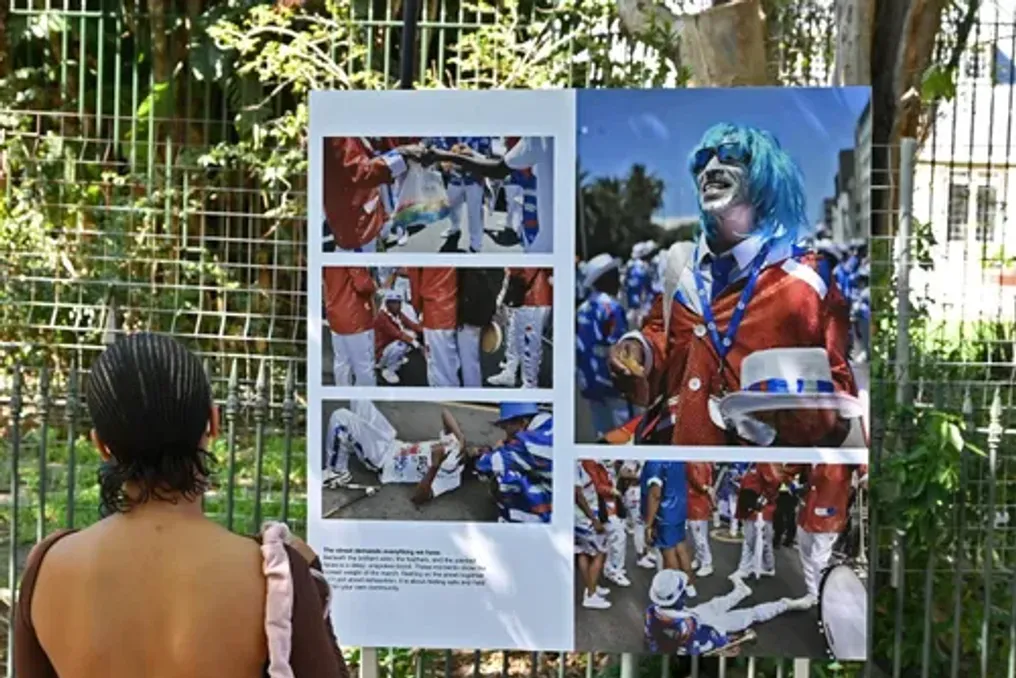
The exhibition titled 'Cape Rhythm: Goema, Klopse & Memory' by Melanie Ismail opened on September 5th at Company’s Garden as part of the Cape Town Photography Festival, which was themed 'Truth'. This exhibition is dedicated to exploring Goema and Cape Klopse as a living expression of identity and memory.

The collection of photographs for the exhibition was taken from the archive of cinematographer and photographer Melanie Ismail, offering a contemporary view of the syncretic soundscape. The modernity of Goema is emphasized by its sound component, which is accompanied by music from the group 'Boskasie'.

The second edition of the Cape Town Photography Festival returned with the theme 'Truth', gathering 40 exhibitions and over 160 photographers who presented their work in various locations across the city between September 2nd and 26th. Among the main events is the aforementioned exhibition 'Cape Rhythm: Goema, Klopse & Memory' at Company’s Garden, featuring images from Melanie Ismail's archive that reveal how Goema, Cape Klopse, and photography shape the memory and cultural identity of Cape Town.

Festival Director Heidi Erdman noted that while photography was long considered proof, today images can be easily distorted, recontextualized, and used as a weapon. She emphasized that the festival's goal is not to find absolute truth, but to study how truths are created, contested, and resisted, and what role photography plays in this process.

The festival unites photography, music, and memory. In addition to 'Cape Rhythm', the festival program includes events such as 'I Witnessed This', presented at the Desmond and Leah Tutu Foundation and curated by Pippa Hetherington, which gathers diverse photographic voices from across the African continent. International perspectives are also provided from Réunion Island, introducing Cape Town audiences to photo narratives from the Indian Ocean, as well as practical workshops by PICHA Stock.

Since its first iteration, the festival has doubled its scale, boasting 40 exhibitions, over 160 photographers, and a month-long program that includes talks, demonstrations, film screenings, lectures, and tours. This year, new venues include the Castle of Good Hope and Company’s Garden.

Five Iconic Matches Between the Springboks and All Blacks in Cape Town
Read more
iol.co.za

Five Iconic Matches Between the Springboks and All Blacks in Cape Town

Cape Town has become the arena for some of the most intense chapters of the greatest rugby rivalry between the Springboks and the All Blacks. Matches held at both the historic Newlands stadium and the modern DHL Stadium have always been characterized by minimal score differences and incredible fan passion, with the All Blacks traditionally enjoying significant support in this city.

These five classic encounters in Cape Town reflect the best of the legendary confrontation, whether it was series-defining victories or dramatic one-point matches.

The Greatest Rugby Rivalry

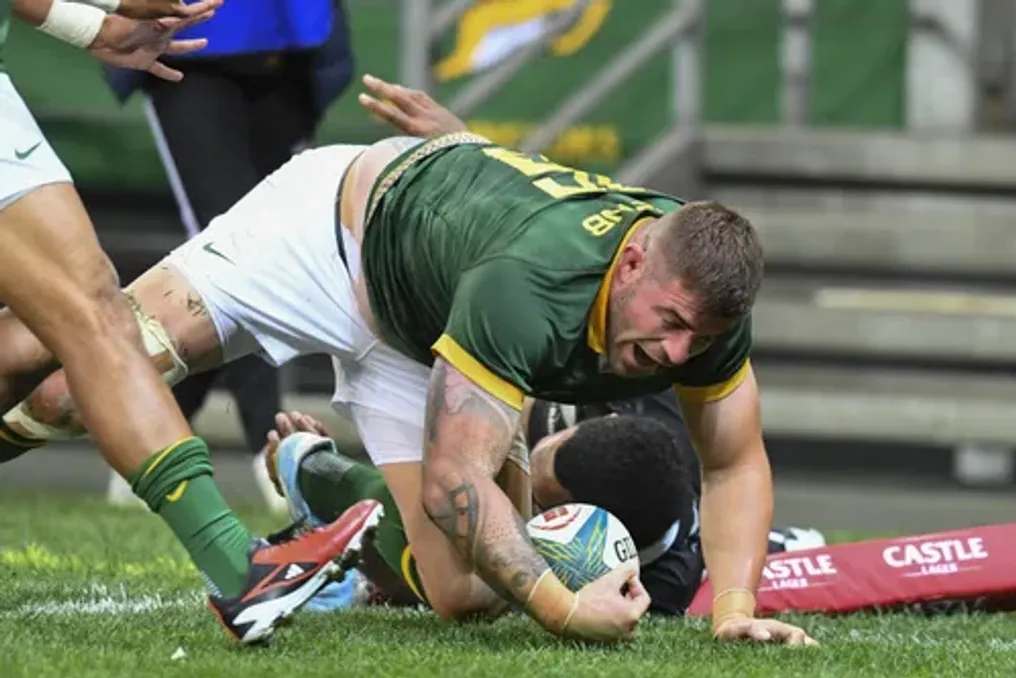
In 2024, Springboks hooker Malcolm Marx scored the decisive touchdown in the match against the All Blacks in Cape Town.

1996 – Tri-Nations, Newlands (South Africa 18–29 New Zealand)

This match was not part of the All Blacks' three-match tour of South Africa, but it marked the beginning of a new competition between South Africa, New Zealand, and Australia. Thanks to the brilliant play of flyhalf Andrew Merten, who earned 19 points from kicks, New Zealand managed to come back into the game, overcoming a nine-point deficit twenty minutes before the end, to secure the victory.

2001 – Tri-Nations, Newlands (South Africa 3–12 New Zealand)

A dirty and tough defensive battle unfolded at Newlands amid heavy rain. In the match, dominated by constant collisions, handling errors, and tactical kicks, the All Blacks managed to win thanks to four accurate penalty kicks from flyhalf Tony Brown, who is now an attacking coach for the Springboks, surpassing the determined Springboks team.

2005 – Tri-Nations, Newlands (South Africa 22–16 New Zealand)

Under the leadership of Jake White, the Springboks demonstrated a defensive masterpiece, interrupting a long streak of defeats against the All Blacks in Cape Town. Through dominant scrummaging, relentless defensive work, and tries by Percy Montgomery, South Africa managed to repel a late onslaught from New Zealand and claim a memorable victory.

2017 – Rugby World Cup, Newlands (South Africa 24–25 New Zealand)

This match is widely regarded as one of the best test games between the two sides in Cape Town in the modern era. Just a few weeks after a humiliating 57–0 defeat in Albany, the Springboks, under Alistair Coetzee, showed incredibly brave play at a packed Newlands, pushing the All Blacks to their limit before losing by only one point.

2024 – Rugby World Cup, DHL Stadium (South Africa 18–12 New Zealand)

In the first meeting of the rivals at this arena, the Springboks secured a tense victory, earning the Freedom Cup for the first time since 2009. Tries by Siya Kolisi and Malcolm Marx in the second half, combined with fierce defensive work, ensured a dramatic comeback and a series win over the All Blacks.

Popular