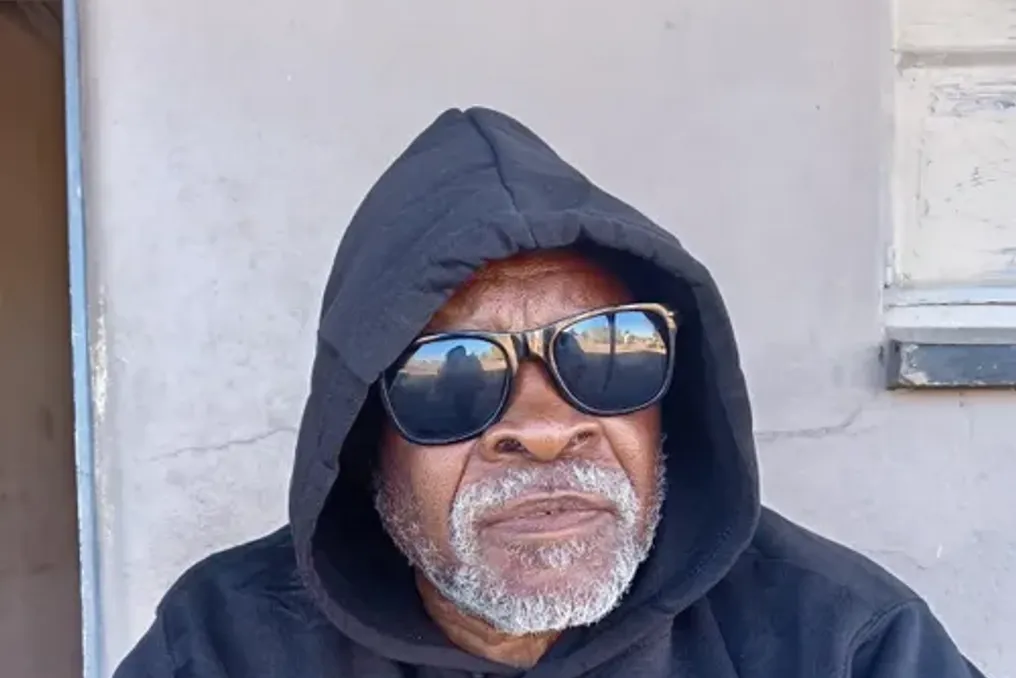
Sonny Lucas Sekwakwa, 67, who learned to write independently after a serious car accident in 1996, has released four new books for readers. These dramatic works will go on sale on Thursday.
After breaking his neck and becoming quadriplegic in a terrible car crash in 1996, Sekwakwa spent an entire hour writing his surname. At the time, at 37, he could barely use his hands, but he practiced daily, gradually regaining the ability to write.
Thirty years later, Sekwakwa is an example of how practice brings perfection. He will simultaneously release four books that he wrote. During his life after the accident, he created 23 scripts, three of which have already been published; the new editions will increase the total number of published works to seven.
He lives in a nursing home in Makhwaleng, near Mokopane, formerly known as Potgietersrus, in the Limpopo province.
Sekwakwa told IOL: 'After the accident, I couldn't write anything. I remember trying to write my surname, Sekwakwa. It took me an hour to finish writing my name in capital letters.'
He continued to train, slowly improving his skill in holding a pen and fixing thoughts on paper. One day he managed to write an entire chapter. He noted: 'This chapter was simply a thank you to God for giving me another chance. I was so happy to find out that I could write.'
Sekwakwa was born on March 28, 1959, in Boipatong, Vanderbijlpark, graduated from high school in 1980, and served as chairman of the school debate committee. Before the accident, he trained as a nurse at Sebokeng Hospital and worked at the Sasol mine hospital in Secunda. When the accident happened, he was about 37 years old, and he was driving his mother-in-law home to Sharpville in Vereeniging with his wife, a friend, and that friend's wife.
He spent four months recovering at Eugene Maris Hospital in Pretoria. Soon after returning home, his marriage ended, and he reported that most friends drifted away from him. He recalled: 'I was angry at life and constantly asked: why me? I was a shadow of my former self, a complete wreck. I knew perfectly well what it meant when days were dark and there were few friends.'
He emphasized that without two physiotherapists, Lebogan and Thandi, he might never have been able to hold a pen again. Over several weeks, he began writing three pages a day.
His first manuscript was never published because he felt its content might hurt his children and grandchildren. His first published drama book under the pseudonym 'Kgomo Tšešo' was released in 2014 through Dinkwe Production in Pretoria, which has since closed. In 2015, the second book, 'Abominations in Secunda', was released by Publishing World SA, which also closed.
In 2020, he moved his works abroad, and Rowanvale Books in Wales published 'Defying the Laws of Nature is Detrimental' in April, shortly after border and air travel closures. He noted that there is a belief that foreign publication guarantees a good market and the possibility of getting rich quickly, but he stated: 'That is a lie. I learned this through bitter experience. My book was published during Covid. My book sold only three copies worldwide.'
The four titles coming out on Thursday are published by MFH Publishers in Pretoria, overseen by Tuso Mathebe. They include 'Abnormalities in Pudiakgopa', a second edition of 'Kgomo Tšešo', 'Ke Pyempyete', and the pseudonym drama 'Sekatapowana.'
'Kgomo Tšešo' tells the story of a priest who steals livestock from the very community he preaches to every Sunday, yet remains beloved by the village. Sekwakwa said: 'We heard of a priest who prayed for a woman and then raped her. We heard of a priest who stole church money. People we consider bringing us closer to God. So priests are no better than others. I write fiction with elements of truth.'
'Ke Pyempyete' tells the story of a boy who refuses to succumb to peer pressure. After seeing a girl throw a baby into the river, he dives in and saves the infant, who is later entrusted to him by the traditional council for upbringing.
Sekwakwa moved to Mokopane in 2007 to care for his aging father. His brother, who helped both of them, passed away in 2009, and his father died the following year. He has two adult children—one of whom is a police officer in Ermelo, and the other works in Vanderbijlpark—and four grandchildren.
When asked what he would tell a young man in a wheelchair reading about him this week, he urged him not to give up. He stated: 'Being in a wheelchair is not the end of the world. God has a purpose for every person on planet Earth. If I could walk, perhaps I wouldn't have been able to write and publish seven books. God put me in this position so that I could focus. Every person has a task to accomplish, and remember: do not be ashamed or afraid to be in a wheelchair.'