August 2026 recognized as the hottest month in observation history
Read more
N+1
nplus1.ru

August 2026 recognized as the hottest month in observation history

According to data, August 2026 set a new world record for temperature, becoming the hottest month in the entire history of meteorological observations.

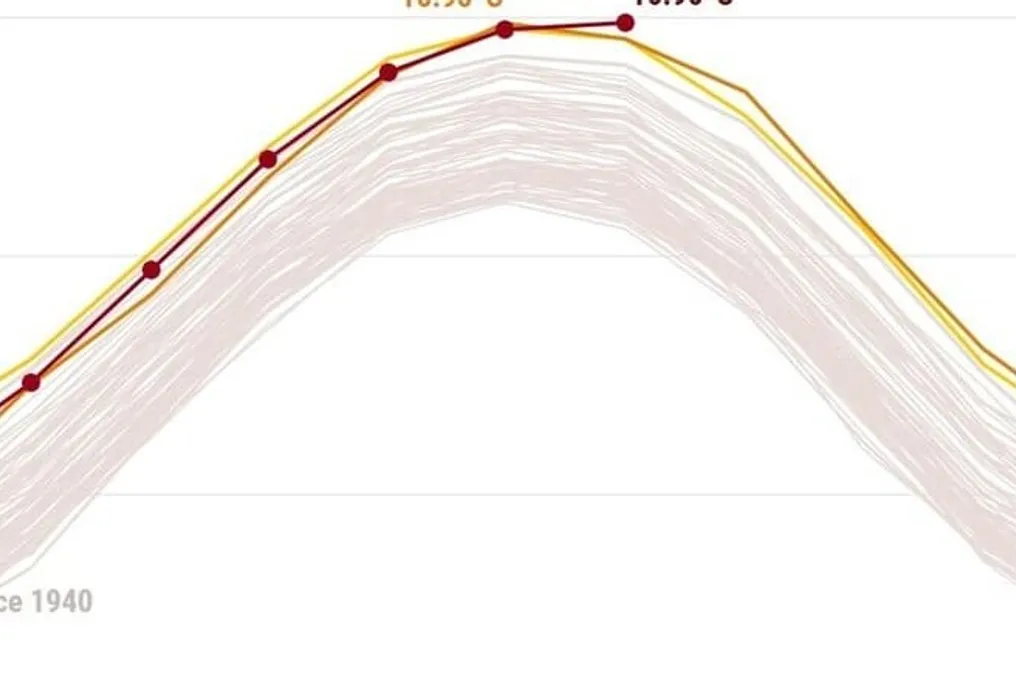
During this month, the average global air temperature reached 16.96 degrees Celsius. This figure surpassed the previous record, which was set in July 2023 when the average temperature was 16.95 degrees Celsius.

Furthermore, in August 2026, the maximum average daily sea surface temperature, excluding polar regions, was recorded at 21.11 degrees Celsius. This information was published in a press release from the Copernicus service, which was sent to the N + 1 editorial office.

Similar stories

According to the WMO, August was the hottest on record, making it the tenth such month since 2016
Read more
cgtn.com

According to the WMO, August was the hottest on record, making it the tenth such month since 2016

The World Meteorological Organization (WMO) reported on Friday that the Earth experienced the hottest August in observational history, and the consequences of this warming are being felt across the planet.

Summer was the warmest in the Northern Hemisphere, while the Southern Hemisphere experienced an almost record warm winter. Furthermore, the sea ice area in both polar regions was below average.

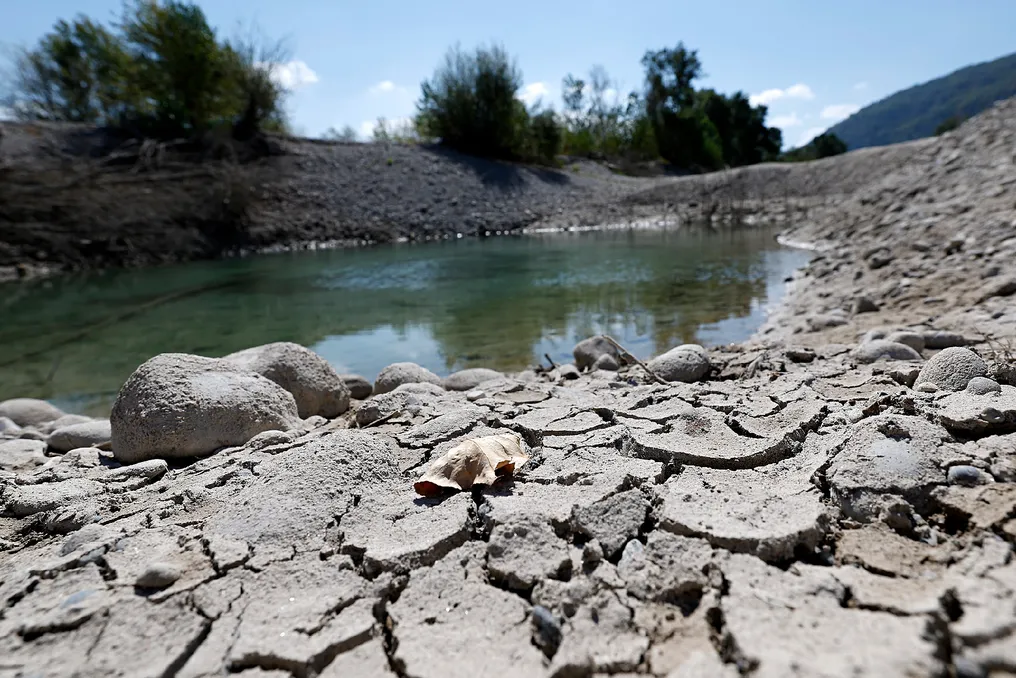
Western Europe suffered from heatwaves in August, which concluded an exceptional series of extreme heat that began back in May. Severe drought conditions affected France, Hungary, Romania, Serbia, and Great Britain.

Significant areas of Central and Eastern Europe also dried up, sometimes as early as May. Many major rivers, including the Rhine, Danube, Southern Bug, and Dnieper, had exceptionally low water levels.

Partially, this situation was caused by the El Niño phenomenon, which also affected tropical cyclones, heavy rainfall, and floods in several countries, according to the WMO. The agency specified that the ten hottest Augusts in observational history have occurred since 2016.

Record heat in August 2026 led to river depletion in Europe
Read more
www.aajtak.in

Record heat in August 2026 led to river depletion in Europe

August 2026 became the hottest August in world history. According to the latest data from the Copernicus Climate Change Service (C3S) of the European Union, the average temperature in this month matched the records of July 2023. The global average temperature in August exceeded pre-industrial levels by 1.65 degrees Celsius.

The consequences of this rising heat were noticeably felt in Europe. The period from June to August 2026 was among the hottest summer seasons, comparable to the figures of 2024. Overall, the summer of 2026 was the third hottest in Europe, and the hottest on record in Western Europe.

A significant decrease in precipitation in most regions of Europe in August led to reduced soil moisture and a drop in water levels in several rivers. In countries such as France, the United Kingdom, Hungary, Romania, and Serbia, a situation of severe drought developed. It should be noted that the water flow in major rivers, including the Rhine, Danube, South Bug, and Dnieper, was significantly below normal.

In some areas, a prolonged period of hot and dry weather persisted. Although rains came in some places by the end of August, bringing some relief from the drought, heavy rainfall caused floods in other regions.

The average sea surface temperature in extrapolar oceans also reached a record level in August, equal to the figures from March 2024. The maximum daily sea surface temperature in the extrapolar ocean was 21.11 degrees Celsius. Furthermore, the sea surface in the tropical Pacific Ocean remained very warm, while the El Niño situation continued to strengthen. The rise in sea temperature under global warming can affect the weather worldwide.

In August, the average extent of sea ice in the Arctic ranked 12th in the lowest rating, indicating a significant reduction in sea ice area compared to the norm. Heat and drought also affect forest fires in Indonesia, as the August weather proved favorable for an increase in seasonal forest fires.

Copernicus data demonstrates that the consequences of rising global temperatures are becoming evident in many places. Experts emphasize the need to reduce fossil fuel use, promote clean energy, and prepare for the consequences of climate change.

August becomes the hottest month in history as El Niño intensifies
Read more
iol.co.za

August becomes the hottest month in history as El Niño intensifies

August 2026 was as hot as July 2023, according to Copernicus data, becoming the warmest month in official records. Simultaneously, global ocean temperatures and summer in Western Europe reached record levels.

The EU Climate Monitor reported that August was the hottest individual month ever recorded globally, with ocean temperatures also reaching unprecedented high levels, and Western Europe concluding its hottest summer.

In response to this assessment, the UN warned that unless humanity abandons fossil fuels, the planet will move deeper into unknown territories.

Copernicus observations cover the period since 1940, but other data sources, such as ice cores, tree rings, and coral skeletons, allow scientists to correlate modern climate with a much longer historical context.

Samantha Burgess from the European Centre for Medium-Range Weather Forecasts, which oversees Copernicus, told AFP that 'People have not seen temperatures as high as today, perhaps for at least the last 100,000 years.'

According to Copernicus, the average global air temperature in August was 16.96°C, exceeding the previous absolute monthly record set in July 2023 by only 0.01°C. Copernicus considered both months the highest jointly, given the negligible difference.

Scientists note that human activity, primarily burning coal, oil, and gas, has warmed the planet by about 1.4°C compared to the pre-industrial period, increasing the probability and severity of extreme weather events. Nevertheless, greenhouse gas emissions that trap heat reached new highs in 2025.

UN Chief Climate Specialist Simon Stiel commented on the Copernicus report, stating: 'The evidence is undeniable: it is a spiral rise in the price of human dependence on fossil fuels and the global climate crisis it fuels.'

What is expected next

Sea surface temperatures also set a new daily maximum and were as hot as in August, extending a three-month streak of record warmth in the world's oceans.

Over 90 percent of the excess heat trapped by greenhouse gas emissions has been absorbed by the oceans, which saved the land from warming but brought serious consequences for marine life, reefs, and coastal communities.

Records were broken in overheated basins such as the Atlantic and Mediterranean, as well as in the tropical Pacific Ocean, where the strongest El Niño weather pattern in the modern era is rapidly gaining strength.

These events are characterized by unusually warm water in the Pacific Ocean but increase the likelihood of wild weather behavior thousands of miles away from these areas—from floods in Peru to droughts in Africa and wildfires in Australia.

The warming phase of the natural climate cycle, El Niño episodes usually cause a temporary spike in global temperatures that are already elevated by long-term background warming.

Scientists predict that records will continue to fall in the coming months as this 'super' El Niño approaches peak intensity around December, and 2027—and possibly 2026—will be the hottest years ever observed.

Frédérique Otto, a climatologist from Imperial College London, noted: 'Climate change is making every El Niño hotter, and until we stop burning coal, oil, and gas, these record-breaking months will simply keep appearing.'

Hot Summer

Copernicus also reported that August marked the end of the hottest summer in Western Europe, which surpassed the long-standing record set in 2003.

The season from June to August was characterized by strong, consecutive heatwaves, leading to school closures, river low flows, and land preparation for destructive wildfires.

Between mid-July and mid-August, the EuroMomo continental monitoring platform estimated that over 32,000 excess deaths occurred in Europe.

Scientists from the World Weather Attribution network concluded that the particularly severe heatwave in June would have been 'practically impossible' without the influence of climate change.

However, abnormal heat was felt worldwide. On Wednesday, the National Oceanic and Atmospheric Administration reported that continuous territories of the United States experienced the hottest summer in history.

According to Copernicus data analysis conducted by AFP, regions inhabited by about 900 million people experienced the hottest July ever recorded.

Burgess, an oceanographer and strategic director at ECMWF, stated: 'We had an exceptional summer—not only in Europe but also in other parts of the world where records that existed for almost a century collapsed.'

She added that the climate 'will become increasingly extreme if we do not turn off the tap of global emissions.'
Popular