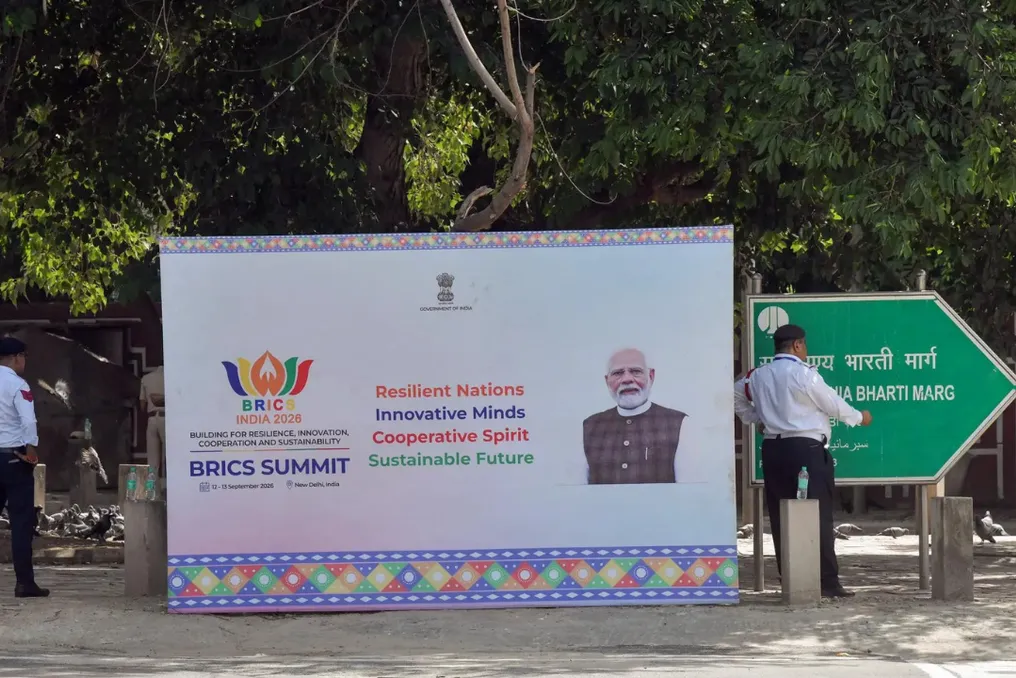
In connection with the arrival of the 'Flying Kremlin' and other highly protected aircraft in Delhi for the upcoming BRICS summit, it is expected that a fully autonomous mobile fortress will be deployed in the capital. This system includes food testing laboratories, mannequins resembling high-ranking officials, and armored limousines capable of resisting mines and chemical attacks.
Delhi is transforming into an impenetrable, multi-layered defensive network. Security personnel are preparing for a complex operation where AI-controlled snipers scan rooftops, gesture recognition cameras track changes in people's posture, and commandos descend via ropes from hovering helicopters. Furthermore, anti-graffiti teams patrol the streets around the clock, defending against threats ranging from high technology to covert forms of protest.
According to sources, the capital has not seen such a high level of security since the G20 summit in 2023, and the current preparations are even more extensive. Unmanned aerial vehicles have been classified as one of the most serious threats, and systems for jamming or shooting down drones have been installed at several locations.
Every high-ranking official, as well as their hotel or motorcade, has been assigned a code name or call sign to ensure unimpeded movement between locations without security breaches. Intelligence data indicates the possibility of spontaneous protests and graffiti with provocative slogans near event venues, aimed against certain foreign leaders. Police have formed anti-graffiti teams for round-the-clock patrolling to prevent such attempts.
The protection system for President Putin is a complex protective shield jointly managed by the Russian Federal Protective Service (FSO) and Indian counter-terrorism forces. Ground transport will focus around his specially manufactured, heavily armored Aurus Senat limousine, often referred to as a 'crawling bunker.' This state vehicle, delivered directly from Moscow, is designed to withstand chemical attacks, mines, and sniper fire; it is equipped with tires capable of continuing movement after punctures and an independent oxygen supply for emergencies.
In the air, the Russian leader travels on a specially modified Ilyushin IL-96-300PU aircraft, known as the 'Flying Kremlin.' It operates in parallel with aircraft mannequins, advanced missile defense systems, and secure command systems. On the ground, the innermost layer of protection is provided by elite officers of the Presidential Personal Security Service (PSPS) of Russia, supported by advanced FSO groups that conduct sanitation of all planned and potential locations. The Russian delegation manages its strict logistics independently, traveling with personal chefs, portable food and beverage testing laboratories, and biological waste collection measures, while also utilizing mannequins in some hotels to enhance operational security.
Ensuring the security of the hotels designated for the summit in central Delhi, Aerocity, and Gurgaon has become one of the most challenging logistical tasks for law enforcement and intelligence agencies. Each hotel is treated as an independent secure zone under the command of an appointed Deputy Commissioner of Police (DCP), who is overseen by Special Commissioner-rank officers managing broader areas.
Inside each hotel, two rooms have been converted into operational command posts: a main security control center directly connected to the central hub of the Delhi Police C4i, and a reserve room for emergency response. To prevent unauthorized access, perimeters and corridors are monitored by advanced AI cameras equipped with posture detection software and intrusion alerts, capable of marking unusual physical movements such as crawling or climbing walls. Hotel staff has undergone thorough multi-stage background checks conducted by special departments and special units, and movement is strictly limited to assigned floors using specially programmed digital passes.