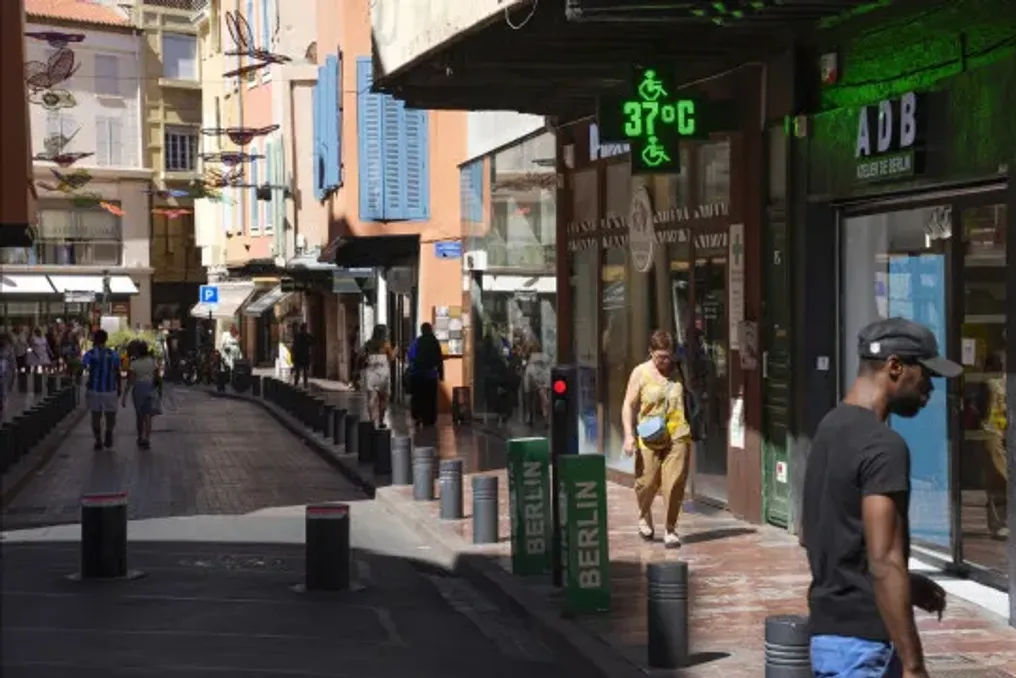
France has recorded its hottest summer since the beginning of historical records, as announced during a press conference on the climate analysis of June, July, and September. Virginie Schwarz, director of Météo France, described the volume of hot days as 'truly exceptional.'
The previous record for hot days was set in 2022, with a total of 33 days. The meteorological agency defines heatwaves as a period when the national thermal indicator (average of reference weather stations) exceeds 25.3 degrees Celsius and only ends when this indicator drops below 23.4°C for more than two consecutive days.
Schwarz also pointed out that the frequency with which Météo France stations exceeded 40°C increased significantly this year compared to a standard summer, resulting in an unprecedented number of heatwave days in France. Monique Barbut, France's Minister of Ecology, who was present at the event, confirmed that it is 'the hottest summer ever recorded since the beginning of measurements in 1900.'
The most intense heat peaks occurred at the end of June (between the 17th and 30th), followed by periods in July (from the 4th to the 19th) and another one in August (from July 28th to August 19th).
The extreme heat caused a preliminary figure of over 7,300 additional deaths in France, a lower figure than the 15,000 recorded in the historic summer of 2003. Furthermore, the country faced severe fires, such as the one that affected parts of Gironde. Monique Barbut reported that, at the end of August, forest fire hotspots had burned six times the average area of the last twenty years.
The minister raised questions about the climate future, questioning whether this summer will be the start of a series of records or a crucial moment to implement adaptation and mitigation strategies, such as reducing greenhouse gas emissions, calling for an 'electric shock'. She stated that France was among the best prepared in Europe, despite criticism from the opposition and NGOs regarding government inaction since the beginning of the summer.
The effects of the heat were varied, including disruptions to school exams, the shutdown of nuclear reactors, and threats to harvests. Roland Lescure, Minister of Economy, recognized the 'absolutely terrifying impact' of the successive heatwaves.
At the end of July, Prime Minister Sébastien Lecornu tasked Monique Barbut with presenting new actions to accelerate the implementation of the National Climate Change Adaptation Plan. The minister committed to delivering conclusions by the end of September, along with a five-year financing plan.
Barbut emphasized the need for proactivity, stating that 'we will not suffer events, wait for them to happen to make decisions,' and urged preparation for the next summer as if it were the same. She admitted that not all schools would be renovated by next summer, but mentioned the possibility of installing coverings and fans. Similarly, although the diversification of forest species was not completed before the next heatwave, she suggested quick solutions to improve firefighter access.