What are the Millennium Prize Problems in Mathematics and their recent advances
Read more
Super Abril
super.abril.com.br

What are the Millennium Prize Problems in Mathematics and their recent advances

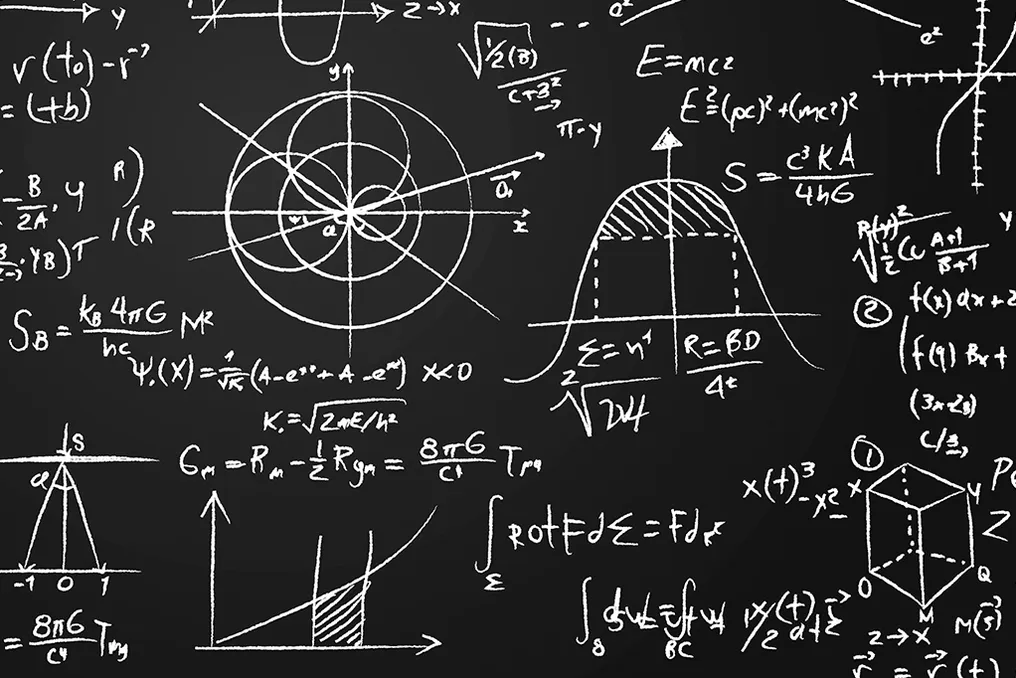
As the millennium approached, the Clay Mathematics Institute (CMI), a research institution based in the United States, gathered leading global mathematicians for an ambitious undertaking. Under the guidance of the institute's scientific council, a set of seven novel mathematical challenges was selected, giving rise to the so-called 'Millennium Prize Problems.'

The CMI's proposal is clear: to offer a one-million-dollar prize to the researcher who solves any of these problems for the first time. It is important to note that none of the seven problems are considered simple, as they were chosen to represent some of the most complex issues faced by mathematicians during the transition into the second millennium.

On May 24, 2000, the Institute released the definitive list of the seven problems: the Birch and Swinnerton-Dyer Conjecture; the Hodge Conjecture; the problem of existence and uniqueness for Navier-Stokes equations; the Poincaré Conjecture; the P versus NP problem; the Riemann Hypothesis; and the mass gap problem for Yang-Mills quantum theory. According to the CMI, the purpose of this initiative is to raise public awareness about the fact that mathematics has open frontiers filled with crucial unanswered questions.

Currently, the Millennium Prize Problems are among the most studied topics in the field, and the CMI has not imposed a final deadline for their resolution. Over the past 26 years, only one has been officially solved: the Poincaré Conjecture, in 2003, by the Russian mathematician Grigori Perelman. However, recently, OpenAI announced that one of its artificial intelligences managed to solve the Navier-Stokes problem.

To illustrate mathematical concepts, a two-dimensional sphere is considered a single closed and connected surface. A practical example is an apple: if an elastic band is stretched around its surface, it can be reduced to a single point without being broken or leaving the surface. In contrast, when imagining the same elastic band stretched around a screw shape, it becomes impossible to reduce it to a point without breaking the band or the screw itself.

In 1904, Henri Poincaré identified that this dynamic can be represented by the two-dimensional surfaces of objects: the surface of an apple is classified as 'simply connected,' while that of a screw is not. The Poincaré Conjecture was a continuation of this investigation, seeking to know whether this discovery about two-dimensional surfaces would also apply to three-dimensional shapes.

Between 2002 and 2003, Perelman demonstrated that any closed, hole-free three-dimensional space is equivalent to a sphere, thus confirming the validity of Poincaré's discovery in three dimensions.

The P versus NP problem is currently considered the biggest unsolved challenge in computer science. It is based on the following question: if it is relatively easy to verify whether a solution to a given problem is correct, does that imply that finding that solution is also easy?

The Clay Mathematics Institute (CMI) itself offers an example: imagine organizing accommodation for 400 university students, where only 100 will be selected for the dormitory, and there are restrictions that certain students cannot live together. In this scenario, it is simple to check if a specific selection meets the criteria, but the process of generating that list from scratch is extremely complicated.

Mathematicians believe that the Navier-Stokes equations could allow for the prediction of both wind and turbulence, since these equations describe the movement of fluids, such as water. Although formulated in the 19th century, the understanding of these equations remains quite limited. The Navier-Stokes problem questions whether these equations always generate a valid solution for all times or if they can produce a singularity under certain conditions.

The claim made by OpenAI suggests having defined exactly one situation of this latter type.

The distribution of prime numbers among natural numbers does not follow a predictable pattern. However, the German mathematician G.F.B. Riemann (1826-1866) noted that the frequency of these prime numbers is linked to the behavior of a complex function. The Riemann Hypothesis postulates that all non-trivial zeros of the equation $\zeta(s) = 0$ are located on a specific vertical line. Although the statement has been proven for the first 10 trillion solutions, its truth for all solutions remains unknown.

In 1954, Chen Ning Yang and Robert Mills introduced a new structure to describe elementary particles using structures found in geometry. Although Yang-Mills theory is well established, its mathematical foundation still lacks clarity. Simulations and experiments point to the existence of a 'mass gap,' where the lowest energy state above the vacuum would have a minimum positive energy. The challenge lies in mathematically proving the rigorous existence of this theory and the occurrence of this gap.

The Birch and Swinnerton-Dyer problem proposes a new premise within Number Theory applied to elliptic curves. Elliptic curves are defined by specific equations, such as $y^2 = x^3 + ax + b$, and can possess a finite or infinite number of points with rational coordinates. This conjecture establishes a connection between the quantity of these points and the behavior of a mathematical function associated with the curve.

As explained by the CMI, 'when the solutions are points of an abelian variety, the Birch and Swinnerton-Dyer conjecture states that the size of the group of rational points is related to the behavior of an associated zeta function $\zeta(s)$ near the point $s=1$.'

The Hodge Conjecture investigates to what extent the topological characteristics of certain geometric spaces can be explained by elements defined by algebraic equations. It maintains that certain topological properties of these spaces correspond to combinations of subspaces that can also be described by algebraic equations.
Similar stories

OpenAI claims to have solved the Navier-Stokes problem, a Millennium Prize challenge
Read more
olhardigital.com.br

OpenAI claims to have solved the Navier-Stokes problem, a Millennium Prize challenge

OpenAI announced that it has found a solution to one of the most complex and ancient problems in mathematics: the existence and smoothness problem of Navier-Stokes, which is part of the seven Millennium Prize Problems established by the Clay Mathematics Institute.

According to the company, an internal artificial intelligence (AI) system generated an analytical proof demonstrating that the Navier-Stokes equations can exhibit a singularity at a specific time. OpenAI also made a formalization of this proof available in the Lean language, which is used for mathematical verification of the result.

This announcement marks a notable progress in the application of AI to mathematics. The Navier-Stokes equations are crucial for modeling fluid motion, being applied in fields such as weather forecasting, aircraft design, and blood flow study.

The question that remained unanswered for decades was whether these equations maintained a smooth solution in three dimensions or if, under certain conditions, they could collapse and generate a singularity, a moment when fluid velocity would increase infinitely in a finite period.

The problem was included in the seven Millennium Prize Problems in 2000, with a prize of US$1 million (equivalent to R$5 million) for anyone who presented a correct solution.

How the solution was achieved

To reach this result, OpenAI employed a system composed of coordinated AI agents. It is estimated that about ten thousand agents worked simultaneously on solving Navier-Stokes, receiving variations of the problem and being distributed into groups to explore different methods.

The process began after OpenAI researchers heard rumors on September 1st that two millennium problems might have been solved. The company then decided to test its new internal model on the remaining challenges.

The system was also used to investigate a similar question related to Euler's equations, which do not contain the viscosity term present in Navier-Stokes. About 100 agents dedicated approximately 50 hours to solving this second problem.

After obtaining this initial result, OpenAI directed its efforts toward Navier-Stokes. The agent groups began exchanging findings, using Codex to consolidate the most relevant information among the various teams.

The agents finally reached the Navier-Stokes solution on September 5th, about 88 hours after the start of the work. The formalization and validation phase of the proof in Lean consumed another 17 hours.

During all tests conducted in the project, the agents sent 4.9 million messages and consumed approximately 300 billion tokens. Specifically in the Navier-Stokes work, 2.7 million messages and about 130 billion tokens were recorded.

The computational cost was also substantial. According to supporting material, the operation demanded processing power estimated in millions of dollars due to the vast amount of resources required to operate so many AI systems simultaneously.

Although it considers the finding as a resolution of the Navier-Stokes problem, OpenAI stated that it does not intend to claim the US$1 million prize offered by the Clay Mathematics Institute.

The company released the work as a demonstration of the advancement of its AI models, publishing both the description of the solution and its formalization in Lean, allowing other mathematicians to examine the result.

Scientific Dispute Involved

However, the announcement did not end the debate about the achievement. In addition to the mathematical analysis of the proof, a controversy arose involving researchers working on related topics and the possibility that ideas developed by them had reached OpenAI.

OpenAI's announcement occurred amidst a scientific dispute involving researchers linked to the company itself and Anthropic. Tristan Buckmaster, a mathematics professor at New York University (USA), and Levent Alpöge, a researcher at Anthropic, were working on issues related to fluid dynamics.

Both researchers had presented results obtained with 'significant help' from language models, including systems from Anthropic and OpenAI. Their work focused on Euler's equations and presented a phenomenon called 'blow-up', or singularity. Part of these results had also been formalized in Lean.

The situation took on the contours of a dispute over credit when Buckmaster alleged that rumors about the method developed by his team might have been transmitted to OpenAI. He maintained that an internal team at the company had used its own model to advance in the complete Navier-Stokes problem.

There was also discussion about authorship. Buckmaster stated that OpenAI offered him exclusive authorship on a paper acknowledging that the internal model had solved the problem, but without including Alpöge, who works for a competing company.

OpenAI denied having accessed the researchers' work before its public disclosure. The company assured that its researchers and agents did not view the material from Buckmaster and Alpöge by any means before publication.

In its statement, OpenAI added that, upon contacting the two researchers after completing its own work, it discovered that they had solved a distinct version of the problem: the case of Euler's equations with external force. The company recognized the researchers' priority in this result.

This advancement also reignites the debate about the role of AI in generating scientific knowledge. AI systems are being trained to solve mathematical problems through techniques such as reinforcement learning. By repeatedly interacting with problems whose answers can be objectively verified, the models learn which strategies are effective and which lead to errors.

The Lean language enhances this process by enabling mathematical proofs to be converted into code and submitted to formal verification.

OpenAI's result is particularly relevant because the Navier-Stokes problem was among the most difficult in modern mathematics. For decades, mathematicians sought to determine whether the equations could develop a singularity or remain always smooth.

Thus, the feat transcends a mere demonstration of computational capability; it brings AI closer to a function that was long considered exclusively human: discovering new approaches to fundamental mathematical questions.

Simultaneously, the dispute between OpenAI and researchers linked to Anthropic raises a question that may become increasingly crucial as AI actively participates in scientific research: who holds the authorship of a discovery when humans and machines collaborate—and how to protect unpublished ideas while they are being developed with the aid of large AI laboratories?

Popular