Government approves eight railway multi-track projects worth 20,804 crore rupees
Read more
The times of India
timesofindia.indiatimes.com

Government approves eight railway multi-track projects worth 20,804 crore rupees

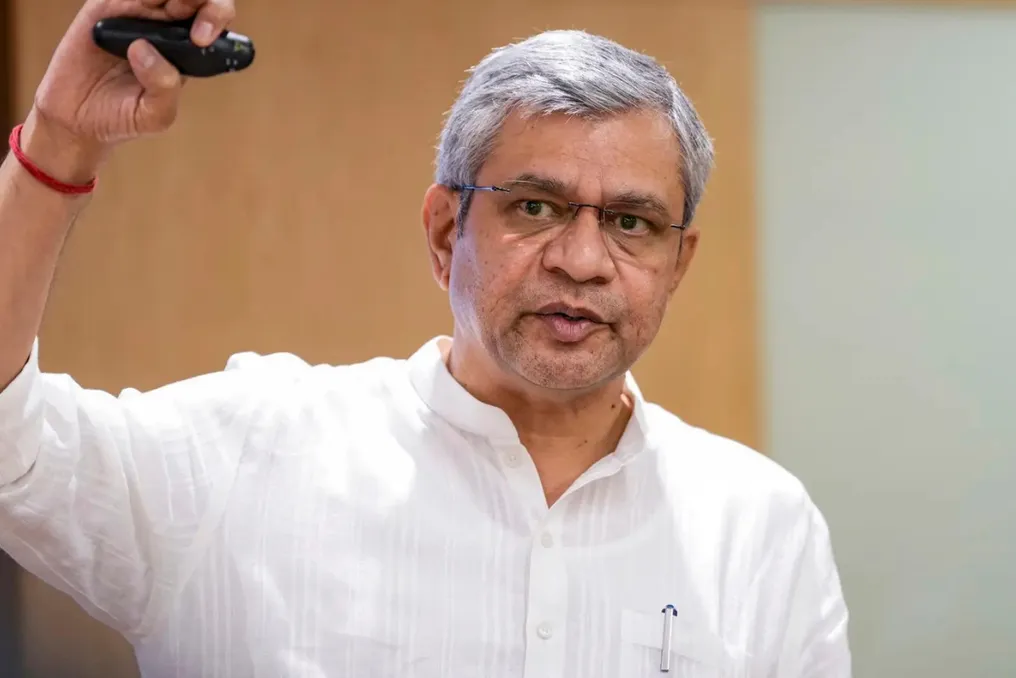
The government has approved eight railway multi-track projects with a total cost of 20,804 crore rupees. These projects are aimed at accelerating the movement of both passengers and goods within the country's densely populated transport networks.

Prime Minister Narendra Modi stated that the implementation of these projects will ensure stronger connectivity, speed up passenger movement, and reduce logistical costs.

Announcing the decisions, Railway Minister Ashwini Vaishnaw reported that these multi-track projects—which include doubling lines as well as laying third and fourth tracks—cover 14 districts in West Bengal, Jharkhand, Odisha, Madhya Pradesh, and Chhattisgarh, as well as 17 districts in Tamil Nadu, Andhra Pradesh, Karnataka, and Telangana. Completion of these works by 2029–2030 will increase the capacity of eight lines for freight and passenger trains.

It is estimated that after the completion of the projects, the railway network will expand by 1,196 km, and the volume of freight transport will increase by 74 million tons annually. The government specified that these routes are critical for transporting coal, cement, iron, and steel, containers, automobiles, grains, petroleum products, and fertilizers.

In his post on social media platform X, Modi also noted that three multi-track projects in Chhattisgarh, Jharkhand, Madhya Pradesh, Odisha, and West Bengal will contribute to tourism development, especially heritage and wildlife, in addition to reducing logistical expenses.

Vaishnaw emphasized that the railway system has undergone a complete transformation over the last twelve years. The national carrier has implemented modern constructions to minimize the need for land acquisition. He added that aerial photography and AI-based monitoring methods are used to determine the actual status of land parcels. Furthermore, preliminary land-related activities now begin even before the official approval of the project.

The minister also provided financial figures: by the first week of September, 50% of the Global Budget Support (GBS) for Indian Railways for 2026–2027 had been utilized. 2.8 lakh crore rupees have been allocated as GBS for the fiscal year 2027.
Similar stories

Indian Railways plans to lay four-lane tracks on seven busy routes
Read more
www.aajtak.in

Indian Railways plans to lay four-lane tracks on seven busy routes

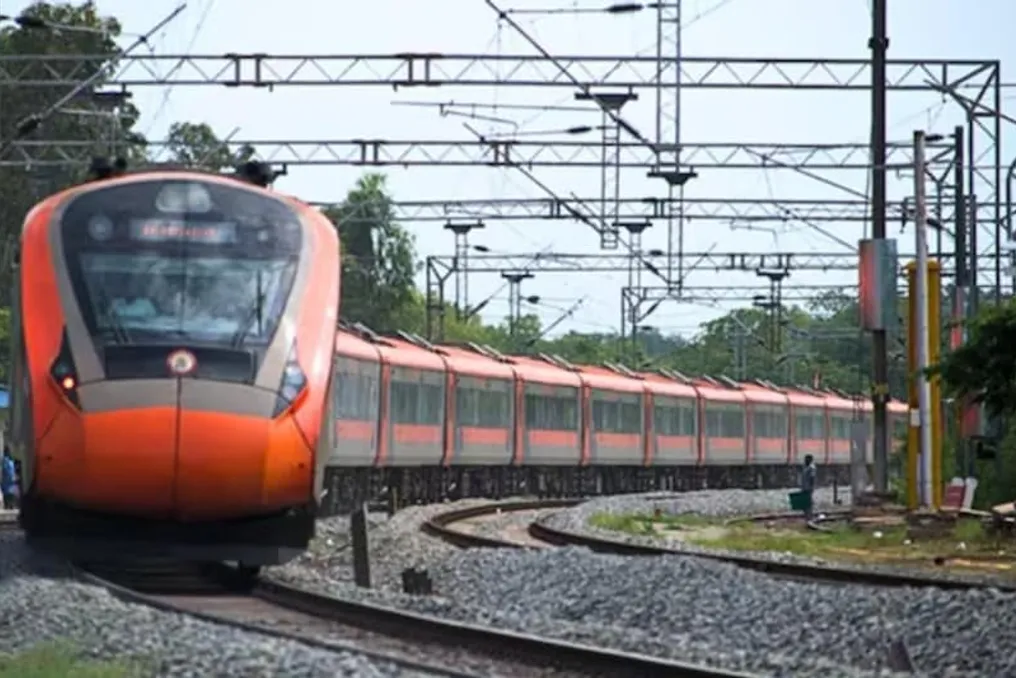
Indian Railways is preparing to convert seven of the busiest railway routes into four-lane lines, similar to highways. As part of this project, it is planned to lay such tracks with a length of about 11,000 kilometers along some of the country's most active railway corridors. The creation of four-lane lines will allow for an increase in the number of trains on these routes and facilitate the transport of passengers and goods.

These busy railway lines currently account for approximately 41 percent of all rail traffic in the country, while making up only 16 percent of the total railway network. These corridors connect major cities such as Delhi, Mumbai, Chennai, and Howrah, making them critically important for both passenger and freight transport.

Railway Minister Ashwini Vaishnaw stated that infrastructure development is underway to lay four railway lines on these routes. The goal of this expansion is to create additional capacity and support future growth in passenger and freight traffic. The Ministry of Railways also highlighted the economic and environmental benefits of rail transport, including reduced transportation costs and the transition to clean transport.

Among the busiest routes are the Delhi-Howrah and Delhi-Mumbai corridors. On both routes, express trains can travel at speeds of up to 160 km/h. More than 120 passenger trains and about 100 freight trains run daily on the Delhi-Howrah route; this corridor is approximately 1,400 kilometers long. The Delhi-Mumbai route serves over 90 passenger trains and about 80-85 freight trains daily, and its length reaches approximately 1,500 kilometers.

Following these are the Howrah-Chennai route, which is about 1,653 km long, and the Delhi-Chennai route, which is approximately 2,174 km long. The Chennai-Mumbai route is about 1,289 km long. In total, about 25,000 trains run across the entire network daily. During the 2025-26 period, Indian Railways provided transport services to more than 741 million passengers.

120 Vande Bharat sleeper coaches to be manufactured in Maharashtra; first prototype expected in 2027
Read more
www.aajtak.in

120 Vande Bharat sleeper coaches to be manufactured in Maharashtra; first prototype expected in 2027

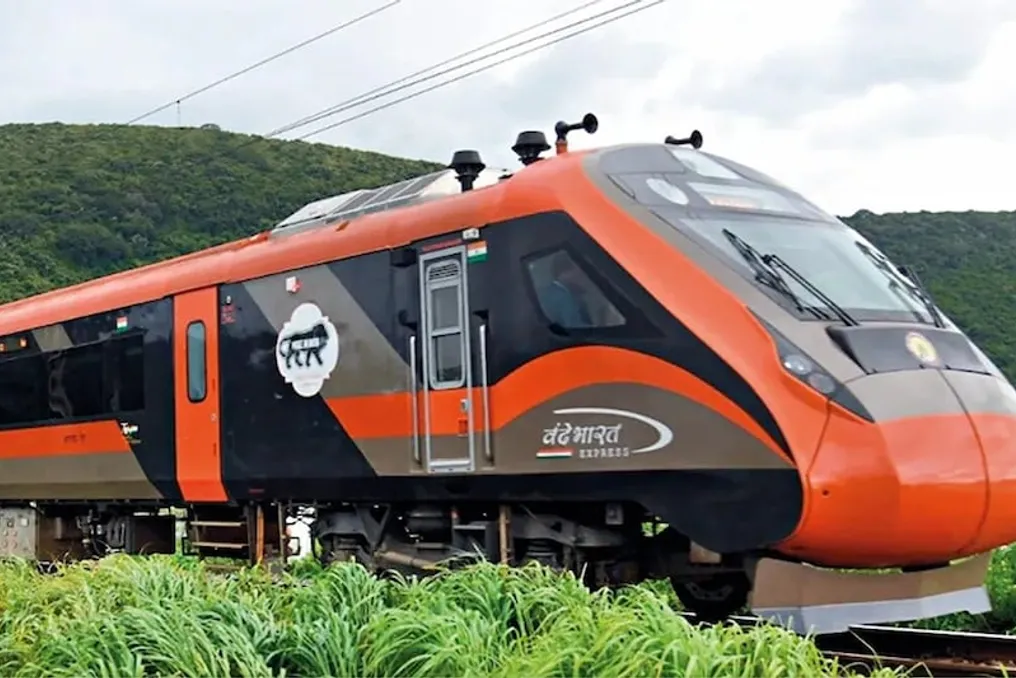
Important information has emerged regarding the Vande Bharat Sleeper trains. The first prototype of the Vande Bharat sleeper coach is expected to be presented at the modernized Marathwada Rail Coach Factory (MRCF) in Latur, Maharashtra, in the current financial year. Previously, the completion deadline was set for June 2026, but it has now been extended to March 31, 2027. This was announced by Salim Ahmed, Chairman and Managing Director of Rail Vikas Nigam Limited (RVNL), at the company's 23rd annual general meeting.

According to the company, the production of Vande Bharat sleeper coaches at the Marathwada factory is ongoing. The responsibility for creating the Vande Bharat Sleeper series has been assigned to the joint venture Kinet Railway Solutions Ltd, established between Rail Vikas Nigam Limited and the Russian company Transmashholding. This JV is tasked with producing 120 such series, with each series consisting of 16 coaches, totaling 1920 coaches.

According to Salim Ahmed, Chairman of RVNL, the Vande Bharat Sleeper project is transforming the company's business. RVNL is now expanding its activities beyond traditional railway construction and infrastructure projects into rolling stock manufacturing. He noted that this change is linked to the revision of the order book, entry into rolling stock production, development of large communication infrastructure projects, and securing contracts through competitive bidding.

Salim Ahmed also emphasized that in previous years, Rail Vikas Nigam Limited strengthened its capabilities in executing complex railway infrastructure projects. The company operates in 16 states across the country, and its international operations are also growing. According to him, RVNL has already handed over 158 projects to Indian Railways. These projects include the construction of new railway lines, track gauge changes, doubling of tracks, electrification, as well as workshop and other critical infrastructure tasks. Over 17,000 kilometers of railway infrastructure have been created through these projects.

RVNL reported that during the financial year 2025-26, the company completed and handed over 173.82 kilometers of railway infrastructure to Indian Railways. Among these is the Fefna-Indra-Mau-Shagandj section measuring 150.28 kilometers. The company asserts that these projects have contributed to improving the safety, speed, and efficiency of rail transport.

During this period, the company also carried out electrification work on 173 kilometers of railway tracks. This work included the installation of four traction substations, eight switching stations, and 12 SCADA systems. These works were conducted as part of track doubling projects and related third-line projects.

RVNL worked on numerous projects even in challenging geographical conditions. In the financial year 2025-26, the company completed earthworks for the construction of a 23-kilometer tunnel. Furthermore, the company made progress in major mountain railway projects being implemented in Uttarakhand, Himachal Pradesh, Madhya Pradesh, and Maharashtra. During the same period, 19 workshop projects were launched.

The company also reported progress on workshops for Periodic Overhaul (POH) of coaches in Kajipet and on the electric locomotive POH shop in Vadodara. Both these projects are planned to be commissioned in the current financial year. Salim Ahmed added that to advance connectivity projects, the company has already established five Special Purpose Vehicles (SPVs) in the form of joint ventures.

Popular