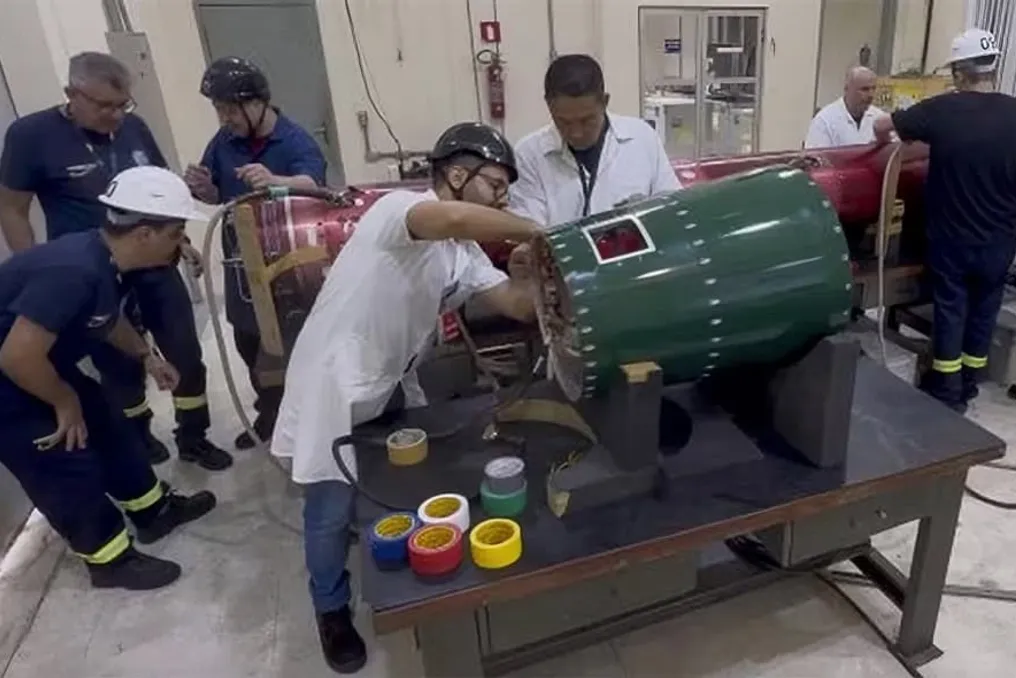
A short mission to an altitude exceeding 100 km above the Earth's surface can provide answers that are difficult to obtain in a conventional laboratory. Therefore, as part of the mission conducted using the Brazilian test platform, experiments will be subjected to microgravity and will be returned after the flight for analysis by researchers on land.
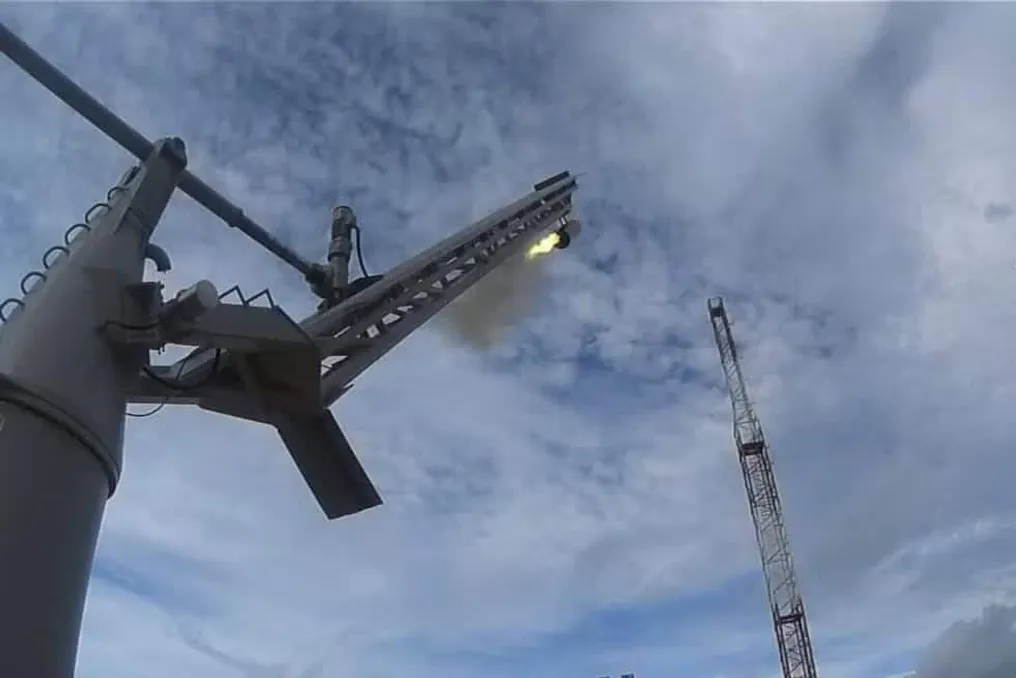
This initiative is being implemented with the Reduced Suborbital Microgravity Platform (PSM-R), designed to carry scientific experiments during a short flight. The vehicle will be launched from the Inferno Barrier Launch Center (CLBI) in Parnamirim (RN) during Operation Potiguar 2, conducted by the Brazilian Air Force (FAB).
The operation, which began on August 31, is scheduled to conclude on September 19, with the launch of experiments installed on the PSM using the VS-30 sounding rocket planned within this period. The main goal of this mission is to test the experiments themselves and the functionality of the system responsible for the platform's return and recovery. If successful, researchers will be able to retrieve the experiments after the flight and conduct an analysis that cannot be achieved solely based on telemetry data during the mission.
The term microgravity refers to a state where gravitational effects are sharply reduced, causing certain physical, chemical, and biological processes to exhibit behavior significantly different from what is observed on the Earth's surface. Such an environment can be useful for researching new materials, combustion processes, pharmaceuticals, and space agriculture.
Crystal formation is of particular interest—structures that may have different characteristics when produced in microgravity conditions because the influence of gravity on their growth is significantly less. Rui Botelho, a mechatronics master, editor of the Brazilian Space channel, and former employee of the Brazilian Space Agency (AEB), explained in an interview with Olhar Digital that synthetic crystallography attempts to reproduce crystals in an industrial environment, but gravity interferes with the organization of elements at the microscopic level. In space, where there is no fixed direction of gravity, structures grow symmetrically and much more uniformly. He noted: 'When you are in a microgravity environment, this different form reduces the probability of its occurrence. Thus, these crystals grow much more evenly in all directions than here on Earth.'
According to the specialist, this process yields crystals of the highest quality, applicable from the pharmaceutical industry to electronics, such as watch precision and computer clock pulses. 'In space, you can achieve much higher quality in the composition of these crystals, which eliminates the problem of time difference practically.'
An example of such an application occurred in 2023 when Varda Space Industries conducted an orbital mission to produce ritonavir crystals, a drug used to treat people with HIV. This experiment demonstrated one of the possibilities of using the space environment to study the production processes and properties of substances.
According to FAB, the PSM-R is mounted on top of the VS-30 V16 rocket, developed by the Institute of Aeronautics and Space (IAE). This approximately nine-meter long vehicle is classified as suborbital because it does not place its payload into orbit. Its task is to reach an altitude over 100 km, complete the mission, and return to Earth.
After ignition, the rocket ascends during the first phase of flight, following a trajectory similar to a parabola. The engine operates for about 30 seconds. When the vehicle loses speed and approaches the highest point of the trajectory (apogee), the platform separates from the rocket and begins executing the prescribed procedures for the experiments.
The time spent in the space environment is very short. Although official reports mention longer windows, Botelho believes that for this specific configuration of the vehicle, the actual microgravity time is about two to three minutes. Nevertheless, he emphasizes that this period is sufficient to test hypotheses and electronic components or biological systems before investing in long-term orbital missions.
After reaching the highest point of the trajectory, the platform begins its return, initiating a stage as crucial as the experiment itself. During descent, the platform first experiences freefall. Then, the first parachute is activated to stabilize the equipment and prepare for the opening of the main system. After this, a larger parachute opens to reduce speed and ensure the structure reaches the water under suitable conditions for detection and rescue.
The landing area is predetermined, but the exact location can vary due to factors such as wind and ocean currents. Therefore, the platform is equipped with GPS to transmit its location and a radio system emitting signals for rescue teams. Botelho explains that the platform is completely sealed and waterproof, guaranteeing the protection and integrity of the samples even in water. Provided the parachute functions correctly and there is no severe impact upon landing, FAB rescue teams are expected to evacuate quickly.