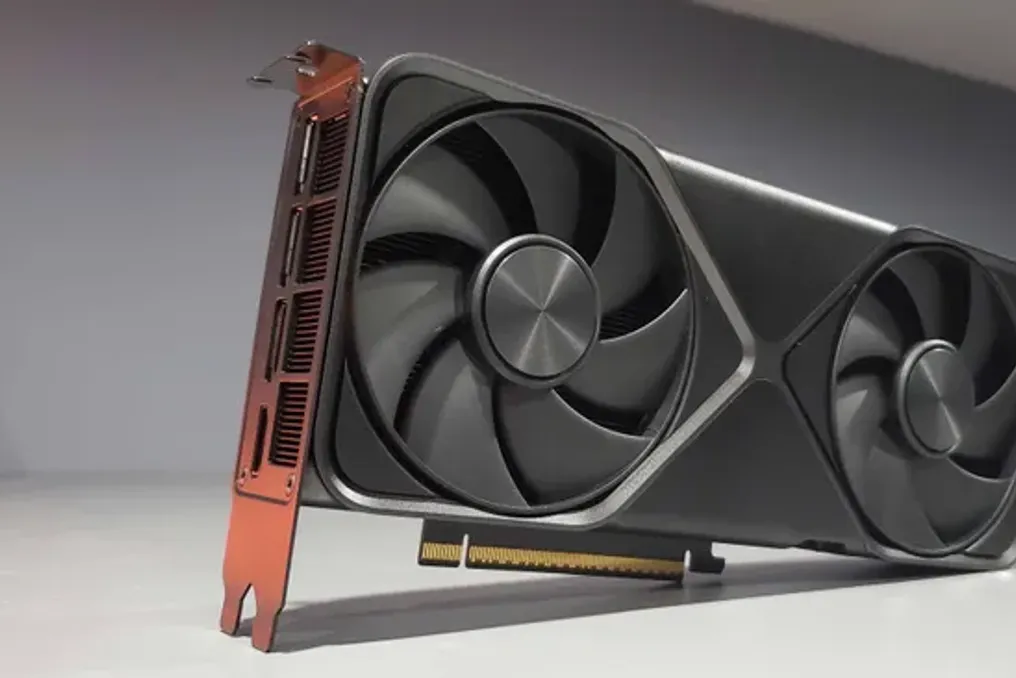
Nvidia is reportedly developing a new variation of the GeForce RTX 5070. According to data provided by VideoCardz, the manufacturer has the possibility of replacing the currently used GB205 chip with a reduced version of the GB203, a GPU present in more powerful models such as the RTX 5070 Ti and the RTX 5080.
This change would not result in an RTX 5070 with greater processing power. The strategy primarily aims to allow Nvidia to utilize GB203 chips that do not meet the requirements for top-tier models, which would help increase the volume of available GPUs in the market.
Currently, the RTX 5070 operates with the GB205, which has 6,144 CUDA cores. This full chip supports up to 6,400 cores, which already allows for the utilization of units with minor manufacturing defects.
The GB203 is notably larger and is the component of the RTX 5080, which uses its full configuration. Chips with defects in their units can already be reused in the RTX 5070 Ti, which features 8,960 CUDA cores.
The new approach could go further: GB203 units that also do not meet the requirements for the RTX 5070 Ti could be adapted and scaled down to offer the same expected specifications as an RTX 5070.
In practice, this would mean that consumers could acquire two RTX 5070s built from different chips but designed to deliver the same level of performance.
The core benefit of this change would be optimizing the use of produced chips, thereby aiding in the supply of the RTX 5070. This is especially relevant because manufacturing larger chips implies that small defects can prevent certain units from being used in the models for which they were initially designed.
However, the introduction of this variant does not necessarily guarantee lower prices for buyers. The use of the GB203 does not decrease the board's production cost and serves primarily to utilize silicon that would otherwise not meet the specifications of higher-end models.
For now, Nvidia has not officially confirmed this new version of the RTX 5070; the information is circulating only as reports about a potential modification in the GPU's manufacturing process.
For gamers, the chip swap should not represent a significant performance leap. Even when using the GB203 found in higher-end cards, the new version would remain restricted to the specifications set by Nvidia for the RTX 5070, maintaining the same 6,144 CUDA cores.
This implies that games should show very similar frame rates between the two versions, since using a physically larger chip does not automatically release disabled resources. Blackwell architecture technologies, such as DLSS 4, Multi Frame Generation, and Ray Tracing, would continue to operate in the same way.
Eventual differences could arise in aspects such as power consumption, temperatures, and boost behavior, depending on the implementation by each manufacturer. However, based on current data, there is no evidence that acquiring an RTX 5070 with GB203 results in receiving a 'hidden 5070 Ti' or achieving performance close to the RTX 5080. The main focus of the change appears to be on production and availability, rather than increasing the card's performance.