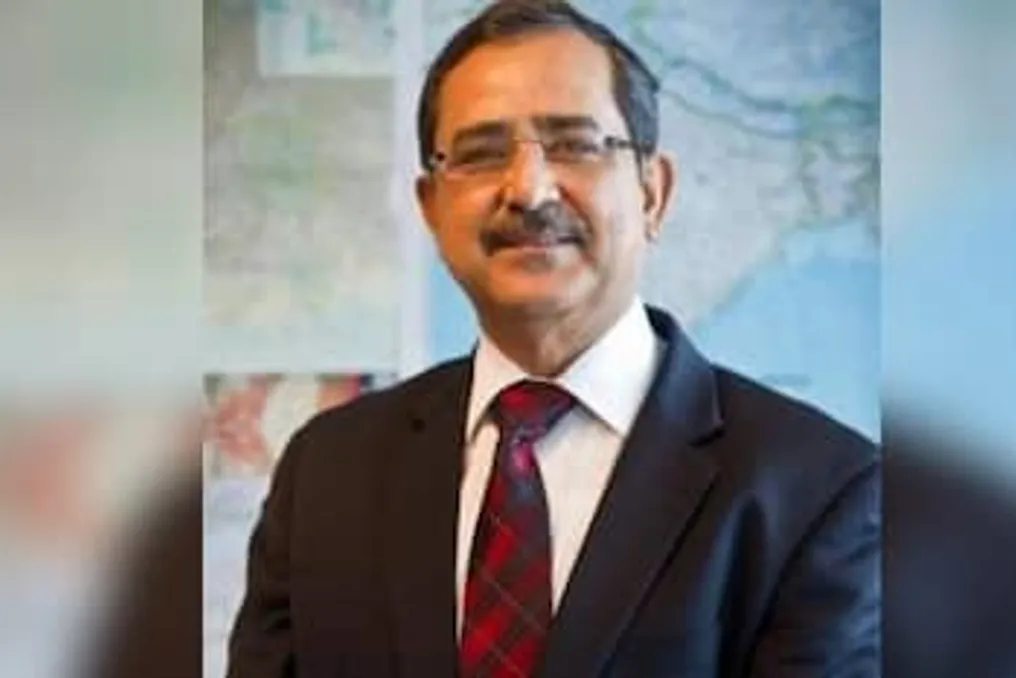
Ashok Lahiri, Vice Chairman of NITI Aayog, noted that transactional data generated through the UPI system can improve creditworthiness assessment and more accurately determine risks, thereby facilitating the inclusion of small, medium, and micro enterprises (SMEs) into India's formal lending system.
Speaking at the Global Fintech Festival (GFF), Lahiri emphasized that India needs to deepen its credit market by utilizing the rich data coming from UPI to integrate the informal sector into the financial sphere. He stated that this data will help banks refine loan assessments, calculate risks more correctly, and provide loans to small businesses that were previously outside the formal credit system.
Lahiri added that while creditworthiness assessment is a key function of a bank manager, broader access to financial data can make this process more efficient. Improved transparency in borrower financial behavior will allow lenders to assess risks more accurately and set appropriate lending terms.
Furthermore, Lahiri pointed out that for India to transition to a developed economy, it must increase the level of investment. Although the current rate is around 30 percent of the gross domestic product (GDP), it reached approximately 34 percent in the first quarter. He compared this to China and Korea, where the share of investment in GDP exceeds the Indian figure by at least 10 percentage points.
Despite the fact that foreign investment can bring capital, technology, access to global value chains, and knowledge in large-scale manufacturing, Lahiri noted that the majority of investment in India should be supported by domestic savings. However, in the short term, the inflow of foreign capital may remain unstable due to uncertainty in the global economy, including tariff militarization, the breakdown of the World Trade Organization (WTO), and disruptions caused by artificial intelligence and digital technologies.
In such an environment, investors become more risk-averse. Lahiri also stressed that investments themselves create demand, and exports provide an additional source of this demand.
The expert called for enhanced cooperation between the government and industry in skill development. Industry should participate in defining its required competencies and play a larger role in developing curricula and apprenticeship programs. The effectiveness of training programs should be measured by how many trained individuals find employment in the industry.
Regarding infrastructure, Lahiri saw significant potential for public-private partnerships (PPP), with the financial sector playing a crucial role in mobilizing long-term and risky capital. He noted that some infrastructure projects can be implemented under the PPP model because the financial sector knows where funds are available and who is looking for opportunities for long-term, risky investments, while risks can be minimized through a carefully designed agreement between the government and the concessionaire.
Asset monetization can also help meet India's infrastructure needs, although different financing models will be required for different projects. The manufacturing sector is seeing increased investment in renewable energy and infrastructure, while data centers, semiconductors, and electronics manufacturing attract interest from both Indian and foreign companies.
NITI Aayog has identified 14 sectors with future potential, but Lahiri advised policymakers to approach such studies with some caution, rather than trying to predict which industries will ultimately succeed, comparing this approach to venture capital, where some investments fail and only a few prove extremely successful.
Lahiri also touched upon India's long-standing tendency to prefer gold, linking the accumulation of precious metal over generations to the country's historical trade surpluses. He questioned whether gold necessarily yields higher long-term returns, noting that his data suggests that over a 100-year period, gold might have yielded less profit than bank deposits, let alone the stock market.