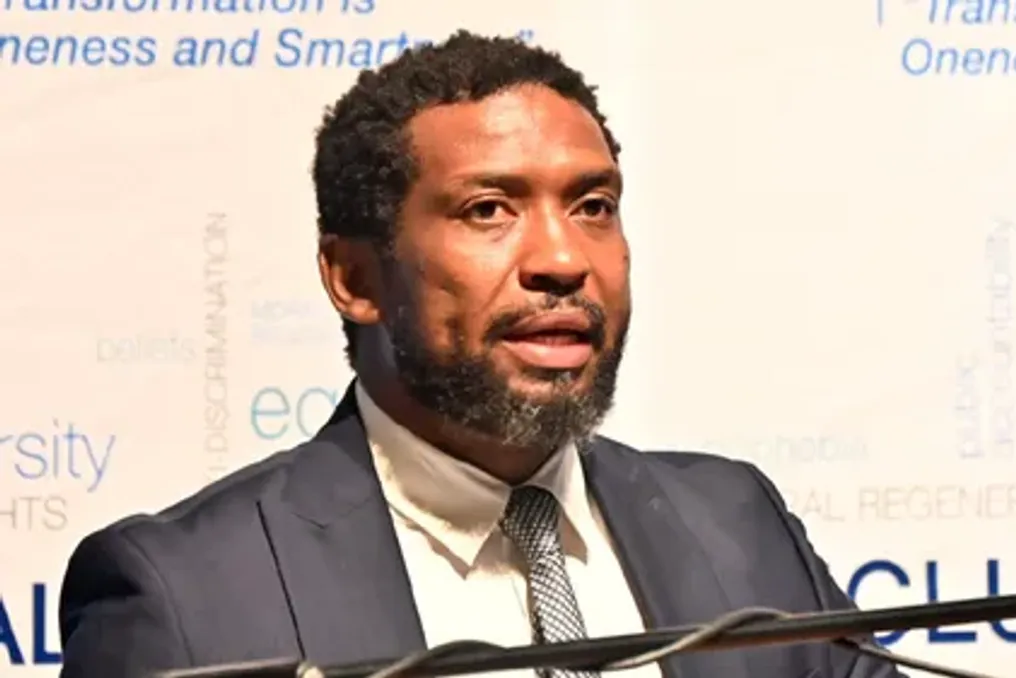
Minister of Higher Education Condemns Destruction of CPUT Campus During Student Protests
Read more
IOL
iol.co.za

Minister of Higher Education Condemns Destruction of CPUT Campus During Student Protests

The Minister of Higher Education and Training, Buti Manamela, condemned the destruction of university infrastructure that occurred during student protests at CPUT. He warned that campuses cannot continue to resort to damaging buildings when disputes between students and management reach an impasse.

This statement came amid preparations by Cape Peninsula University of Technology (CPUT) to resume classes on September 14th after disruptions that forced the government to send a delegation to the institution. Manamela welcomed the agreement reached between the parties at CPUT but expressed serious concern over threats to university infrastructure, including attempted arson.

Manamela noted: 'What I really want to say about what happened at CPUT is, of course, I applaud the parties for coming together and reaching an agreement, but I am very concerned that when we are dissatisfied with what is happening on campus, the first victims are things that cannot speak back, such as buildings,' he stated, adding: 'We tend to burn them instead of talking to each other.'

Manamela's Stance on the Right to Protest

The Minister reported that prior to the attempted arson, he had spoken with CPUT representatives and learned that the idea of burning some university buildings was being openly discussed on campus. Manamela emphasized that the constitutional right of students to protest must be protected, but stated that this right cannot justify the destruction of infrastructure objects.

He reminded that the right to protest has been used to achieve some successes, but he believes it is time to reconsider the approach; instead of threatening buildings, dialogue should be pursued. In his opinion, threats to buildings are not constructive and lead to setbacks.

Resumption of Classes on September 14th

Manamela confirmed that an industry delegation had been sent to CPUT, and the resumption of classes was expected on September 14th. He expressed regret over the lost time and the fact that interested parties on campus spent a lot of time discussing issues.

Despite this, he welcomed the final reconciliation of the parties. However, Manamela warned that CPUT's fundamental financial problems have not disappeared simply because the university withdrew its financial recovery plan. He clarified that the withdrawal of the plan only means that the problems must be addressed differently.

The Minister urged both the university management and student representative councils to maintain open lines of communication so that disagreements do not escalate into work stoppages and destruction. He advised management to interact with students without closing doors to the SRC if they have questions, and conversely, the SRC should not isolate themselves but should negotiate and communicate with management when problems arise. Manamela concluded that funding remains one of the main threats to stability in higher education, as universities, students, and the entire system struggle against growing financial pressure.

Similar stories

Minister of Higher Education warns about the instability of the NSFAS funding model, forecasting a deficit of up to R33 billion by 2029
Read more
iol.co.za

Minister of Higher Education warns about the instability of the NSFAS funding model, forecasting a deficit of up to R33 billion by 2029

The Minister of Higher Education and Training, Pius Manamela, expressed serious concern regarding the financial sustainability of the National Student Financial Aid Scheme (NSFAS), warning that the funding deficit could reach R33 billion by 2029 if the government does not revise higher education funding principles.

Manamela stated that the government is negotiating with the National Treasury concerning the current NSFAS deficit of approximately R15 billion. He noted that this financial gap has significantly increased since the introduction of the current student funding policy. The Minister presented the deficit dynamics: last year it was R13 billion, the year before that was R7 billion, even earlier R5 billion, and in the first year of the policy's implementation, it was R2.5 billion.

These statements were made during a meeting with the higher education and training delegation within the National Media Group on Wednesday, where he highlighted the main challenges facing the post-school education sector.

Unstable Policy

Manamela emphasized that the widening financial gap cannot be attributed solely to leadership issues or administrative disputes within NSFAS; the root of the problem lies in the funding policy structure itself. He stated that the situation is caused by a 'policy that is unstable.'

In this regard, he proposed two possible solutions: either allocating the entire necessary amount—R33 billion in the medium term, or revising the methods of distributing these funds among citizens. NSFAS remains a central element of the country's higher education financing system, with approximately R56 billion from his department's budget directed towards this scheme.

The Minister warned that the instability of NSFAS carries far-reaching consequences beyond individual student allowances. He explained that the collapse of NSFAS could lead to universities not receiving payment for tuition, problems with private housing payments, which threatens the student experience itself, and could negatively affect those providing student accommodation.

Despite NSFAS successfully funding hundreds of thousands of students, Manamela considers it unacceptable if even one student does not receive their entitled grant. He specified that the concern is not the fact of paying grants to 800,000 students annually, but the probability that one of these students will be without payment on any given day, which is too great a risk.

Consideration of Income-Contingent Loans

Amid growing pressure on funding, Manamela reported that one of the options being considered to create a more sustainable higher education funding model is an income-contingent loan system. Under this system, students could access education without upfront payment and begin repaying the funds to the state only after their post-graduation income reaches a predetermined threshold.

The Minister noted that in the long term, the possibility of implementing such a credit mechanism is being discussed to make education free for everyone at the point of entry. An income threshold is set after graduation, and the repayment amount to the state is determined based on it. He mentioned Australia as an example of a country that has implemented such a model, but stressed that any South African version must be adapted to local conditions.

NSFAS Stability and Readiness for 2027

Manamela stated that stabilizing NSFAS remains one of his main priorities, asserting that stability depends not only on having a board of directors or an administrator. He clarified that stabilization also implies having competent people in the roles of CEO and senior managers, which is a current concern.

The immediate focus is on ensuring NSFAS is ready for the 2027 academic year. Priorities include ensuring the proper functioning of the board of directors together with NSFAS senior management, preparing for the 2027 academic year, opening applications, finalizing funding guidelines, and resolving student accommodation issues.

Angolan teachers' union announces strike after alleged breach of agreement with the government
Read more
noticiasaominuto.com

Angolan teachers' union announces strike after alleged breach of agreement with the government

Sinprof has called for four periods of strikes in Angola in protest against the alleged non-compliance with an agreement signed with the executive branch in January. The first strike period is scheduled for September 21.

Admar Jinguma, Secretary-General of Sinprof, reported that the Minister of Education, Erika Aires, reviewed the points of the agreement and provided information, but this was considered repetitive. For the unionist, the meeting constituted a 'dialogue of the deaf,' as Sinprof believes that the conversation only has value if it results in solving teachers' problems.

Jinguma emphasized that if the teachers choose to strike, as is most expected, the union leadership will accept this decision. He informed that details will be communicated to the teachers at the Saturday meeting, which will take place at the São João cinema in Luanda, while in other provincial capitals, it will depend on the guidance of local secretariats, leaving the final decision to the teachers.

Sinprof determined the strike to cover general education, technical-professional training, teacher training, and adult education due to the breaches and violation of the terms of the agreement established on January 8. This action will be preceded by representative assemblies in all 21 provincial capitals of Angola on September 12.

Hermínia Maria da Conceição Ferreira do Nascimento, President of Sinprof, declared that the Angolan teacher is exhausted by unfulfilled promises, stressing that the same issues have been sought for three decades and that it is time to obtain concrete answers.

The Union argued that the Ministry of Education violated a large part of the commitments made in the January 8 Agreement between the executive and Sinprof, which harms the valuation of the teaching career and weakens confidence in the government. Among the demands, Sinprof asks for compliance with the agreement regarding the inclusion of thousands of teachers unjustly excluded from the Internal and Access Entrance Exam, both in the registration and selection phases.

Furthermore, the union complains about the reassessment of this process by the joint national commissions of the Ministry of Education and Sinprof, as well as the immediate inclusion of admitted teachers in the State Financial Management Integrated System (SIGFE). The National Council of Sinprof expressed deep concern over the situation of thousands of Angolan children and adolescents who, again, cannot attend school due to lack of places in public institutions, which constitutes, for the union, a serious restriction to the right to education that the Angolan State must guarantee.

The four phases of the strike were scheduled by Sinprof: the first between September 21 and October 15; the second from December 2 to December 18; the third from February 10 to February 26, 2027; and the fourth from May 17 to June 18, 2027.

Popular