Astana Finance Days 2026 gathered 8000 participants from 90 countries
Read more
UzDaily
uzdaily.uz

Astana Finance Days 2026 gathered 8000 participants from 90 countries

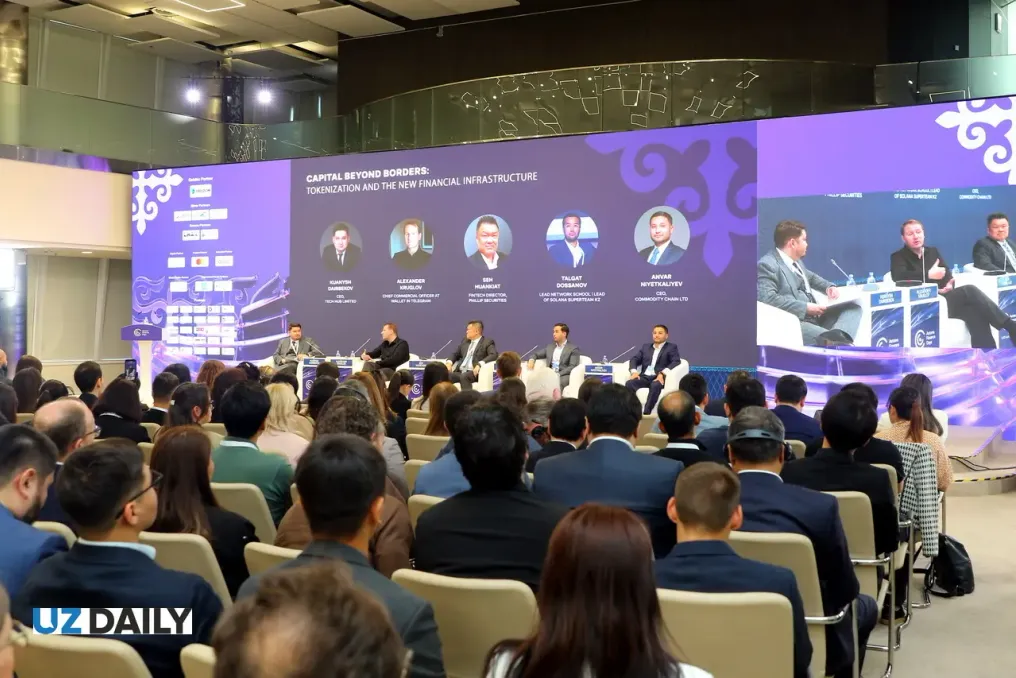
The ninth forum, Astana Finance Days 2026, held under the slogan 'Making an Impact. Capital in Action,' took place on September 9–10 at the Astana International Financial Centre (AIFC). The event attracted approximately 8000 participants from 90 different countries, including investors, representatives from the financial and technology sectors, regulators, state and quasi-state institutions, as well as international companies.

The main business agenda of the forum focused on developing capital markets and investment products, improving legal and regulatory frameworks, implementing institutional-scale innovations, financing the real sector of the economy, and expanding regional and cross-border cooperation.

Renat Bekturov, Governor of the Astana International Financial Centre, emphasized that in modern conditions, competition for capital requires not only attractive terms but also the ability to turn opportunities into real projects and investments. He noted that the essence of Astana Finance Days 2026 is to unite investors, regulators, and businesses to bring ideas into practical solutions, investment projects, and long-term partnerships.

Financial System in Conditions of Technological Transformation

The first day of the forum included sessions dedicated to the role of sovereign and institutional capital in economic growth, the future of financial infrastructure, tokenization of real assets, investor protection, sustainable finance, and the development of real sector projects.

The central event was the plenary session 'Transformation of the Financial Architecture.' Participants included Timur Suleimenov, Chairman of the National Bank of Kazakhstan; AIFC Governor Renat Bekturov; Timur Turlov, CEO of Freedom Holding Corp.; Balaji Srinivasan, founder of Network School and author of The Network State; and Sergio Mello, Global Head of Stablecoin Solutions at Anchorage Digital. Attendees discussed the impact of technology, regulation, and new models of capital movement on the structure of financial markets, with a special focus on digital assets, the digital tenge, crypto reserves, AI regulation, and the development of decentralized finance.

Ben Powell, Managing Director of BlackRock Investment Institute and Chief Investment Strategist for the Middle East and Asia-Pacific region, presented a separate perspective on capital market development. In the session 'Sovereign and Institutional Capital as Catalysts for Growth and Strategic Transformation,' participants examined the role of public and institutional investors in supporting long-term economic development, structural transformation, and the implementation of large-scale projects.

Tokenization and Digital Infrastructure

The technological program of the forum continued with sessions titled 'The Future of Financial Infrastructure' and 'Capital Without Borders: Tokenization and New Financial Infrastructure.' Representatives from the Development Bank of Kazakhstan, National Payment Corporation of Kazakhstan, Mastercard, Janus Henderson Investors, Bir Ecosystem, Phillip Securities, Solana, The Open Platform, and Commodity Chain discussed the development of payment infrastructure, digital assets, and new mechanisms of capital movement.

Another part of the program was dedicated to financing small mining companies and early-stage projects. Experts and representatives of financial institutions spoke at the session 'Financing Small Mining Projects: Challenges and Opportunities.' In April 2026, AIFC launched the Small Mining Platform to attract investment in early-stage exploration projects. Out of 48 submitted applications, 23 projects were selected and presented to potential investors during the pitching session at the forum.

Green Finance and Regional Cooperation

Astana Finance Days 2026 also served as a platform for the second annual meeting of the Turkmen Council on Green Finance, gathering representatives of financial regulators, government bodies, and development institutions from Turkic countries. Participants included Kubanychbek Omuraliev, Secretary General of the Organization of Turkic States; Bagdad Amreev, President of the Turkic Investment Fund, as well as representatives from the Central Bank of Azerbaijan, Kyrgyz Stock Exchange, Hungarian National Bank, AIFC Green Finance Center, and other organizations.

The issue of financial security was addressed in the session 'Financial Intelligence in the Digital Age: From Digital Assets to AI.' Representatives of international and financial organizations analyzed the impact of digital technologies on identifying financial risks and cooperation between the public and private sectors.

A separate track was dedicated to the legal infrastructure of AIFC. The session 'Capital in Action: How the AIFC Court and IAC Protect Investor Rights' examined international dispute resolution mechanisms, digital tools, and institutional approaches aimed at increasing transparency and investor confidence.

Within the regional track of the forum, the AFSA roundtable 'From Fragmentation to Integration: Regional Cooperation for Strengthening Financial Markets' took place. The discussion brought together financial regulators from Kazakhstan, Uzbekistan, Kyrgyzstan, Tajikistan, and Georgia, as well as international financial organizations and development institutions, including the Asian Development Bank, the European Bank for Reconstruction and Development, the World Bank, and the International Finance Corporation.

Participants studied the main obstacles to cross-border capital flows, mutual recognition, expanding access to financial markets, information exchange, and strengthening supervisory cooperation. Uzbekistan's participation in the regional track of Astana Finance Days 2026 became part of a broader dialogue on financial integration and expanding cross-border investment cooperation in Central Asia.

AIFC Introduces Intelligent Digital Assistant

For the first time at the forum, AIFC introduced AIDA—a multilingual intelligent assistant developed by AIFC to support clients and help users navigate the services of the Astana International Financial Centre. The system processes text and voice requests, providing information about registration in AIFC, applicable requirements, procedures, and available services. If necessary, it directs users to the relevant department or specialist. Forum participants were able to test AIDA in various languages in real-time.

New Agreements and Investment Projects

It is expected that several documents aimed at strengthening international regulatory and investment cooperation will be signed at the forum. These include memorandums of understanding between the National Bank of Georgia and the AIFC Financial Services Authority (AFSA), as well as between AFSA and the Croatian Financial Services Supervisory Agency (HANFA).

As part of the grain tokenization project within the AIFC jurisdiction, agreements are also planned to be signed between Tech Hub Limited and Concordia Group Ltd., and between Tech Hub Limited and Aitas Agro Ltd. An important part of the forum is the AFD Exhibition Center, which brings together financial institutions, banks, asset management companies, as well as fintech and technology projects. Participants showcase their products and solutions and have the opportunity to establish direct contact with potential investors and partners.

Astana Finance Days 2026 provided a platform to discuss key trends shaping the global financial system, including digitalization, asset tokenization, the development of artificial intelligence, green finance, and cross-border capital flows. The forum also contributed to strengthening regional financial cooperation and expanding investment ties between Central Asian countries and global markets.

Similar stories

GWM reveals Ora 5 sedan, which may be produced in Espírito Santo
Read more
autopapo.com.br

GWM reveals Ora 5 sedan, which may be produced in Espírito Santo

GWM has registered a sedan version of the Ora 5 model in China, and this novelty may have a destination in the Brazilian market. Vehicle homologation documents indicate that it will have a three-volume body, being a derivation of the SUV that the brand already sells in the country. According to the automaker itself, the Ora 5 will be manufactured in the national territory in different body configurations.

Ricardo Bastos, director of institutional and governmental relations at GWM, informed about local production during an interview given to the CBN Autoesporte program. He confirmed that the Ora 5 will be produced in Brazil in several body options, although he did not specify which ones.

As reported by Autoesporte, the line of vehicles derived from the SUV, which will also include an unprecedented station wagon, will be assembled at the future factory located in Aracruz, Espírito Santo. This unit was announced in June and is scheduled to begin operations in 2029, with capacity to produce 200 thousand vehicles annually. The Ora 5 was already listed among the models confirmed for this Capixaba plant since the beginning of the project.

In the registrations made in China, the sedan preserves the front part of the SUV, maintaining the oval headlights reminiscent of those on the Porsche, in addition to repeating the side lines up to the C-pillar. From this section, the design acquires an extended rear, with a traditional trunk and LED taillights connected by a horizontal strip, a detail that accentuates the car's sense of width. Although the regulatory body has not disclosed details of the interior, it is expected to maintain the dashboard of its taller body sibling.

The dimensions of the model are 4.76 meters in length, 1.83 meters in width, and 1.63 meters in height, presenting a wheelbase of 2.72 meters. These measurements classify it as a mid-size sedan, slightly larger than the Toyota Corolla.

The registered mechanical range includes three alternatives. The gasoline-powered version uses a 1.5 turbo engine that generates 184 horsepower and 27.9 kgfm of torque, reaching a top speed of 190 km/h. The hybrid option combines fifth-generation Hi2 technology with a 1.5 turbo engine of 152 hp, resulting in a total of 226 hp and 48.4 kgfm in the system, with a top speed of 185 km/h. The electric version uses the Honeycomb system with a 14-in-1 architecture, delivering 204 hp, 26.5 kgfm, and a top speed of 170 km/h.

Currently, in Brazil, the Ora 5 is offered only in the electric version. The availability of gasoline and hybrid versions in China suggests that the platform supports combustion engines, which could significantly expand the price variety if domestic production is realized. GWM has not yet announced the sale of the sedan outside of China, and the official presentation of these new derivatives is scheduled for the end of this year, according to Autoesporte.

Government approves eight railway multi-track projects worth 20,804 crore rupees
Read more
timesofindia.indiatimes.com

Government approves eight railway multi-track projects worth 20,804 crore rupees

The government has approved eight railway multi-track projects with a total cost of 20,804 crore rupees. These projects are aimed at accelerating the movement of both passengers and goods within the country's densely populated transport networks.

Prime Minister Narendra Modi stated that the implementation of these projects will ensure stronger connectivity, speed up passenger movement, and reduce logistical costs.

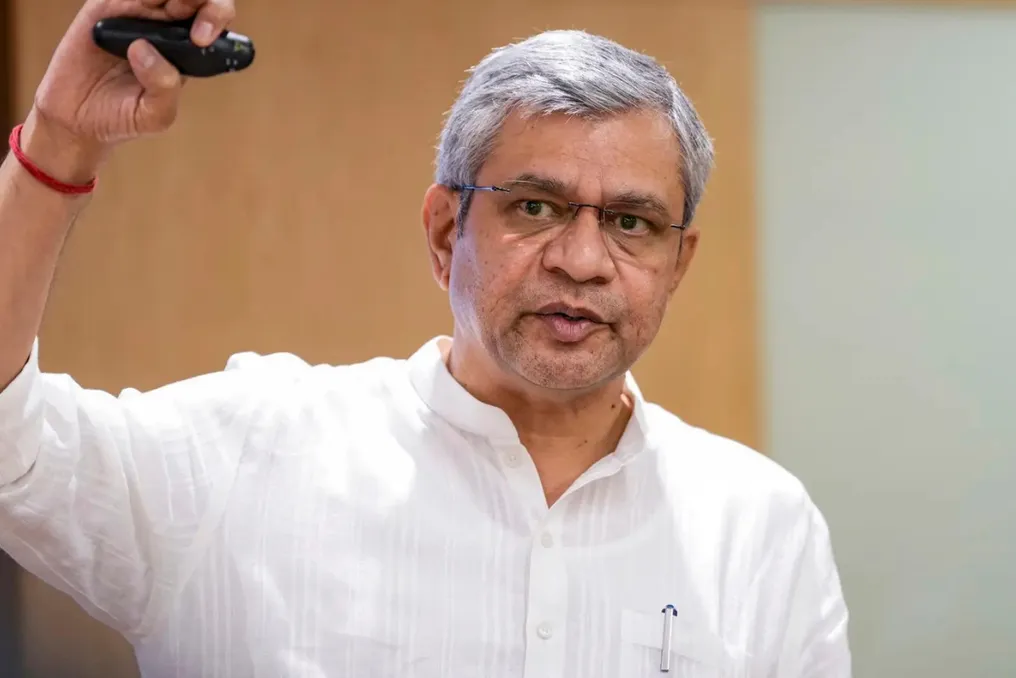
Announcing the decisions, Railway Minister Ashwini Vaishnaw reported that these multi-track projects—which include doubling lines as well as laying third and fourth tracks—cover 14 districts in West Bengal, Jharkhand, Odisha, Madhya Pradesh, and Chhattisgarh, as well as 17 districts in Tamil Nadu, Andhra Pradesh, Karnataka, and Telangana. Completion of these works by 2029–2030 will increase the capacity of eight lines for freight and passenger trains.

It is estimated that after the completion of the projects, the railway network will expand by 1,196 km, and the volume of freight transport will increase by 74 million tons annually. The government specified that these routes are critical for transporting coal, cement, iron, and steel, containers, automobiles, grains, petroleum products, and fertilizers.

In his post on social media platform X, Modi also noted that three multi-track projects in Chhattisgarh, Jharkhand, Madhya Pradesh, Odisha, and West Bengal will contribute to tourism development, especially heritage and wildlife, in addition to reducing logistical expenses.

Vaishnaw emphasized that the railway system has undergone a complete transformation over the last twelve years. The national carrier has implemented modern constructions to minimize the need for land acquisition. He added that aerial photography and AI-based monitoring methods are used to determine the actual status of land parcels. Furthermore, preliminary land-related activities now begin even before the official approval of the project.

The minister also provided financial figures: by the first week of September, 50% of the Global Budget Support (GBS) for Indian Railways for 2026–2027 had been utilized. 2.8 lakh crore rupees have been allocated as GBS for the fiscal year 2027.

Samsung Galaxy Ring with 45% discount reaches R$ 1,199, an intelligent health monitoring ring
Read more
olhardigital.com.br

Samsung Galaxy Ring with 45% discount reaches R$ 1,199, an intelligent health monitoring ring

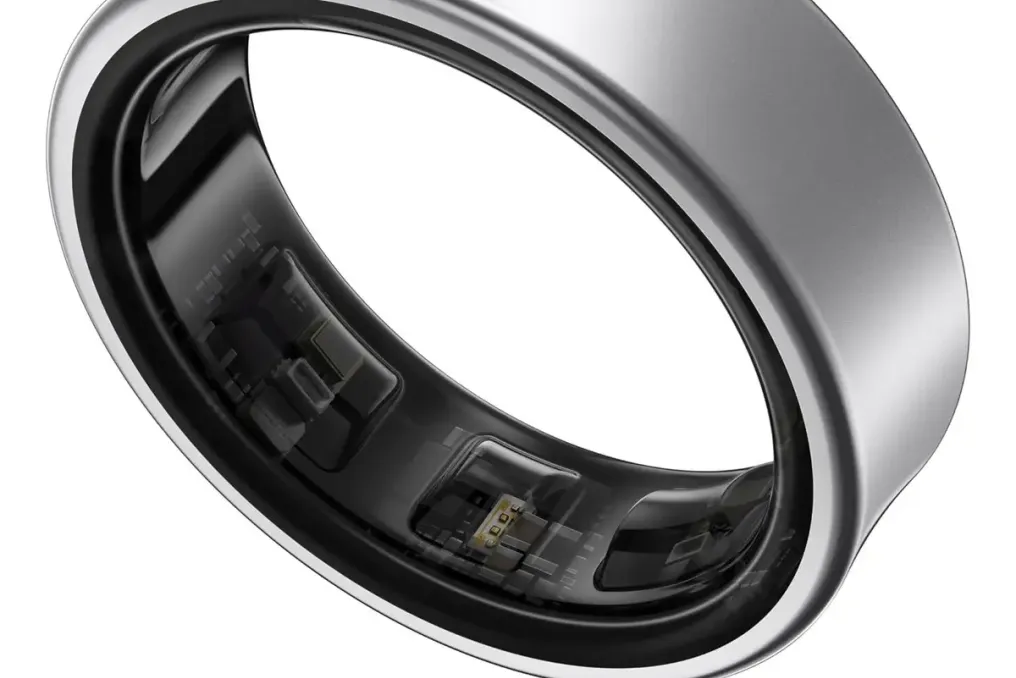
The Samsung Galaxy Ring, Samsung's smart ring that offers continuous health monitoring directly on the finger, is available with a significant 45% discount in size 6, costing R$ 1,199. This promotion is considered one of the best deals recorded for this innovative and discreet Samsung wearable. Additionally, size 7 is also on sale, with a 38% discount.

Globally launched in 2024, the Galaxy Ring introduces a new category of wearable devices. Unlike traditional bracelets or smartwatches, it fits on the finger like a regular ring, allowing for very discreet and comfortable monitoring of heart rate, sleep patterns, physical activity levels, and other indicators, even during sleep, a time when smartwatches can be bothersome.

Size and Price Details

Size 6 is recommended for thinner fingers, generally associated with women or individuals with smaller bone structure, and represents the best price in the current offer, with a 45% discount at R$ 1,199. This is cited as one of the biggest discounts on the Galaxy Ring in Brazil since its launch. Size 7, suitable for medium-sized fingers—the most common among Brazilian adults—is on sale for 38% off at R$ 1,357.03.

The Galaxy Ring is presented as one of Samsung's most complete and innovative wearables. Among its main features, Samsung provides an official Sizing Kit, a physical set containing test rings in all available sizes (from 5 to 13), helping the user determine the exact size before purchasing. This kit is often sent free of charge when purchases are made at official Samsung stores. Alternatively, finger measurement can be done using a sewing tape measure or a paper strip combined with a ruler.

Usage and Functionality Comparison

The choice of device depends on the user's priority. The Galaxy Ring is ideal for those seeking uninterrupted health and sleep monitoring with maximum discretion, as it does not bother during sleep, has superior battery life (seven days), and features an elegant design that matches various styles. Conversely, the Galaxy Watch is more suitable for those who need the full functionality of a smartwatch, such as receiving notifications, accessing applications, integrated GPS, and the ability to make calls from the wrist. Many consumers choose to use both devices, utilizing the Ring for constant health monitoring and the Watch for dynamic activities.

It is important to note that although the Galaxy Ring has basic health monitoring functions and synchronization with the Samsung Health app compatible with iPhones, more advanced features, such as integration with the Galaxy Watch, smart notifications, and certain fine adjustments, are optimized for the Samsung Galaxy ecosystem. To fully utilize its capabilities, the Galaxy Ring works best when paired with Samsung Galaxy smartphones, complementing its use with a Galaxy Watch.

Samsung specifies a battery life of up to seven days with moderate use. In practice, battery life may vary depending on feature usage and monitoring, falling within the common range of five to seven days. This battery life is notably superior to competitors like the Apple Watch (1-2 days) and Galaxy Watch (2-3 days). Recharging is done via a dedicated case that comes with the ring, functioning similarly to TWS earbud cases.

Regarding durability, the Galaxy Ring has a 10 ATM certification, allowing it to be used in pools, baths, and shallow dives (up to about 100 meters in still water). It is made of titanium, a material known for being lightweight and resistant to scratches, corrosion, and different temperatures. However, prolonged contact with harsh chemicals, such as concentrated chlorine or saltwater, is recommended to be avoided to maintain the ring's aesthetics over the long term.

The Galaxy Ring does not allow for size adjustments after manufacturing, unlike conventional rings, due to the presence of internal sensors and a battery. For this reason, it is crucial to measure the finger accurately before purchase or request the official Samsung Sizing Kit. If there is a size error, the product must be exchanged; return policies on platforms like Mercado Livre or Amazon generally allow returns within seven days of receipt, but it is essential to confirm this information before finalizing the transaction.

Due to constant fluctuations in prices and availability, it is advisable to take advantage of the opportunity, especially if size 6 is suitable, to enter the world of smart rings with the largest discount ever seen on this model.

Popular