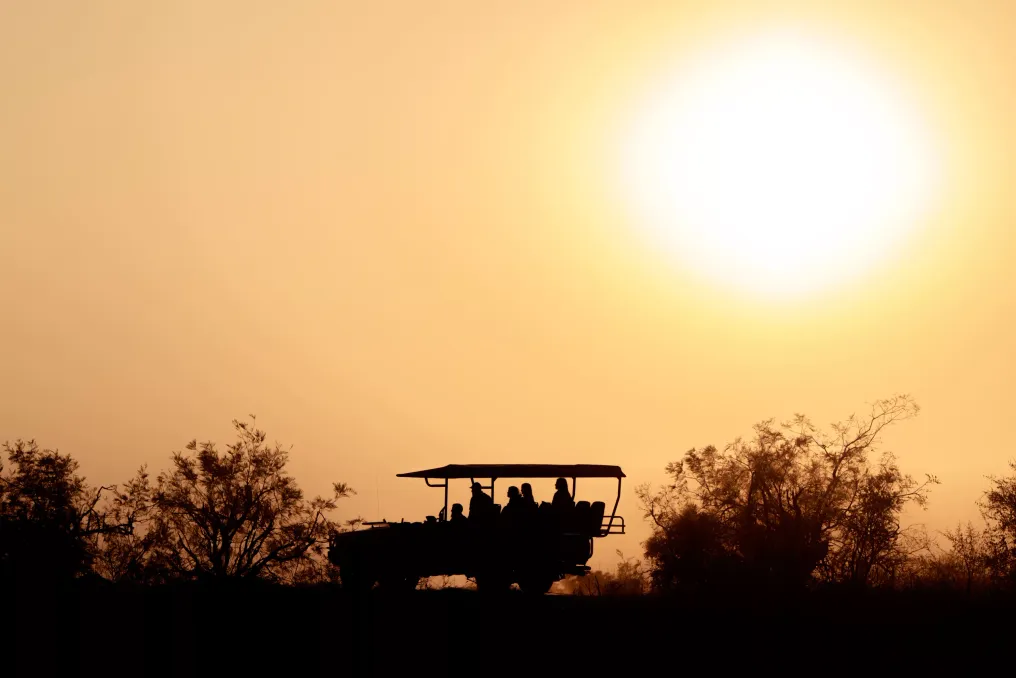
The traditional approach to safari, involving early starts and driving in SUVs to find animals, remains popular. However, modern resorts are offering alternative ways to observe wildlife that allow guests to stay in place.
The author shares experiences from staying at Kruger Shalati, where they decided to forgo the traditional safari drive and instead spent time on the suspended deck by the pool, watching the Sabie River. Although giving up the trip seemed like breaking an unwritten rule, such opportunities are becoming increasingly common across South Africa.
Modern lodges are designed so that animal observation happens not just from a vehicle. This is now possible thanks to open sleeping areas, underground shelters, and watering holes located right in front of decks and pools, turning stationary stays into a legitimate choice of safari rather than a missed opportunity.
Kruger Shalati is considered one of the boldest architectural projects in South Africa. Converted train carriages house 24 luxury rooms on a bridge over the Sabie River, which was previously a night stop for travelers in the 1920s. These suites feature floor-to-ceiling windows, allowing guests to enjoy the view from the shower and from their king-size bed.
The most impressive viewpoint is the deck extending beyond the bridge. From here, one can watch elephants and buffalo following familiar paths along the banks, while crocodiles bask on sandy shoals. The elevated position reduces the sense of urgency often associated with wildlife viewing; there is no need to change position, no radio communication, and no feeling of being chased.
Even though Kruger Shalati is inside the park and offers daily safaris, many guests opt out of one of the trips in favor of relaxing on the deck or watching the sunset from their suite, content that the river itself provides the spectacle.
At Lion Sands Game Reserve, which borders Sabi Sands and Kruger National Park, guests can substitute a lodge room for a night in one of three treehouses. These houses are not part of the main lodge but follow the same principle: once you arrive, you stay put. You are accompanied at sunset and left on an elevated platform with a four-poster bed, protected only by a mosquito net and feather bedding, creating a feeling of complete solitude with the night.
Outdoors, one can hear the distant cries of hyenas or the sounds of lions at dusk. Elephants move below; their approach is heard long before they become visible, betrayed by the sounds of snapping branches, chewing bark, and low rumbling communication between them. As dawn breaks, the savanna gradually reveals itself; shapes emerge from the shadows: a herd of impalas grazes cautiously, a giraffe's head appears above the treeline, and a kudu moves in a solitary line along a worn track.
If height provides one type of proximity, ground level offers another. At Mhondoro Safari Lodge & Villa in Welgevonden Game Reserve, just three hours from Johannesburg, an underground shelter accessible via a tunnel beneath the main deck allows one to be at the same level as a permanent watering hole. Animals approach, and neither height nor distance hinders observation. Antelope pass close enough to hear their breathing, and rhinoceroses cautiously appear and then pause.
This shelter changes the relationship between observer and observed. You are not looking down from a car or observing through a dam; you are in the animals' world at eye level. Here, not only the closeness but also patience and stillness change. In a vehicle, there is always the option to move on, to look for something else, whereas in the shelter, you remain. You watch how the watering hole changes its character with shifting light and the appearance of different animals, and in the process, you begin to notice patterns that you usually miss during a drive.
Mhondoro is also known for a detail that seems incredible: elephant herds regularly drink from the lodge's salt lick. The pool is located near the watering hole observed by the shelter, and the elephants use it accordingly. They appear almost daily, sometimes in large groups, moving through the space without hesitation. Guests quietly swim or sit at the edge while the elephants approach the water with their trunks. Although encounters are not guaranteed, they happen frequently, leaving behind something stranger after the novelty wears off: the anxious intimacy of sharing a pool with a bull elephant while reading a book.
Sometimes thoughtful design gives way to something entirely different. Places like Kruger Untamed do something even more fundamental by eliminating the need for a specific viewpoint. During the dry winter months, two seasonal tented camps appear, and they disappear completely with the return of the rains. Both camps are unfenced—one near Satara Rest Camp, the other near Tshokwane—and built so lightly that no trace remains by October. The animals passing through here do not visit the watering hole or leave; they cross their backyard. These camps acknowledge something that permanent lodges can only approximate: this is not your territory; it is theirs. You are simply occupying it seasonally.
Cheetah Plains Private Game Reserve in Sabi Sands demonstrates a similar principle of immersion through more permanent architecture. Each of the three exclusive villas has glass doors that open fully onto the savanna. One villa, Mapogo, is located right next to an active watering hole, and its infinity pool stretches along the water's edge. From the pool, one can see animals approaching without obstruction, framed by open space rather than enclosures or platforms.
None of this diminishes the value of driving safaris. Early mornings and late afternoons in the vehicle remain among the most effective ways to cover large distances and track elusive species. However, these lodges understand that guests are not obligated to spend every hour searching.
When wildlife observation becomes part of the place where you sleep, eat, and bathe, the savanna isn't just turned on when the vehicle is running. It is present always. By choosing to stay put, you are not missing out; you are choosing a different type of safari where wildlife comes to you. For those who still prefer the traditional experience, the 5 AM alarm calls remain relevant. You can still go on trips.