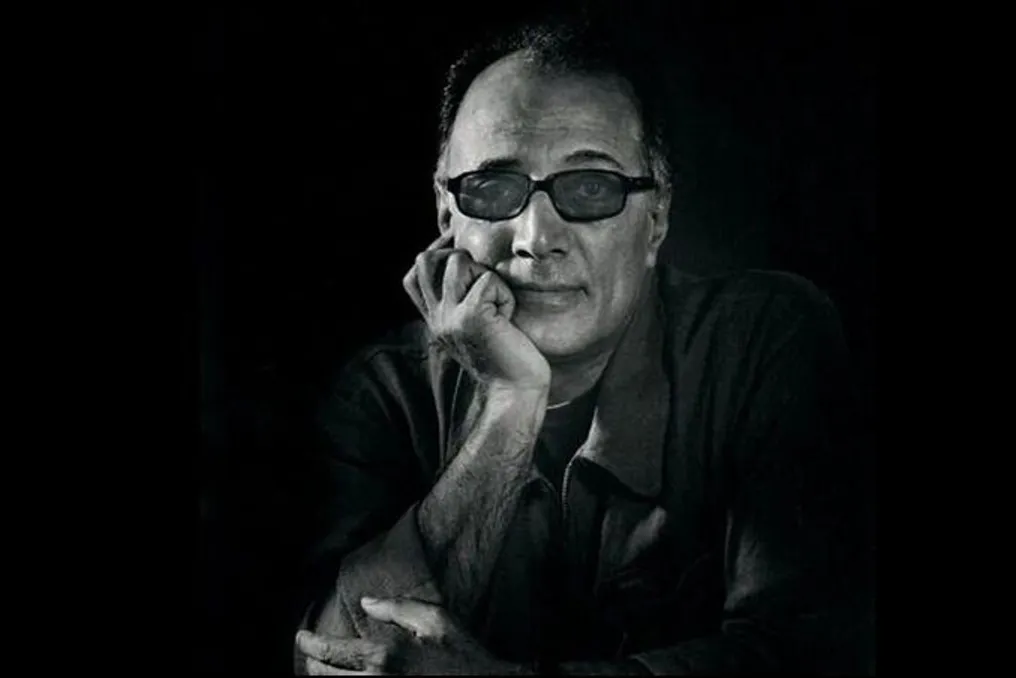
Six works by the renowned Iranian film director Abbas Kiarostami are scheduled to be screened at the 11th Ulsan Uldju Mountain Film Festival in South Korea. This festival specializes in works that explore nature, mountains, adventure, the environment, and human experience.
The program includes films such as 'Bread and the Alley' (1970), 'Order or Disorder' (1981), and 'Chorus' (1982), as well as 'Take Me Home' (2016), 'No' (2010), and 'Ten' (2002). These films allow viewers to trace the evolution of the director's unique cinematic language over several decades.
The films cover Kiarostami's early experiments at the Institute for Intellectual Development of Children and Young Adults in Iran (IIDCYA) up to one of his later cinematic projects. The festival organizers have structured this selection as a cinematic journey from 'Bread and the Alley' to 'Take Me Home,' linking these works through recurring motifs of the alley, movement, and the road, which are present throughout Kiarostami's work.
Within the program, presented in the festival's 'Human' section, the central theme is challenge. Festival programmer Jinna Lee describes the second line of this section as an homage to the Iranian master who 'laid the foundation' for similar cinematic endeavors.
According to Lee, Kiarostami dedicated his entire career to crossing boundaries between different media and blurring the distinction between art and documentary film. She notes that his approach to filmmaking can be traced from early works at IIDCYA to later experiments with digital filmmaking and non-professional actors.
'Bread and the Alley,' Kiarostami's early short film about a boy encountering a stray dog on his way home, is characterized by Lee as a film the director himself called 'the mother of all my films.' She emphasizes the combination of child and animal—two of the most complex themes in cinema—and the simple story of how a supposed enemy becomes a friend thanks to a piece of bread.
The film 'Order or Disorder' uses a more experimental approach, showing the same actions first in an organized manner and then in an anarchic one. Lee points to the transition in the film from a school staircase to a Tehran intersection, calling it a bold formal experiment disguised as an educational film.
'Chorus' focuses on an elderly man who turns his hearing aid on and off to avoid the noise of Rast streets. At home, he waits for his granddaughter but does not hear her arrival. Lee describes this work as an elegant cinematic experiment focused on sound itself, contrasting silence and noise, old age and youth, loneliness and solidarity.
'No' presents another exploration of childhood and self-awareness, using close-ups and off-screen sounds to capture a child's firm declaration of independence. Lee views this film in the context of Kiarostami's ongoing experiments with the relationship between everyday life, performance, and the cinematic frame.
The film 'Ten' (2002) marks another important stage in this evolution. This picture, focused on a female protagonist, was shot entirely from material recorded without the director's physical presence, allowing for the freedom of digital video and enabling non-professional actors to act without the constraints of a traditional set. Lee describes it as a work that advanced innovations in both medium and form, marking a new phase in Kiarostami's cinema.
The selection concludes with 'Take Me Home' (2016), a black-and-white short film shot in southern Italy. The film moves through staircases and alleys, returning to the motif that accompanied Kiarostami since 'Bread and the Alley.' For Lee, this represents a journey that began in the alley of his debut and returns to it as the director's 'beautiful farewell.'
Collectively, these six films demonstrate Kiarostami's persistent interest in children, ordinary life, movement, roads, and alleys, as well as his willingness to challenge conventional cinematic forms. Lee characterizes this selection as a letter from a 'philosopher of the road,' whose compassionate view of children remained a central element of his work, and who consistently left the audience the right to define the ultimate meaning of his films.
The 11th Ulsan Uldju Mountain Film Festival will take place in South Korea from September 18 to 22.