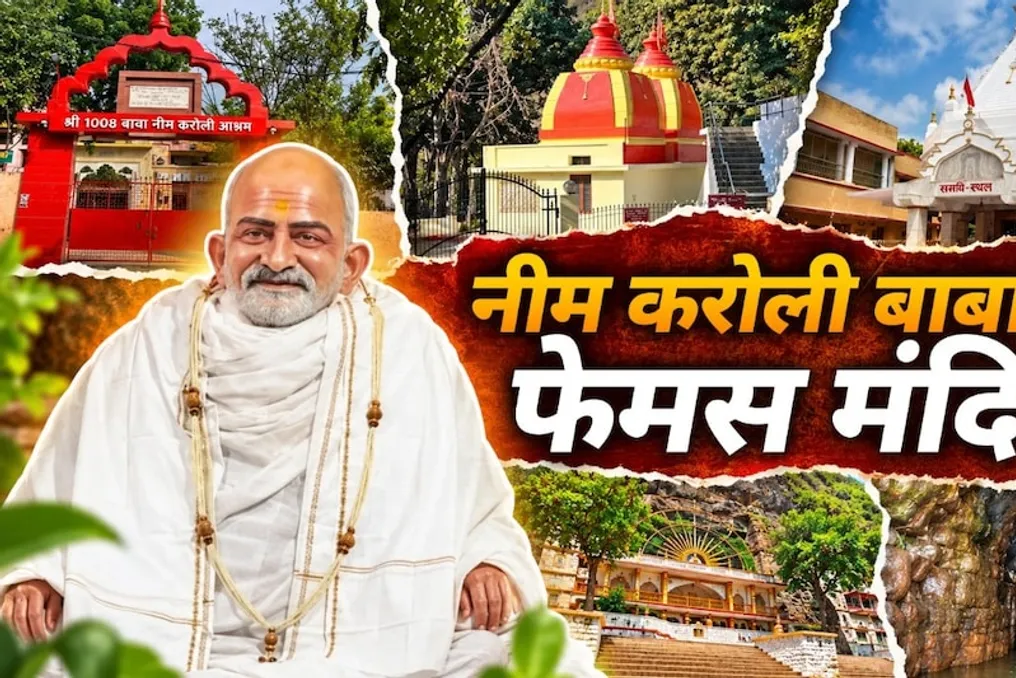
Birthplaces and Samadhi of Nima Korali Baba: Information on His Famous Temples
Read more
Aaj Tak
www.aajtak.in

Birthplaces and Samadhi of Nima Korali Baba: Information on His Famous Temples

The film 'Hanman Ansh,' based on the figure of Nima Korali Baba, who is considered an incarnation of Hanuman, attracted significant attention and broke numerous box office records. At the same time, a large number of followers visit Kachandi Dham in Nainital dedicated to Nima Korali Baba. However, many are only aware of this single temple, whereas the sacred abodes, ashrams, and temples of Baba exist in other parts of the country.

Nima Korali Baba enjoys strong devotion among people at his ashram in Vrindavan. There is a belief that Baba left home at an early age in search of spirituality. After spending most of his life in Uttarakhand, he arrived in Vrindavan, where he passed away in 1973. The temple of his Mahasamadhi is also located in this place.

Another famous temple of Nima Korali Baba is located in Lucknow. This temple is built inside the Hanman Setu Mandir complex. According to legend, it was here that Baba erected a small Hanuman temple, and later his followers installed a statue of Nima Korali Baba there.

In the capital city, Delhi, there are also two well-known temples of Nima Korali Baba. One of them, known as Shri Hanuman Birla Mandir, is located near Kashmere Gate on Civil Line. It is believed that an ancient statue of Hanuman, excavated from the ground near the Yamuna, was installed here. Furthermore, there is also a famous ashram of Baba on the Mahouli-Chatarpur road. A large number of pilgrims travel to this temple from cities such as Gurgaon, Faridabad, Noida, and Ghaziabad.

Other famous shrines of Nima Korali Baba include Pankhi Hanuman Mandir in Kanpur. The ashram of Nima Korali Baba in Rishikesh and the Sankat Mochan Hanuman Temple in Shimla are also known for their spiritual significance. In addition to Nainital in Uttarakhand, Nima Korali Baba's temples are located in Kakadi Ghat, Bhumidadar, and Hanuman Gadi. Nima Korali Baba was born in Akbarpur, Uttar Pradesh. A sacred temple has also been built at his birthplace, which attracts people from all over the world for pilgrimage.

Similar stories

Steve Jobs' Unfulfilled Desire to Meet Neem Karoli Baba and the Influence of a Spiritual Teacher
Read more
www.aajtak.in

Steve Jobs' Unfulfilled Desire to Meet Neem Karoli Baba and the Influence of a Spiritual Teacher

The film 'Hanuman Ansh,' dedicated to the life of the spiritual teacher Neem Karoli Baba, is demonstrating success at the box office. This film showcases Baba's miraculous abilities and his teachings aimed at the welfare of humanity.

Interest in Neem Karoli Baba increased after Indian cricketer Virat Kohli visited his ashram. However, even before Kohli, Steve Jobs' destiny was changed by Neem Karoli Baba.

This incident occurred in the 1970s when Steve Jobs was searching for spirituality in India, which is considered a center of spirituality. His college friend, Daniel Kotke, advised Steve to come to India and told him about Neem Karoli Baba. But by the time Steve could travel to India and see Baba, he had already entered samadhi. Neem Karoli Baba passed away on September 11, 1973. Therefore, when Steve traveled to India in 1974 to explore spiritual matters, he did not meet Baba.

In an interview given to Playboy in 1985, Steve mentioned his experience traveling to India. He noted that this trip played a role in changing his worldview and called it significant. Following the guidance of Neem Karoli Baba, Steve achieved career success. It is said that Steve advised Mark Zuckerberg, founder of Facebook, to visit Kainti Dham during a difficult period for the company. According to available information, Mark visited Baba's ashram in Kainti Dham on Steve's advice. This spiritual journey gave him a new direction regarding the company's original goal and path.

Hollywood star Julia Roberts also spoke about being impressed by Neem Karoli Baba. In one interview, Julia recounted how Baba's image evoked attraction in her, even though she knew nothing about him at the time. Neem Karoli Baba's thoughts influenced people all over the world and abroad.

Neem Karoli Baba's story is currently generating excitement on the cinematic screen. The film, created with a budget of only 20 million rupees, caused a sensation at the box office. What the big-budget film 'Toxic' could not achieve, 'Hanuman Ansh' managed to do. 'Toxic' failed in comparison to Baba's devotion. The film collected over 150 million rupees. For Bollywood, this low-budget film serves as an example proving that content is the true king.

Reasons for Frequent Closures of the Banke Bihari Temple During the Shri Krishna Janmashtami 2026 Festival
Read more
www.aajtak.in

Reasons for Frequent Closures of the Banke Bihari Temple During the Shri Krishna Janmashtami 2026 Festival

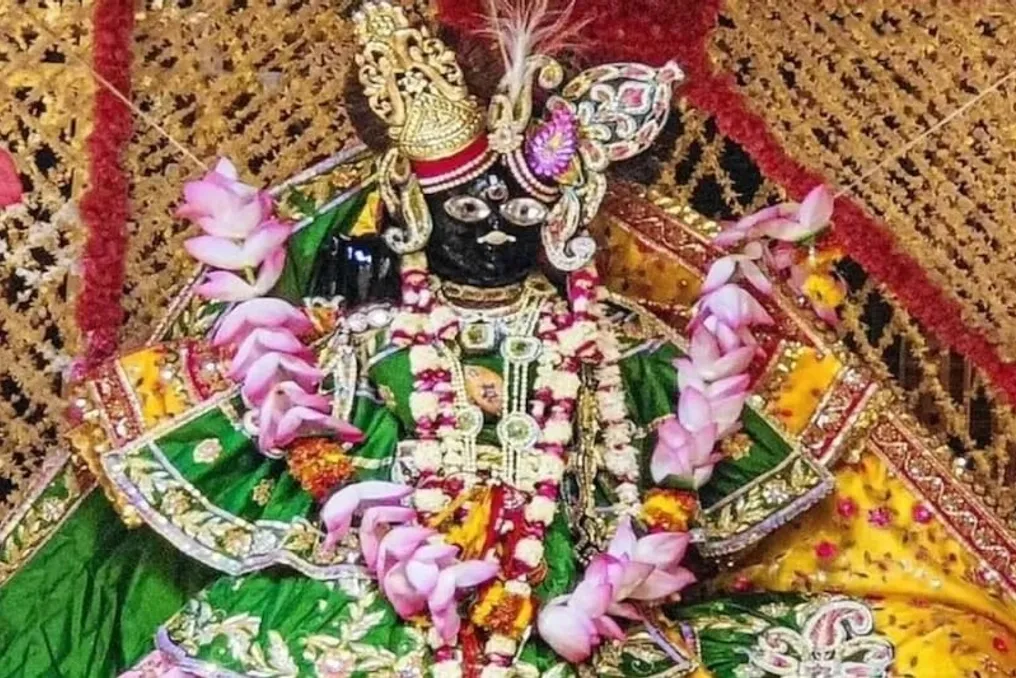
The Banke Bihari Temple, located in the sacred city of Vrindavan in the state of Uttar Pradesh, is renowned for its incredible and boundless spiritual significance. While pilgrims in temples around the world can gaze at their deity for extended periods, the Banke Bihari Temple observes a unique tradition that sets it apart from all other places of worship—the practice of 'Janki Darshan' or the veil.

Pilgrims are not allowed to see God continuously. The temple servants (Goswamis) pull back the heavy velvet curtain before God every two to three minutes, and then remove it after a few moments. For first-time visitors, this may seem unusual, but the faith behind this practice is so mystical that it inspires awe in anyone who learns about it.

Why is there always a veil placed before Banke Bihari?

According to the religious beliefs and traditions of Braj, the eyes of Banke Bihari possess an extremely intoxicating, divine, and powerful charm. It is said that if anyone looks into the eyes of Thakurji with sincere feeling and complete concentration, Bihariji is so captivated by this devotion that He leaves His divine throne and follows that devotee. This practice of the veil was introduced precisely to preserve this otherworldly connection and to keep Bihariji in Vrindavan.

When Bihariji Left the Temple Following an Elderly Devotee

Behind this tradition lies a very touching and ancient story. Many years ago, an elderly devotee came to the temple to see Banke Bihari. He was so absorbed by the Lord's captivating beauty that he continued to look at Him without blinking. The love of this devotee was so pure and deep that even Thakurji could not resist it. Influenced by his devotee's love, Bihariji took his hand and walked through the temple threshold, heading towards the devotee's village.

When the temple servants discovered that the statue of Bihariji had disappeared from the sanctum, panic ensued. The servants immediately set out to search for the devotee. After walking quite far, they saw the elderly devotee, followed by Banke Bihariji himself, smiling. The servants prayed, shed tears before God, and implored Him to return to the temple. Thanks to the devotee's love and the servants' prayers, Bihariji agreed to return to the temple.

A Symbol of Love and Dignity

Following this historic event, wise people and temple servants decided that from then on, visions of God would occur only briefly in the form of 'Janki'. This veil is not just fabric; it is a boundary established in the deep ocean of love between the devotee and God. The practice of Janki Darshan is proof that in the Vedic tradition, God is not merely a statue, but a living consciousness yearning for love, ready to give everything for the true feeling of His devotee.

Popular