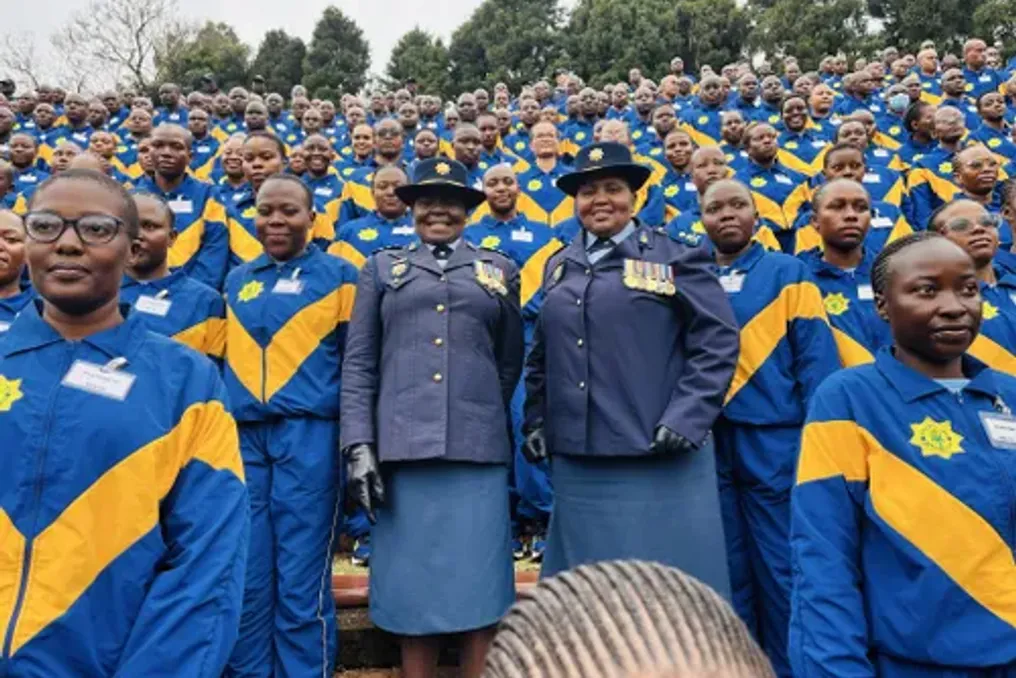
The South African Police Service (SAPS) defended the racial makeup of its latest recruit intake, stating that this composition reflects the overall pool of applicants and the established selection and recruitment process.
These statements came after concerns arose on social media that the current intake of new police recruits consisted exclusively of African applicants.
SAPS reported that 1,049,998 applications were received during the current recruitment process. Of this total, 1,079 applications came from the white racial group, 3,047 from the Indian racial group, and 53,797 from the Coloured racial group. SAPS noted that 'the vast majority was from the African racial group.'
The police service emphasized that these figures correspond to the applicant pool and are not the result of a decision to exclude candidates from any specific population group. SAPS acknowledged that 'the current figures show that African applicants are significantly more represented in the applicant pool,' which naturally influences the final group composition.
Priority for driving licenses
SAPS clarified that priority was given to applicants who held valid driver's licenses due to operational requirements and the need for police officers to perform a wide range of policing duties. Among the prioritized applicants with valid driver's licenses were 556 white, 1,722 Indian, 11,743 Coloured, and 291,591 African.
SAPS reported that all candidates who passed the preliminary screening underwent psychometric and physical assessments before proceeding to further suitability screening. This process included interviews, medical examinations, drug testing, fingerprint checks, criminal record checks, and reference checks, as well as other prescribed evaluations. Final intake lists were assessed and recommended by Provincial Recruitment Committees.
These committees include public representatives, including members of Community Policing Forums, and are chaired by Provincial Commissioners or their representatives.
SAPS plans to work with underrepresented communities
Geaton McKenzie, leader of the 'Patriotic Alliance', questioned the lack of Coloured, Indian, and white recruits, stating that he would demand clarification on these figures. McKenzie wrote on Facebook: 'This is wrong and completely unfair. Where are the Coloureds, Indians, and whites? I will demand accurate figures for new SAPS recruits.'
SAPS stated that it continues to encourage greater participation from white, Indian, and Coloured communities, and has previously conducted targeted initiatives for recruitment and engagement with these groups. The police service announced further targeted activities, including recruitment fairs and community-level events, to reach communities that are currently underrepresented in the applicant pool.
According to SAPS, these initiatives aim to bring employment opportunities directly into communities and provide information about the requirements and selection process. SAPS stressed that the goal is not just to recruit more people, but to attract suitable, competent, and diverse candidates from across South Africa who are willing to serve and protect their communities. The service also noted that this intake will help address unemployment while strengthening its police capacity and human resources. SAPS affirmed its commitment to fair, transparent, and inclusive recruitment while maintaining standards of competence, fitness, integrity, and suitability.