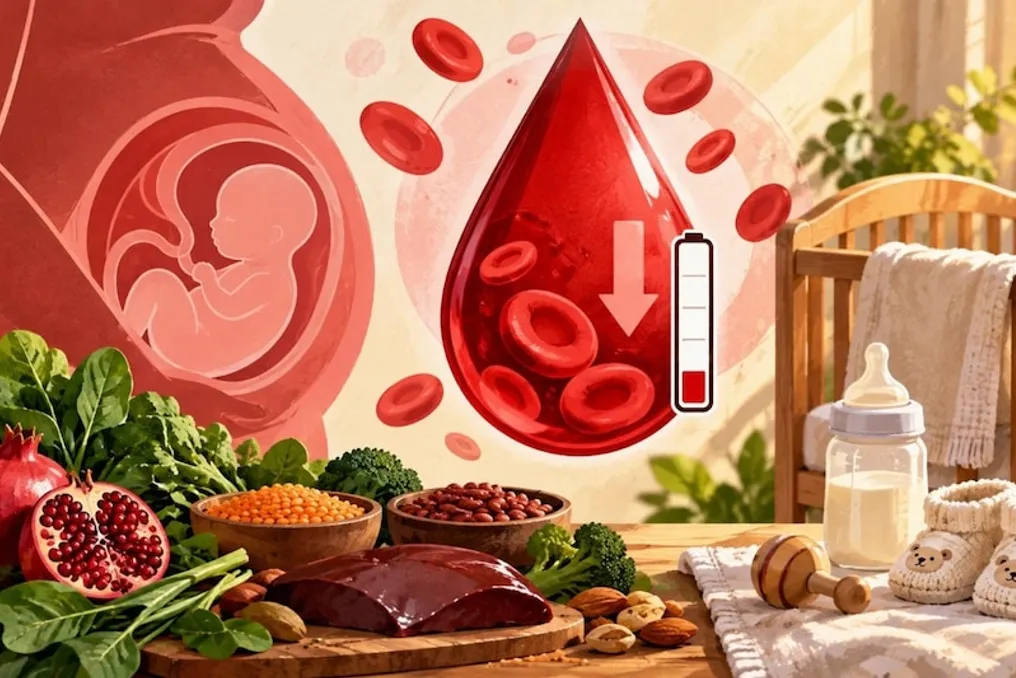
Some women may experience anemia, which is a deficiency of blood in the body, during pregnancy, and this can prove to be dangerous. A recently published study found that children born to mothers suffering from anemia may have smaller brains. Specifically, this difference was also observed in brain regions responsible for controlling learning and emotions. The research also warns that ignoring signs of blood deficiency during pregnancy can have a serious impact on the child's brain.
This research was conducted by scientists from King's College London in Britain and the University of Cape Town in South Africa. According to a report by The Guardian, scientists followed over 300 mothers and their children in Cape Town for an extended period. During this process, the children's brains were MRI scanned, including testing children from three months to 3 years old. The MRI scans revealed that children whose mothers had anemia during pregnancy had an average total brain size that was 4 percent smaller. Notably, the women included in the study had mild, not severe, anemia, meaning that even a slight blood deficiency can affect a child's brain development.
A worrying aspect of this research was that the difference observed in the children's brains did not appear to diminish over time. Some of these children were scanned even after the age of 3, and their brain size was still found to be smaller than normal. Researchers suggest that this study highlights the need for women to prevent blood deficiency during pregnancy, for which consuming iron-rich foods is crucial.
However, scientists clarify that this does not mean that every mother with anemia will have a child who will definitely suffer from illness or learning difficulties in the future; nevertheless, this research emphasizes that timely detection and treatment of anemia during pregnancy are extremely necessary.
Anemia involves a deficiency of hemoglobin or healthy red blood cells in the body. Hemoglobin helps transport oxygen to various parts of the body. During pregnancy, the fetus receives oxygen and nutrients through the mother and the placenta. If the mother has anemia, the body's oxygen-carrying capacity is affected, and in many cases, oxygen supply to the brain is not adequate.
Symptoms of anemia include fatigue, shortness of breath, paleness of the skin, and weakness. To prevent anemia, one should consume iron-rich foods. This can be achieved by including green leafy vegetables like spinach, lentils, and beans in the diet. Non-vegetarians can consume meat, fish, and eggs. Additionally, it is important to take sufficient amounts of Vitamin C, which can be obtained from sour items such as lemon, orange, amla, and tomato.