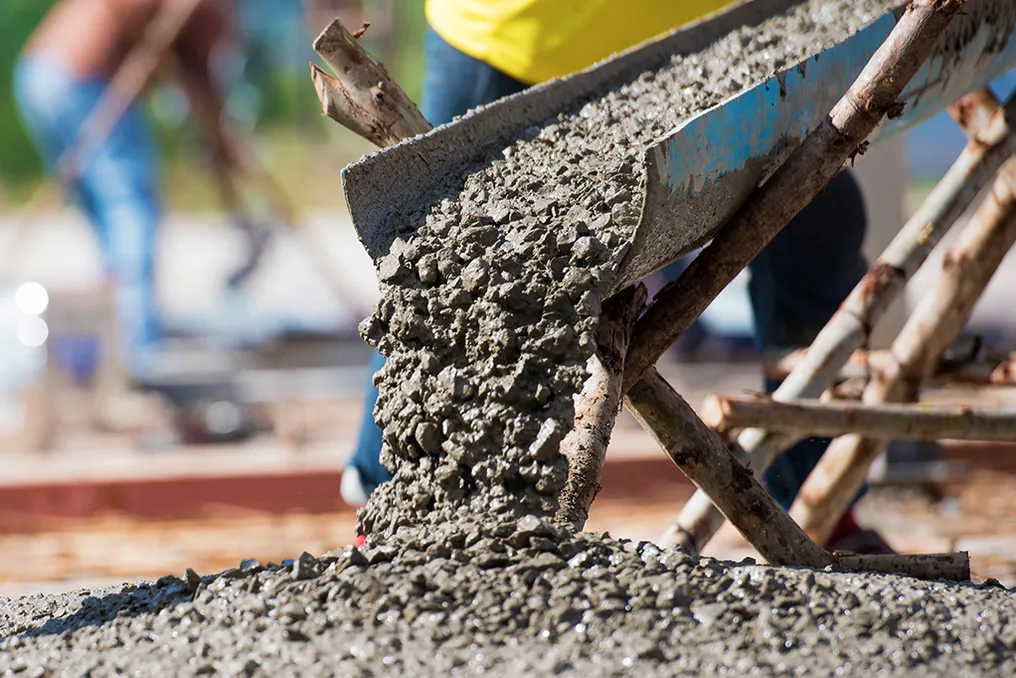
The civil construction industry consumes massive amounts of concrete globally; annually, it reaches an impressive 30 billion tons, making it the second most used material on the planet, surpassed only by water, according to data from the Global Cement and Concrete Association (GCCA).
However, cement production, an essential component of concrete, generates significant environmental impacts because the heating of the involved limestone is one of the main sources of carbon dioxide emissions, intensifying the greenhouse effect and global warming.
A study conducted by Manipal University Jaipur, located in India, points to a potential substitute for cement: human feces. Engineers developed a type of concrete using a combination of biochar and fecal waste collected at local treatment plants. The results, published in the journal Scientific Reports, indicated a 'significant improvement in concrete properties.'
Biochar is recognized as a promising alternative to cement, being a carbon-rich material generated by heating organic matter in a low-oxygen environment. An advantage of this process is its versatility, allowing production from various organic wastes, such as sawdust, wood, or rice husks.
The researchers questioned whether human feces could serve as such a substitute, considering that, like cement, this material is abundant worldwide, with one person producing about 400 grams daily.
Although concrete is a difficult material to surpass due to its malleability when wet and its extreme strength and durability after curing, scientists were surprised to observe that the concrete formulated with human feces showed superior performance to the traditional one. Specifically, there was a general improvement in resistance and strength when 5% of the cement was replaced by fecal biochar.
To validate these findings, the team analyzed parameters such as shrinkage, compressive strength, flexural strength, water absorption, and porosity of the different mixtures. After a period of 91 days, the mixture containing fecal waste demonstrated an average increase of 20% in compressive strength and 36% in flexural strength.
Despite these advances, researchers warn that more investigations are needed to determine the material's behavior in real-world scenarios, such as exposure to low temperatures, salinity, and intense heat. Furthermore, the study did not address the environmental impact of this method in terms of carbon emissions.
The scientists propose that several mechanisms work together to optimize the concrete. Firstly, the biochar derived from feces has high porosity, creating cavities that act as internal reservoirs, gradually releasing water during curing and assisting in the chemical reactions that give cement hardness and strength. Secondly, the silica present in the biochar interacts with cement compounds, promoting the formation of more calcium silicates, substances crucial for concrete strength. Finally, the fine particles of biochar help fill voids in the concrete, improving compaction and the bonding of components.