Minister reports that over 43 thousand national heritage sites are registered in Iran
Read more
Tehran Times
www.tehrantimes.com

Minister reports that over 43 thousand national heritage sites are registered in Iran

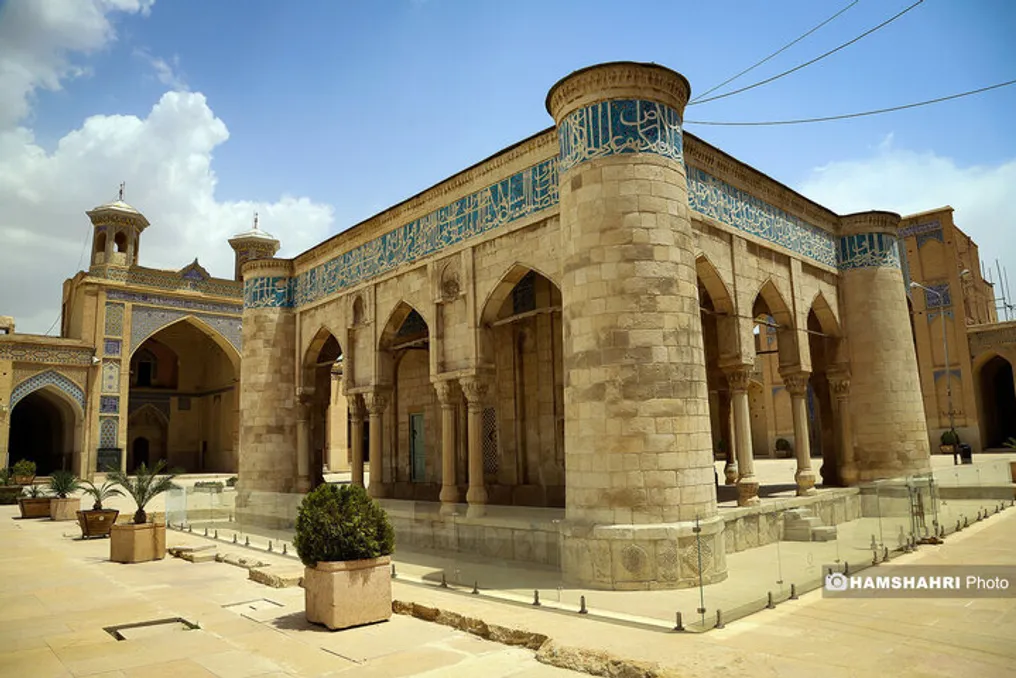
The Minister of Cultural Heritage, Tourism and Handicrafts stated on Tuesday that Iran has registered over 43,000 artifacts and sites, including more than 14,000 historical buildings.

Seyed Reza Salehi-Amiri emphasized that Iran's material heritage, which includes archaeological monuments, structures, and historical buildings, along with its written heritage, constitutes a significant part of the country's historical and cultural identity.

Speaking during a visit to the center of documents of the Islamic Revolution, Salehi-Amiri noted that written and material heritage are two key components of the history, identity, and chronicle of the Iranian people.

The Minister added that these two types of heritage are closely interconnected and together reflect the history and personality of the Iranian people. He stated that the values embedded in them can reveal the greatness of this land for both current and future generations.

Salehi-Amiri also stressed that it is impossible to fully understand Iran's cultural identity without considering its written heritage. According to him, if one knows Iran through its cultural and historical heritage, then Iranian culture is known thanks to its written heritage, which serves as a link between the country's material and written heritage.

Furthermore, the minister mentioned the global distribution of manuscripts, reporting that according to available information, there are about 2 million Iranian manuscripts worldwide. He specified that nearly a million of them are located on the Indian subcontinent, about 500,000 in Central Asia and the Caucasus, and another 500,000 in Iran itself.

Similar stories

Iran participates in the Cosmoscow contemporary art exhibition for the third consecutive year
Read more
www.tehrantimes.com

Iran participates in the Cosmoscow contemporary art exhibition for the third consecutive year

As part of the 14th international contemporary art exhibition Cosmoscow in Moscow, representatives from Iran reported that the works of Iranian artists received a positive response from visitors to the event, which is considered one of Russia's most important professional art exhibitions.

The exhibition took place from September 4 to 6 at the Timiryazev Center and gathered 108 galleries. Modern and traditional Iranian art was presented at this international event in a special 'Persian' section, according to the IRNA agency.

Iranian artists have been participating in this exhibition for the third consecutive year. Selected works by over 50 artists, represented by eight Iranian galleries, were on display and available for sale.

The collection presented within this project demonstrated the diversity of experience in modern and traditional Iranian art across different generations and artistic directions. Participants included both internationally recognized figures such as Mansour Ghandriz, Masoud Arabshahi, Ali Akbar Sadeghi, Sirak Melkonian, Aydin Aghdashloo, Nikzad Nojoumi, Mohsen Vaziri Moghadam, Reza Derakhshani, Faride Lashai, Hossein Kazemi, Farshid Maleki, and other pioneers, as well as contemporary Iranian artists who attracted visitor interest.

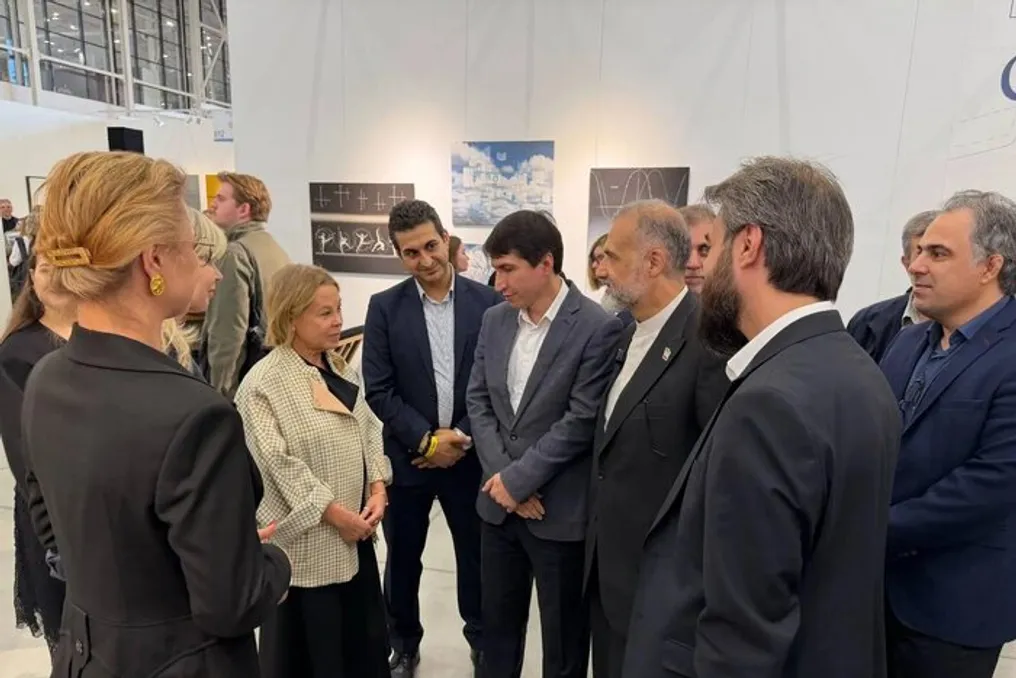
Kazem Jalali, the Iranian Ambassador to Russia, visited the Iranian pavilion and emphasized the importance of utilizing the potential of visual arts and developing direct interaction between artists, galleries, and cultural institutions of both countries to strengthen cultural ties between Iran and Russia.

Jalali noted: 'The significance of the presence of Iranian artists and galleries in the Russian market is not limited to displaying and selling works. Participation in such an event means that an Iranian artist enters the professional network of the Russian art market, gains visibility among collectors, gallerists, experts, and cultural institution leaders, and creates opportunities for future exhibitions, sales of works, and cooperation.'

He added that 'continuing such a presence helps build trust and recognition in the art market, which in contemporary art is usually achieved only through constant participation and direct interaction between artists, galleries, and collectors.'

Margarita Pushkina, director and founder of Cosmosco International Contemporary Art Fair, also commented on the visit to the Iranian pavilion: 'We all know that, without exaggeration, Iranian culture and art are very rich, and we have always been interested in them.'

Pushkina continued: 'Before the participation of contemporary Iranian artists in our exhibition, we had heard and known a lot about their abilities. When the opportunity arose to invite Iranian galleries and artists to participate in this event, it was a great honor for us.'

She also noted that 'Russian people have become acquainted with the works of talented Iranian artists in recent years and have grown accustomed to Iran presenting its galleries and artists' works to them.'

Speaking about his visit, Abdolreza Rashed, Cultural Attaché of the Iranian Embassy in Russia, stated: 'The presence of our country's artists at Cosmoscow over the past three years is not just a ceremonial act. This presence can be seen as a practical example of cultural diplomacy through art, a path through which Iran is presented not only through official programs but also directly through the works and language of Iranian artists.'

Rashed further explained that 'over the past three years, by supporting the participation of Iranian galleries and artists, accelerating and facilitating negotiations with the Russian side, taking necessary measures with the exhibition organizers, and helping to establish connections between art professionals from both countries, we have tried to pave the way for a more regular and effective presence of Iranian art.'

He also reported that the Iranian pavilion, titled 'Persian Art: Dialogue of Generations,' attempted to present a modern image of Iranian art to the Russian audience, moving beyond stereotypical perceptions. Thanks to the presence of works from different generations, historical continuity between modern and traditional Iranian art was demonstrated.
Archaeologists in Uzbekistan discovered stone artifacts dating back up to 320,000 years
Read more
uzdaily.uz

Archaeologists in Uzbekistan discovered stone artifacts dating back up to 320,000 years

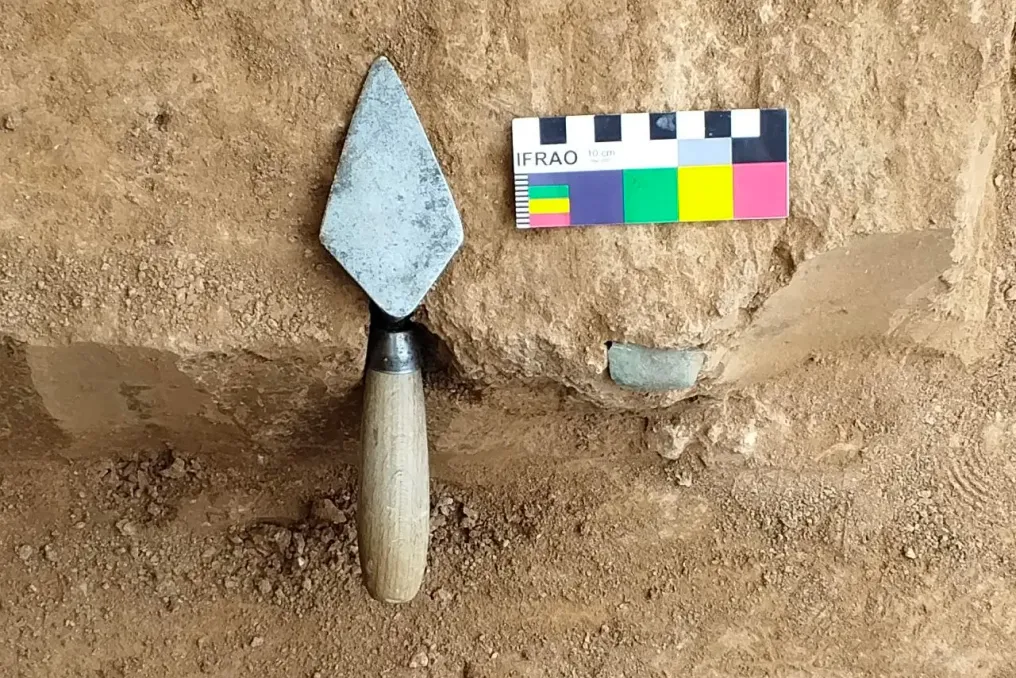
Russian and Uzbek archaeologists have discovered stone artifacts in the Tashkent region of Uzbekistan, which, according to preliminary geological and paleoclimatic assessments, may date from the period between 280,000 and 320,000 years ago. This was reported by the press service of the Academy of Sciences of Uzbekistan.

These findings were made during research at a paleontological site and could potentially be among the oldest known archaeological monuments in Uzbekistan if their age is finally confirmed.

The artifacts were found in the third layer of ancient fossilized soil. Scientists believe this layer formed approximately 320,000 – 280,000 years ago. Researchers emphasized the scientific significance of these discoveries for studying the early stages of the Paleolithic in modern-day Uzbekistan.

The excavations are being conducted jointly by specialists from the Institute of Archaeology and Ethnography of the Siberian Branch of the Russian Academy of Sciences, the Institute of Anthropology, and the Institute of History of the Academy of Sciences of Uzbekistan. Russian and Uzbek scientists have been studying this site for three years.

During this period, archaeologists have found other stone objects, but their age could not be determined previously. The latest finds were made in layers of ancient soil for which preliminary geological and paleoclimatic expertise has been conducted.

According to the Academy of Sciences of Uzbekistan, the presence of artifacts in layers from different periods indicates that human settlements in this area may have developed in stages. Scientists consider the new findings important for studying the initial stages of the Paleolithic in Uzbekistan. Furthermore, the materials may help in studying the migration routes of ancient people across Central Asia and their methods of adapting to climate change.

The exact age of the artifacts has not yet been established. Previously, the Agency for Cultural Heritage of Uzbekistan reported the discovery of remains of an ancient structure dating back to the 4th–5th centuries, on whose walls unique flower images were found.

Popular