South Africa's water boards are facing severe financial difficulties due to municipal debt. The South African Human Rights Commission (SAHRC) highlighted deep-seated problems, including mafia structures involved in water, which threaten the stability of these boards.
Water resource experts believe that corruption related to water transportation, as well as a culture of non-payment, have become reasons why water boards found themselves in debt.
On Wednesday, the SAHRC held a webinar with a group of experts to discuss political and institutional measures that could prevent the financial collapse of water boards. The Commission reported that municipalities collectively owe water boards over 28 billion rand, and the ability of the boards to continue operating is under serious threat.
The Water Service Value Chain
The SAHRC also examined the central role played by water boards and municipalities in providing water. During the webinar, factors and causes of municipal debt owed to water boards were discussed.
Khululwe Sithole from the SAHRC explained that water boards and municipalities play a key role in the water service value chain. Water boards provide municipalities with bulk water supply services, allowing municipalities, in turn, to fulfill their obligations to supply consumers within their jurisdiction.
Sithole noted that the financial sustainability of water boards depends on their ability to collect due funds. However, due to several factors such as low revenue, management issues, and financial difficulties, some municipalities are struggling to meet payment obligations to water boards, leading to significant financial problems for some boards.
Water Mafia and Corruption
Dr. Henk Boshoff, a member of the SAHRC commission, expressed concern about the consequences and cumulative effect of reducing water supply as a measure to enforce debt repayment. He stated that reduced supply could have severe consequences for schools, residential areas, clinics, and hillside neighborhoods.
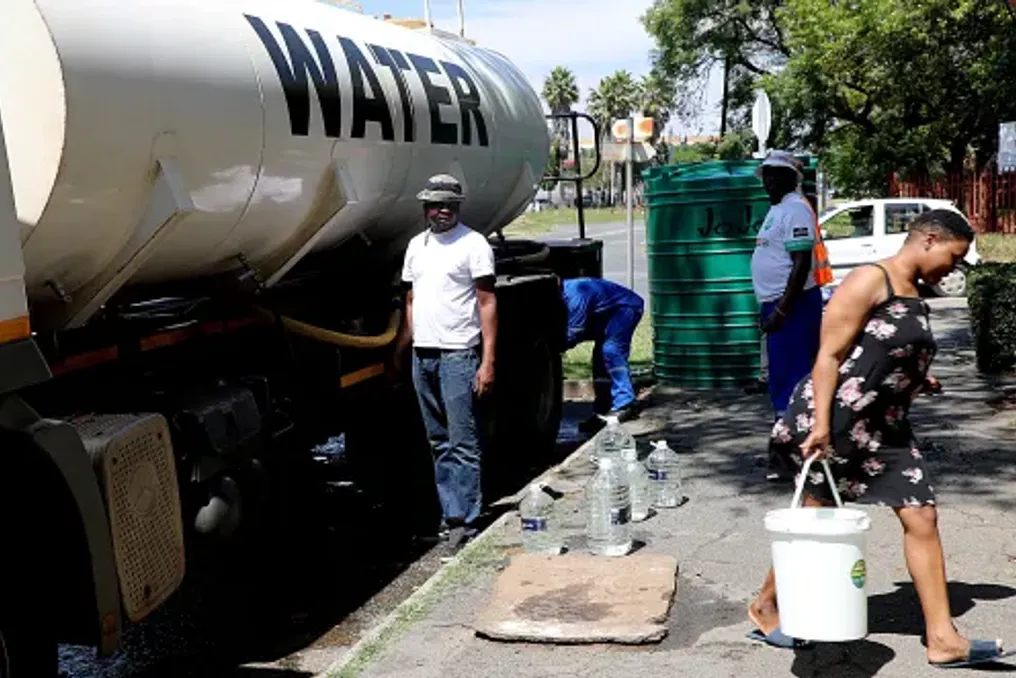
Boshoff added that when water supply problems arose, a water transportation service emerged, which became a breeding ground for corruption. He mentioned a meeting with the Minister of Police regarding water mafias, damage to municipal infrastructure, vandalism, and sabotage.
Jean Hatting, representing the National Treasury, reported that the companies Magalies Water and Vaal Central Water were on the brink of collapse, threatening the water supply to the North West, North Cape, and Free State provinces.
Constitutional Rights
Mayor of Or Tambo District, Mesuli Ngkondwana, spoke about the rise in consumer debt in municipalities. He called for strengthening the constitution regarding water supply, as it is difficult for municipalities to disconnect households or buildings that do not pay their bills. He also demanded the allocation of budget funds for the protection of water infrastructure.
Ngkondwana emphasized that when water is disconnected, especially in occupied buildings, people resort to court, claiming the municipality is depriving them of their constitutional right. He noted that even if no bill is issued, the municipality has an obligation to ensure the availability of water, and this burden falls on the municipality. Since water is a fundamental right for many constitutional rights, collecting what is owed becomes impossible.
Billing Systems
David Makhlobo, Deputy Minister of Water and Sanitation, acknowledged serious shortcomings in local government that they are trying to address. He stated that South Africa requires 400 billion rand to restore its water infrastructure system. Makhlobo also expressed concern about weak billing systems, credit control, and the culture of non-payment by consumers.
He added that implementing the metropolitan trade services reform strategy will take the country to a new level, and stabilizing water services will take three to four years.
Leonard Basson, Chairperson of the Water and Sanitation Committee, suggested that municipalities purchase their own cisterns for service delivery to eradicate corruption among contractors. Sandile Mkhize, CEO of uMngeni-uThukela Water, stated that water boards are financed by their own funds and do not receive money from the state budget. He noted that funds must be reinvested in infrastructure expansion and maintenance, and that boards should have debts amounting to 28 billion rand, of which 3.1 billion rand must be paid by KwaZulu-Natal municipalities.