Despite the rapid growth of India's aviation sector, which was previously positioned as a symbol of a rising nation, it is now facing serious difficulties related to safety issues and regulatory gaps.
A series of crises involving the country's two largest carriers—Air India and IndiGo—has exposed deficiencies in safety and regulation within the world's third-largest domestic aviation market. The situation is complicated by geopolitical upheavals that have reduced profits and forced airlines to reconsider their expansion plans.
Market concentration is also a problem: Air India and IndiGo together account for nine out of ten seats in the domestic air transport market. Mark Martin from Martin Consulting noted that the last two years, 2025 and 2026, have been the bleakest for India's global reputation and trust.
The latest incident occurred at the beginning of this month when an Air India flight from Phuket (Thailand) to New Delhi sharply descended by 300 feet, resulting in injuries to 24 passengers. This case drew intense scrutiny following reports of a positive captain's marijuana test upon arrival, prompting Air India to conduct a one-time drug screening of all pilots. Initial investigation results are expected in the coming weeks.
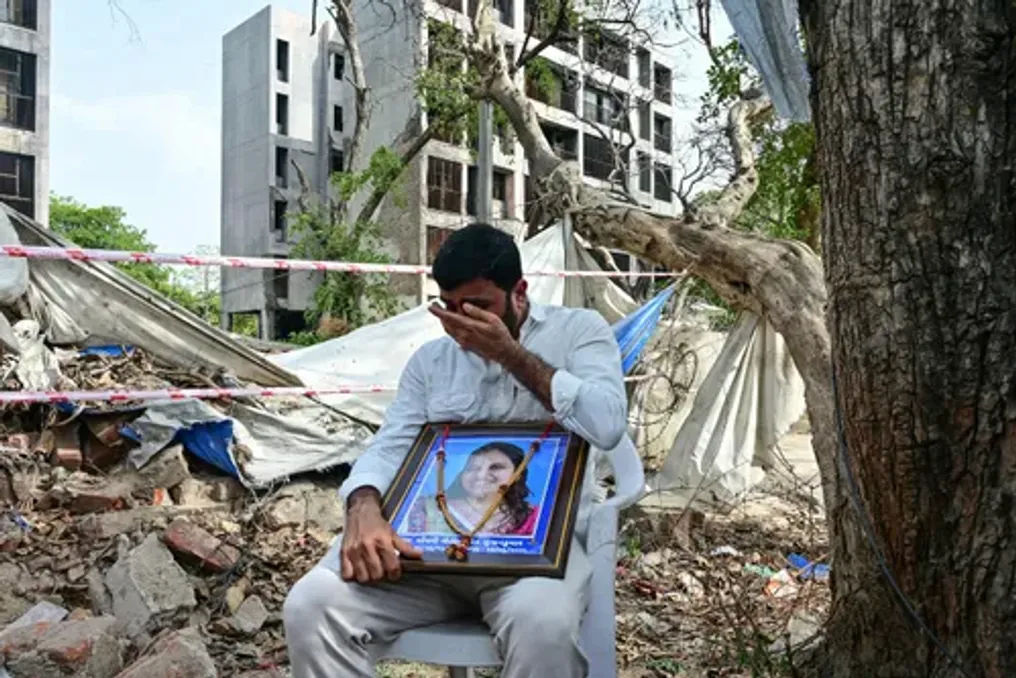
For many observers, this episode is part of a broader trend keeping Air India under scrutiny since the crash of a Boeing 787 Dreamliner bound for London last year, which claimed 241 lives. An independent audit of Air India revealed about 100 safety violations, including seven requiring 'urgent corrective actions' and 're-training gaps' for Boeing 787 and 777 pilots, according to the parliamentary committee's report.
Former airline operations head Shakti Lumba stated that the safety culture at Air India is 'weak,' emphasizing that merely declaring concern for safety is insufficient to create it. Former Air India CEO Jitender Bhargava also expressed doubts about management oversight in light of the drug report, believing the pilot community would have discovered substance use by a colleague on its own.
Safety issues are exacerbated amid growing financial pressure. Indian carriers faced the closure of Pakistani airspace after the escalation of tensions between New Delhi and Islamabad last year, forcing them to use longer and more expensive routes. Rising aviation fuel prices linked to the Middle East war have compounded this burden. Rating agency ICRA predicts that Indian airlines will lose nearly $4 billion in the current fiscal year. Meanwhile, Air India's losses doubled to $2.3 billion in the last fiscal year, and IndiGo reported losses for two consecutive quarters.
Financial difficulties are also affecting expansion plans: IndiGo suspended wide-body operations last month, and Air India is reportedly considering delaying orders for up to 500 aircraft. These problems mark a turning point for a sector often considered one of India's greatest success stories.
Last year, Indian airlines transported about 167 million passengers, more than double the figure from a decade ago. Over the last decade, more than 70 airports have been added, and carriers have ordered about 1,500 aircraft. Harsh Vardhan, Chairman of Starair Consulting, believes the problem is not a lack of growth, but that the rest of the ecosystem has failed to adequately manage this growth.
These concerns surfaced last year when IndiGo canceled a large number of flights due to unpreparedness for new pilot fatigue regulations. Industry experts noted that the temporary suspension of some new rest rules reflects a wider regulatory failure. Lumba, the former operations head, stated that the DGCA functions more as a facilitator than a regulator. The dominance of Air India and IndiGo further complicates the regulator's task, as seven major airlines have either gone bankrupt or been sold over the past two decades, making it difficult to penalize the two remaining giants.
Martin added that the duopoly only works under conditions of maturity, responsibility, and operational adulthood, whereas in India it resembles more of a 'territorial gang.' Last year, the government announced the need for 'five major airlines,' and regulators have since approved plans for two new carriers. The government is also examining a proposal to relax rules prohibiting airport operators from owning airlines, which could potentially open doors for conglomerates like the Adani Group. However, Vardhan stressed that attracting investors alone will not solve the sector's problems, as the cost structure has always been extremely unfavorable, which is one of the main reasons why new operators have failed to break through. He concluded that the contradiction lies at the heart of India's aviation ambitions: 'On one hand, they call it a sunlit sector. On the other hand, everyone is trying to capitalize on the industry's success at the expense of profitability.'