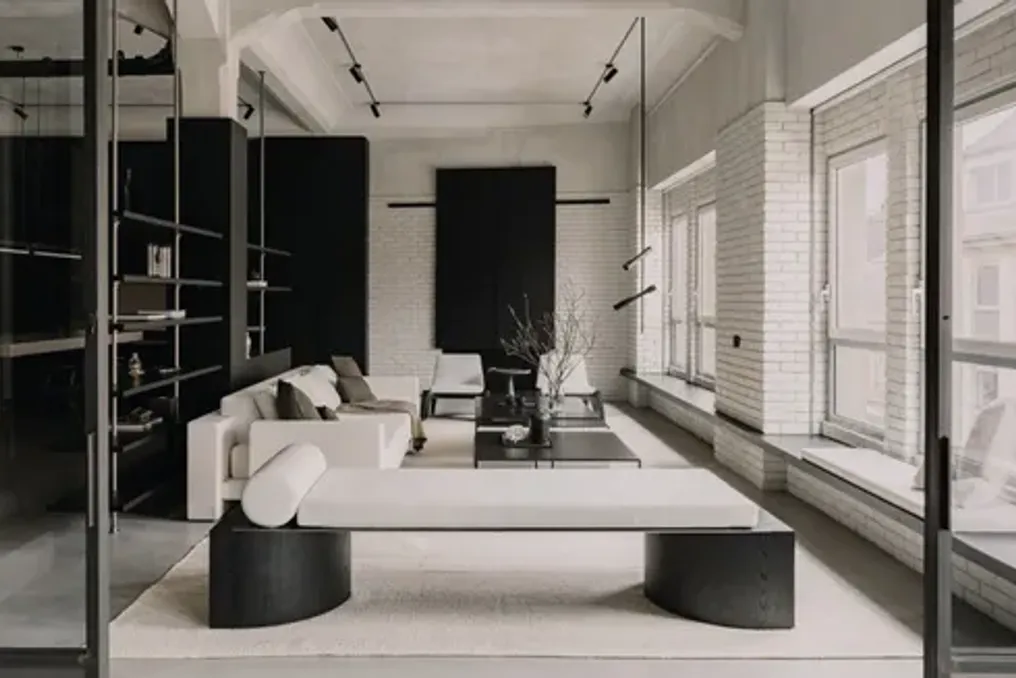
An interior built on a single color palette demonstrates that one color can create significant visual interest. There is a certain quiet confidence in a room that adheres to one color. Instead of relying on contrast, a monochrome interior finds its appeal in tone, texture, form, and light, creating spaces that look cohesive but not overly uniform.
Furthermore, a monochrome design does not necessarily mean a completely white room. Almost any color can serve as a starting point for an elegant interior—from earthy browns and chalky creams to deep greens, ink blues, and unexpected shades of red. The main secret lies in knowing when to stop selecting colors.
The simplest approach to monochrome decorating is to choose an entire family of colors rather than one specific paint swatch. For example, consider warm terracotta instead of just one particular orange, olive instead of one green, or the spectrum of chocolate, caramel, and taupe instead of a single shade of brown. This allows for experimentation with lighter and darker variations of the same color while maintaining a visual connection across the entire palette.
When color contrast is minimal, texture becomes critically important. It is worth combining smooth painted walls with rough linen textiles, polished wood with bouclé, glossy ceramics with aged metal, or a plush rug with a more architectural piece of furniture. The more diverse the surfaces, the richer the room will feel, even if the palette remains restrained.
The character of a monochrome room is given by sculptural furniture and thoughtful lighting. The most successful monochrome rooms do not perfectly match in color. Instead, you should allow some elements to slightly step outside the chosen hue: a deep walnut armchair can add depth to a room with warm neutral tones, dusty rose can soften a burgundy palette, and smoky blue can add dimension to an otherwise pale scheme.
Patterns are not forbidden. In fact, they can be one of the easiest ways to prevent the monochrome style from feeling overly controlled. Look for stripes, checks, organic motifs, or abstract patterns that fall within the same color group. A patterned curtain, rug, or accent chair can bring movement without disrupting the overall palette.
A monochrome room can change dramatically throughout the day, which is part of its appeal. Natural light reveals subtle differences between shades, while lamps and directional lighting can create zones of shadow and warmth. Before deciding on applying a color throughout the room, consider how your chosen shade behaves in both bright daylight and after dark.
Even the most tonal room needs some tension. A sculptural chair, an impressive piece of art, a vintage lamp, a dark wood table, or a piece of stone with dramatic veins—these moments of contrast do not necessarily have to introduce a completely new color. Often, form and material are enough to create the necessary visual focal point in the room.
Thus, a monochrome scheme gains depth through subtle shifts in color and tone. Monochrome decor should not be viewed as choosing one color and repeating it everywhere. It should be perceived as creating an interaction between different versions of the same color, and then allowing texture, material, proportion, and light to do the rest.