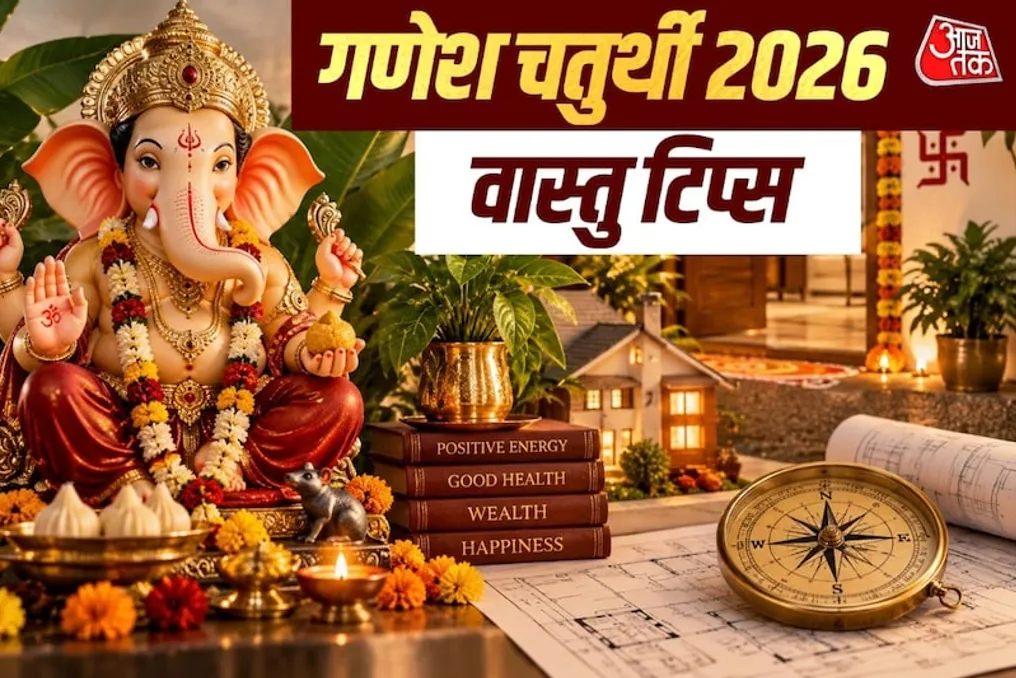
If there are constant fluctuations in business despite efforts, or if paths for personal growth remain unclear, it is recommended to turn to the worship of Lord Ganesha. Ganesha is revered as a deity who grants intellect, prudence, and removes obstacles. According to Vastu principles, the north direction is associated with new opportunities, progress, and commercial activity, as it is linked to the planet Mercury.
In this regard, before the start of Ganpati Mahabhoota on September 14th, the direction of placing the Ganesha statue during worship holds special significance. Particular attention is paid to the placement when worshipping Ganesha.
The northeast direction, known as Ishan Kona, is considered a direction associated with wisdom, knowledge, and positive energy. Therefore, it is considered auspicious to place the Ganesha statue in this direction for conducting rituals. Furthermore, the north direction itself is also suitable for worshipping Ganesha. The north direction is associated with the planet Mercury, which is the planet of intellect, speech, logic, trade, and communication. For people whose natal chart shows a strong position of Mercury as a factor planet, especially if it is in the sign of Virgo and is dominant, worshipping Ganesha in the north direction has special significance. During prayer, it is also considered auspicious to meditate on Ganesha while facing north or the Ishan direction.
If for any reason it is impossible to place the Ganesha statue in the north direction, then according to Vastu, one can plant a Tulsi or Monstera plant in that spot. The Monstera shoot should grow upwards, not hang downwards. This promotes an increase in positive energy for development, prosperity, and forward movement in the house.
The north direction is associated with the water element and Mercury. If there is a Vastu defect in this direction, the favorable results associated with Mercury begin to suffer. Therefore, the north direction should be kept clean, light, and organized. The level of this area should not be unjustifiably higher than other parts of the house.
From a Vastu perspective, using flowers associated with the fire and earth elements in the north direction is also undesirable. Excessive use of red, orange, pink, and yellow colors can cause negative effects. Conversely, green, blue, and white colors are considered favorable for the north direction.
Placing plants and greenery in the north direction is also considered beneficial from a Vastu perspective. Small plants that grow upwards are especially valued, as they symbolize progress and positive energy. Keeping the north direction clean, open, and green creates a favorable environment for opportunities and economic activity in the house. When worshipping Ganesha during Ganpati Chaturthi, attention should be paid not only to the ritual itself but also to the direction of the worship place and the surrounding environment. Worship in the correct direction with sincere faith and maintaining order in the northern part of the house enhances positive efforts for the development of intellect, business, and life.