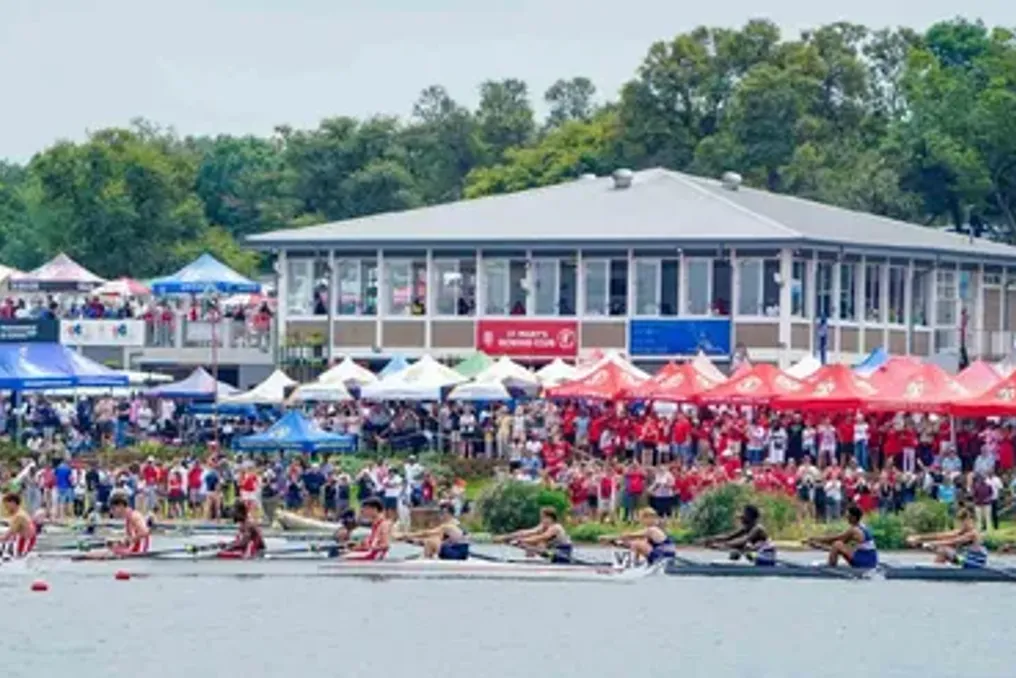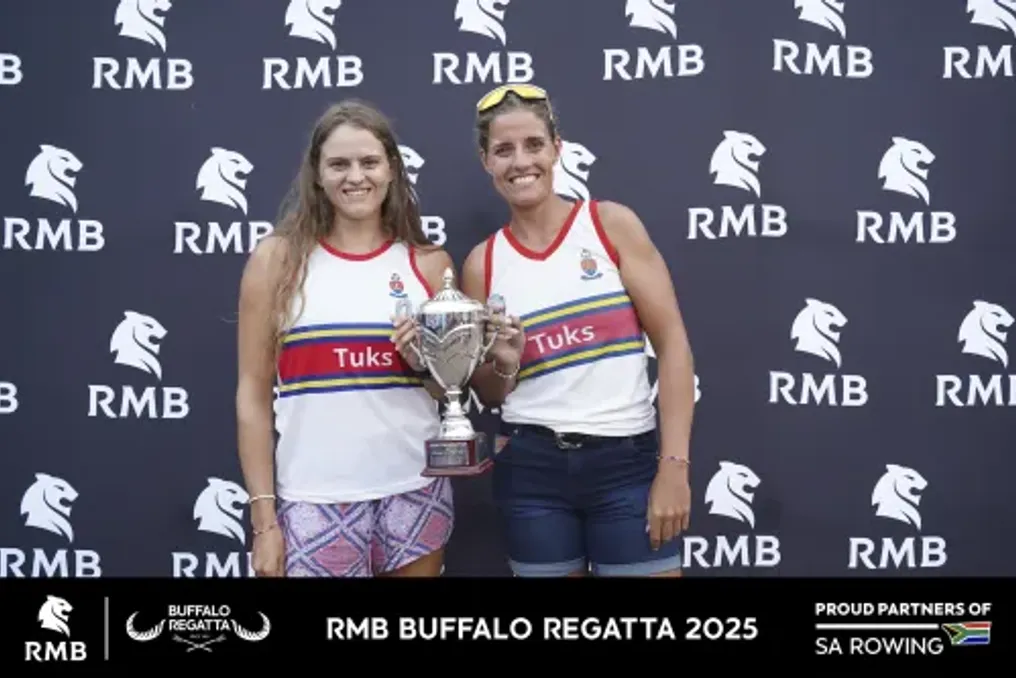
Pretoria University students Katerina Williams and Courtney Westley intend to defend their title in the RMB University Regatta on the Kowie River in Port Alfred. They arrived at this event after participating in international competitions in Amsterdam, where they competed in a pair race.
Although their result in Amsterdam did not reach the goal of making the top five, the experience gained proved very valuable for the upcoming university competition. For Williams, this regatta holds even deeper significance, as returning to university starts helped her rediscover her love for sports after failing to qualify for the Paris Olympics and beginning to doubt her desire to continue rowing.
In interviews, Williams and Westley discussed the transition from international competitions to university ones, the pressure associated with defending Tuks' outstanding achievements, their experience in Amsterdam, and why the University Regatta remains so special.
Courtney Westley noted that the university provides them with significant support throughout the year, assisting with studies, organizing trips abroad, and supporting them overall, which is their way of repaying the university. Katerina Williams believes that an international athlete should never consider anything beneath themselves, and participating in the University Regatta is a pleasant way to end the season and express gratitude to the university, as well as a fun and unique sight of competition for the season.
Westley emphasized that during the international season, everything is very serious, and the focus is on training and racing. Now, the level of pressure is lower, although they are still focused on performing well. She added that it is a completely new experience since they are on the river rather than competing in a 2000-meter race.
Westley agreed that returning to the University Regatta at the end of the season makes it special because it only happens once a year and is the culmination of their season. She recalls that some of her most vivid moments in rowing are connected to this regatta. Williams also enjoys it, noting that it differs from pair races. In the eight, team interaction and crew dynamics become critically important, and one must ensure that everyone feels their contribution to the boat, regardless of whether they were abroad.
In the eight, they will form a team that includes Donna Erasmus, who represented Zimbabwe but trained at Tuks, as well as many other student rowers.
Westley admitted that the top-five goal was not achieved, and they have work to do on themselves. She suggested that perhaps they did not perform as well in their race as they could have. Despite intensive training, they found a lot of speed in recent months and during the competition week, but failed to execute it properly in their race, which cost them the semi-finals. Nevertheless, in the C final, they managed to come together and put on a really good race, and now they plan to analyze what they did better the second time compared to the first.
Williams stated that the upcoming regatta in Port Alfred will be different, and they intend to use the lessons learned abroad and in Amsterdam, as well as all the work done during the season, to improve the eight's performance. They strive to remain optimistic, using positive moments and acquired experience despite areas that require improvement.
Westley shared that every year they feel honored to uphold the legacy of Tuks women. She believes that using this legacy to strengthen their power is a great victory. She mentioned her series of victories that brings pride and is passed down into their races. Williams confirmed that they are approaching this year with the desire to achieve another victory.
Tuks has won the Women's Regatta nine years in a row, with ten total victories, meaning they are fighting for the eleventh victory and the tenth consecutive title.
Williams would name UCT and Stellenbosch as the strongest competitors based on past years and events at the University Sprints. However, she is confident that they can reclaim the title, and they will focus on their own goals and efforts rather than the actions of other universities. Westley noted that RMB's participation in South African rowing and the University Regatta became possible due to support. She emphasized that rowing is a sport that requires a large amount of resources, such as equipment and funding, and RMB's support makes such events possible.
Regarding the Olympics, Williams admitted that not qualifying for Paris deeply affected her, as did subsequent failures at the World Championships. She felt depressed and doubted continuing with rowing. However, the University Regatta became what strengthened her desire to return. After three weeks of bed rest, she returned to teaching practices and participated in the University Regatta, which brought back her love for sports. She realized that one cannot define oneself solely by achievements, and this changed her perspective. Although the Olympics remains the ultimate goal, it does not define her personality.
Westley added that the past cannot be changed, but one can continue to grow. She noted that over the year, they significantly increased their speed compared to where they were a year earlier, despite many rivals having more experience in pair racing.
Williams explained that the inability to qualify for the Olympics led her into a difficult situation where she had to decide whether she wanted to continue rowing. The former national coach Roger Barrow helped her because everyone who did not make the Olympic team was excluded from the national squad. Roger advised her to come to the University Regatta and just enjoy it. Furthermore, she wanted to hold another regatta in memory of the late Tuks coach Mpumi Geze, who trained them from 2019 and passed away at the end of 2021. This 2024 regatta became an opportunity for her to pay tribute to him, which motivated her to return—to enjoy it and remember why she loves rowing. She realized that rowing is much more than just the Olympics.
Both athletes agree that the University Regatta is special because it unites all universities, showcasing the effort invested throughout the year and demonstrating a love for sports across different skill levels, which unites all of South Africa.