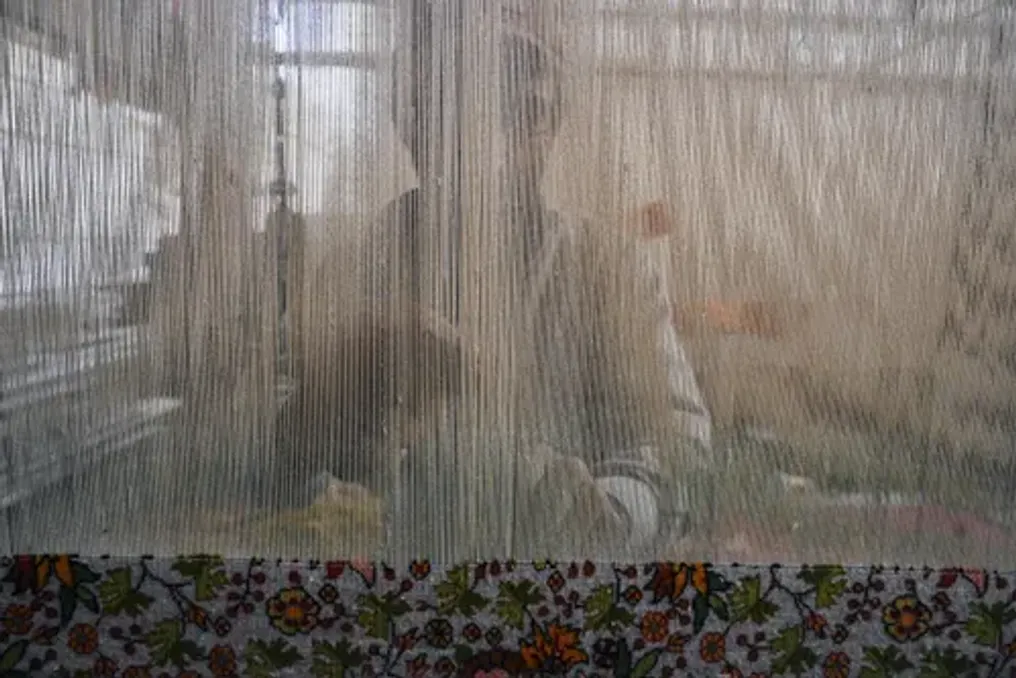
Despite having survived wars and upheavals, the renowned hand-weaving craft of Kashmiri carpets is currently experiencing a steady decline as younger generations turn away from the meticulous labor.
For centuries, masterpieces crafted from sheep's wool or mulberry silk by artisans adorned imperial courts, museums, and elite homes worldwide. These items are made on handlooms from yarn dyed with natural dyes, with a density ranging from 300 to several thousand knots per square inch, depending on the complexity of the design.
Until the 1980s, carpets constituted the main export of Kashmir, but production volumes have steadily fallen since then. The latest blows to this trade have been the military actions in Ukraine and the Middle East.
Weaver Bashir Ahmad, 78, expressed regret over the situation, noting that if more young people engaged in this craft, they could earn a living from it. However, long working hours, low pay, and changing life aspirations have made the profession less appealing to the youth of Kashmir.
Today, a master weaver earns only about 500 rupees (5 dollars) per day, which is less than many unskilled workers. Ahmad added that although not everyone has a government job, his child or someone else could try to build a career in this field, but the situation has changed.
While creating carpets, masters loudly chant the design code, which is handwritten on a strip of paper called a 'talim'—a shorthand of ancient symbols denoting colors and numbers—while joining the threads one by one.
Depending on the size and design, making one piece can take a group of masters up to a year, and on the international market, such carpets can cost up to $20,000. The art of fine carpet weaving was first introduced to the Himalayan valley of Kashmir by Persian travelers in the 15th century and received patronage during the reign of the last local king Zain-ul-Abidin Budshahi. The craft flourished in Srinagar and later spread to other towns and villages in Indian-ruled Kashmir.
Despite the decrease in workload, some weavers are determined to continue this beloved tradition. Mushtaq Ahmad, 75, who has been weaving for 50 years, stated: 'As long as I have strength and days ahead, I will continue this work.'
Industry estimates suggest the sector employs about 30,000 people, significantly fewer than the hundreds of thousands three decades ago. Officials report that steps are being taken to modernize the sector and attract new workers. Zubair Ahmad, director of the Indian Institute of Carpet Technology in Srinagar, reported that modern looms are being provided free of charge as part of these efforts.
The government has also introduced 'geographical indication' signs to help distinguish authentic Kashmiri carpets from cheap imitations. Director Ahmad noted that the goal of this step is to guarantee their authenticity, as there was a deficit of trust between buyers and sellers.