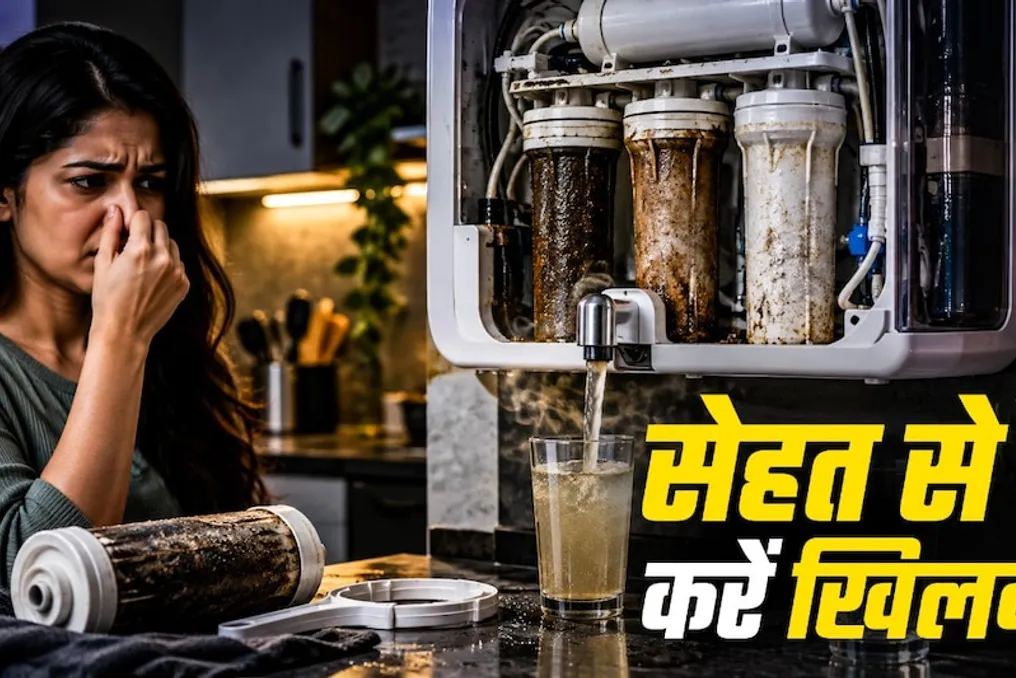
A home Reverse Osmosis (RO) water purifier provides clean and safe drinking water; however, over time, its filters and membranes wear out. If RO maintenance is not performed on schedule or its components fail, the unit may begin to contaminate the water instead of purifying it, releasing bacteria and impurities.
Consuming water from a malfunctioning RO increases the risk of various illnesses, including intestinal infections and vomiting. Therefore, it is crucial to know the signs that allow you to independently determine if the water from your RO is no longer safe to drink and requires immediate replacement or repair.
How to Clean RO Water:
There are five main signs indicating a malfunction or the need to replace the RO system:
- Change in Water Taste: If the taste of the RO water suddenly becomes bitter, salty, or astringent, it indicates damage to the TDS controller or the RO membrane, which hinders the proper filtration process of dissolved minerals.
- Unusual Water Odor: The presence of a musty, chlorine, or any other foul odor in the water is a clear sign of bacterial buildup in the RO's carbon and sediment filters, which can no longer purify the water.
- Decreased Water Flow Rate: If the water from the tap flows very slowly, the cause may be a clogged sediment filter or dirt accumulation inside the purifier itself.
- Cloudiness or Suspended Particles in Water: If the water looks cloudy in a glass or contains small floating particles, it means the filter has completely failed, and impurities are entering the drinking water directly.
- Excessively High or Low TDS Level: An RO system is equipped with a TDS meter—a small digital device to measure the amount of heavy substances in the water. If testing shows that the TDS level has dropped below 50 or risen above 300, it indicates a complete failure of the RO membrane, requiring immediate replacement.